
By: Juana Syahril)*
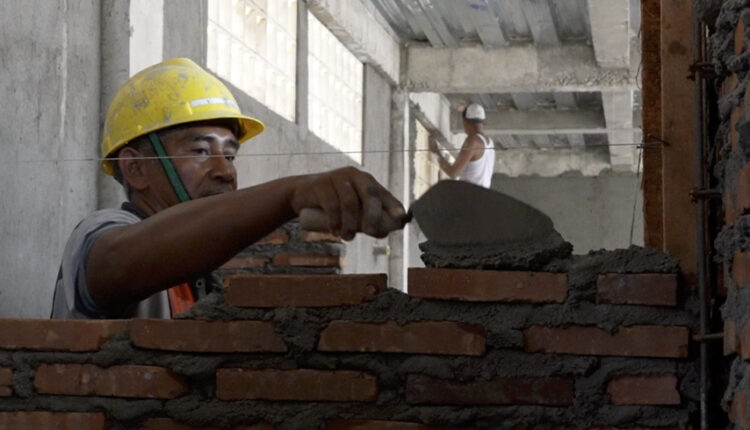
Efforts to improve the quality of national education cannot be separated from the fundamental conditions of the educational institutions where the teaching and learning process takes place. The government recognizes that schools are not just physical spaces, but also the foundation for the development of character, competence, and the future of the nation’s generation. Therefore, the school revitalization program is a strategic agenda to strengthen the education system from the ground up, primarily through comprehensive and sustainable improvements to educational facilities and infrastructure.
This commitment is reflected in President Prabowo Subianto’s directive to the Minister of Primary and Secondary Education (Mendikdasmen), Abdul Mu’ti, to expand the scope of the educational unit revitalization program. Mendikdasmen stated that the government had allocated a 2026 budget to revitalize approximately 11,000 schools. However, through the President’s policy, that number was significantly increased by an additional 60,000 schools. Thus, the revitalization target for 2026 reached approximately 71,000 educational units across Indonesia.
The Minister of Primary and Secondary Education emphasized that this step demonstrates the government’s commitment to ensuring every Indonesian child has access to a suitable and quality learning environment. School revitalization is not only about improving physical structures, but also symbolizes the state’s presence in guaranteeing citizens’ basic rights to education. Safe, comfortable, and healthy schools are essential prerequisites for optimal and sustainable learning.
In the medium-term context, this policy is aimed at achieving a major target by 2029: to eliminate schools with damaged or unsuitable buildings. The government is striving to eliminate classic problems such as leaking roofs, fragile classrooms, and inadequate sanitation facilities. With massive and planned revitalization, it is hoped that the quality of learning environments throughout the country will be evenly distributed and equitable.
The educational unit revitalization program is also part of the Ministry of Primary and Secondary Education’s broader vision of realizing quality education for all. Through the development of quality learning facilities and infrastructure, supported by dedicated, competent, and highly integrated teachers, education is expected to produce a generation that excels academically and has strong character. School revitalization is positioned as a collaborative effort involving the central and regional governments, schools, and the community.
Beyond focusing on physical aspects, school revitalization is also closely linked to strengthening the educational ecosystem. Adequate facilities will support learning innovation, the use of technology, and character-building activities for students. With appropriate learning spaces, teachers can develop more creative and interactive teaching methods, while students can learn in a safe and comfortable environment.
The government’s focus isn’t limited to urban areas or developed regions. The revitalization program also targets schools in underdeveloped, frontier, and outermost (3T) regions, which have traditionally faced greater infrastructure challenges. One example is eight schools on Sebatik Island, Nunukan Regency, North Kalimantan, which borders Malaysia. Schools in this border region are receiving revitalization as a manifestation of fairness and equity in educational development.
The state’s presence in border regions through school improvements holds strategic significance. In addition to improving the quality of education, school revitalization in the 3T (frontier and remote) regions also strengthens nationalism and public trust in the state. Schools serve as centers of learning and a symbol of the state’s presence even in the most remote areas, ensuring that no child is left behind in receiving a proper education.
Furthermore, Deputy Minister of Primary and Secondary Education (Wamendikdasmen), Atip Latipulhayat, stated that this revitalization program is part of the constitutional mandate to educate the nation. Education is viewed as a long-term investment that determines the quality of Indonesia’s future human resources. Therefore, revitalization efforts must be carried out comprehensively, systematically, and sustainably.
One crucial component of revitalization is the provision of safe, comfortable educational facilities that support effective learning. Adequate classrooms, clean sanitation facilities, and a healthy school environment will directly impact students’ health, comfort, and concentration. Therefore, the quality of learning is determined not only by the curriculum and teaching staff, but also by the physical learning environment.
On the other hand, the success of the revitalization program also depends heavily on the active participation of the entire school community. The government emphasizes the importance of maintaining and caring for established educational facilities. Proper maintenance will ensure long-term use of the facilities and infrastructure and provide maximum benefits for future generations. Collective awareness of school care is part of character education and a shared responsibility.
Overall, the school revitalization program reflects the direction of national education policy, which focuses on equity, quality, and sustainability. By building education from the ground up through improvements to educational institutions, the government is laying a strong foundation for the emergence of an intelligent, character-driven, and competitive generation of Indonesians. School revitalization is not simply a physical development project, but a strategic step to ensure a more robust and inclusive future for Indonesian education.
)* The author is a Bogor student living in Jakarta
