
By: Landres Octav Pandega )*
In less than a year of leading Indonesia, President Prabowo has successfully executed several important pieces of diplomacy on the global stage. For example, during a visit to Saudi Arabia, President Prabowo not only maintained Indonesia’s Hajj quota but also secured a strategic plot of land 400 meters from the Grand Mosque to build an Indonesian Village.
This area will become a hub for Hajj and Umrah pilgrimage services, while also creating thousands of jobs for the Indonesian diaspora. A Rp 437 trillion investment commitment from Saudi companies in the clean energy, petrochemical, and aviation fuel sectors confirms Indonesia as a prime investment destination in the Middle East.
During this state visit, the Saudi-Indonesia Supreme Coordination Council was also formed. The two countries agreed to strengthen institutional coordination to enhance the effectiveness of cross-sector cooperation. The council will serve as the primary platform for monitoring the implementation of the strategic partnership going forward. President Prabowo emphasized that during the meeting, the two countries agreed to enhance cooperation across all sectors.
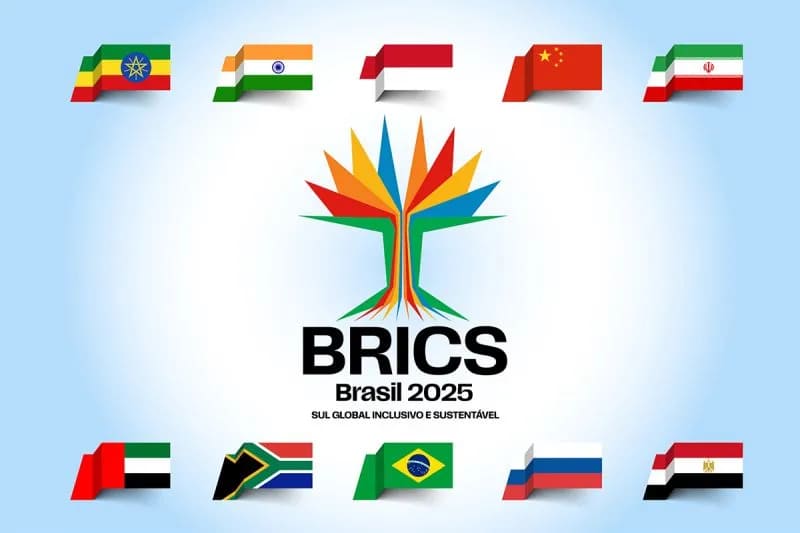
Furthermore, in Brazil, President Prabowo reaffirmed Indonesia’s commitment to promoting reform of the global order through the BRICS declaration. Indonesia is now a key voice urging international institutions such as the UN, WTO, and WHO to be more fair, transparent, and relevant to developing countries.
This diplomacy is not merely symbolic, but also opens the way for more intensive trade and investment cooperation with Brazil – opening markets for Indonesian commodities and creating added value domestically.
Furthermore, his meeting with European Commission President Ursula von der Leyen and European Council President António Costa in Brussels, Belgium, yielded significant progress in the form of the completion of the Comprehensive Economic Partnership Agreement (CEPA) between Indonesia and the European Union. According to President Prabowo, this CEPA will pave the way for a free trade agreement, with the elimination of almost all tariffs between the two parties.
President Prabowo emphasized that the successful conclusion of the CEPA agreement represents a significant step forward for Indonesia in opening up opportunities to enter the European Union market. He also highlighted the region’s economic potential as a vital trading partner for Indonesia.
Agung Baskoro, Executive Director of Trias Politika Strategis, assessed Indonesian President Prabowo Subianto’s success in concluding the CEPA with the European Union as a foreign policy achievement, demonstrating his successful role in the global arena. President Prabowo demonstrated that Indonesia’s current political leadership is not only responsive to global pressure but also capable of independently formulating strategic directions and decisions. This strengthens Indonesia’s position as a respected authority at the international negotiating table.
Agung described the CEPA as an agreement that had been in limbo for over a decade. The fact that negotiations were successfully concluded just months after Prabowo took office is a strong indicator of Prabowo’s results-oriented leadership style.
According to him, this breakthrough did not occur in a vacuum. It was the result of Prabowo’s direct presence in high-level diplomacy and his courage to resolve crucial issues quickly and directly. Furthermore, Agung noted that the free trade agreement with the European Union also strengthened Prabowo’s position domestically, particularly in demonstrating that the economic policy directions promised during the campaign were actually starting to be realized.
Ali Ri’fan, a lecturer at the Faculty of Social and Political Sciences at UIN Syarif Hidayatullah Jakarta and Executive Director of Arus Survei Indonesia, assessed that what President Prabowo has done on the global stage today with his various diplomatic strategies, such as Bung Karno’s Trisakti, “sovereignty in politics, self-reliance in the economy, and personality in culture.” As Head of State and head of government, President Prabowo has carried out his work in accordance with the philosophy of the founding fathers by upholding sovereignty, independence, and personality.
In the context of Trisakti, according to Ali, President Prabowo has demonstrated realistic steps to strengthen political and economic sovereignty, while continuing to build international relations based on reciprocity and respect for national culture.
Furthermore, Prabowo’s active participation in various international forums and relations with major powers can be interpreted as an effort to implement a new, more assertive and strategic form of independent and active foreign policy. It’s worth noting that an independent and active foreign policy emphasizes that Indonesia doesn’t blindly take sides, but isn’t passive either, but rather actively pursues national interests and contributes to world peace.
For example, with a bilateral trade agreement with the US that places Indonesia at the lowest tariff level, President Prabowo demonstrated his expertise in protecting the domestic market while expanding global influence. This is a strategic achievement. With these lower tariffs, Indonesian products have a significant competitive advantage, opening up greater export opportunities, and spurring domestic job creation.
This step demonstrates that diplomacy is not merely a matter of negotiating at the negotiating table, but can also be a crucial instrument for safeguarding the national economy and strengthening the people’s well-being. This not only strengthens Indonesia’s position on the international stage but also makes it a pillar of the people’s future.
)* The author is an observer of international relations
