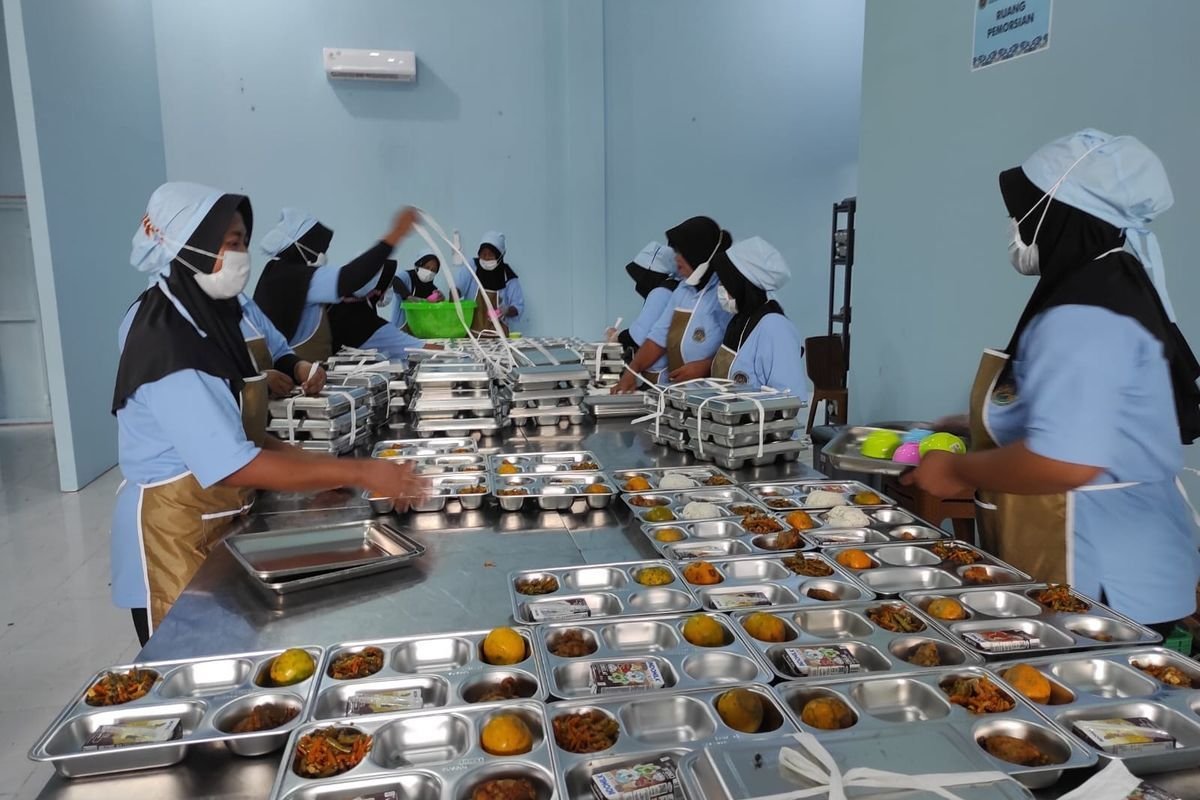

JAKARTA – The government continues to demonstrate its commitment to implementing the Free Nutritious Meals Program (MBG) as part of its efforts to create a superior generation towards Golden Indonesia 2045.
The Ministry of Public Works (PU) and the National Nutrition Agency (BGN) are collaborating to build 2,200 MBG kitchens, or Nutrition Fulfillment Service Units (SPPG), which will serve as the backbone of providing nutritious food to students across Indonesia. This step follows up on a memorandum of understanding signed in March 2025 between the two agencies.
Public Works Minister Dody Hanggodo emphasized that the construction of the MBG kitchen is a strategic step that requires cross-sector support.
“The development of MBG kitchens is a shared responsibility. We are ready to provide infrastructure to ensure this program can be implemented quickly and evenly across Indonesia,” said Dody.
He added that the Ministry of Public Works will not only be involved in the physical construction of the kitchens, but also in developing technical guidelines and building standards. The construction of these kitchens will stimulate local economic growth by creating jobs and strengthening the food supply chain.
“The MBG Kitchen not only nourishes students but also strengthens the local economy. This is part of PU 608’s vision to reduce the ICOR below 6, reduce poverty to 0%, and boost national economic growth by 8%,” he explained.
Meanwhile, BGN Head Dadan Hindayana welcomed the support and emphasized that adequate nutrition infrastructure development is a key factor in the success of the MBG program. Kitchen development will focus on the 3T (Underdeveloped, Frontier, and Outermost) areas using a self-managed approach with communities.
“The plan is to manage the MBG kitchens through a self-managed scheme. We’re currently expanding our reach to 3T locations,” said Dadan.
Along with infrastructure development, outreach for the MBG program continues. In West Jakarta, an event titled “Together Creating a Healthy Generation for Indonesia” was held, featuring various stakeholders, including Charles Honoris, Deputy Chairman of Commission IX of the Indonesian House of Representatives.
In his remarks, Charles described the MBG as a concrete step by the government to prepare Indonesia’s golden generation. He also encouraged parents to play an active role in maintaining the nutritional quality of their children.
“We in the Indonesian House of Representatives, particularly Commission IX, will continue to support the MBG program to run quickly and evenly throughout Indonesia,” Charles emphasized.
The MBG program also opens up real opportunities for empowering local entrepreneurs. For example, Ely Hartati, a catering entrepreneur in Tenggarong, East Kalimantan, has successfully developed two MBG kitchens with financial support from BRI, which now serve over 6,000 students and employ over 100 local residents.
“I’ve been able to grow my business and create jobs thanks to access to financing from BRI. This program isn’t just about nutritious food, but also about economic empowerment,” said Ely.
BRI Corporate Secretary, Agustya Hendy Bernadi, stated that banking support for the MBG program is a concrete form of synergy between the financial sector and the government in building a sustainable economic and social ecosystem.
“Mrs. Ely’s story is an example of how MSMEs can grow alongside government programs. We continue to open access to financing so that more local businesses can support the MBG program,” said Hendy.
With synergy between ministries, institutions, the House of Representatives (DPR), the business community, and the community, the construction of 2,200 MBG kitchens is believed to be a strong foundation for developing a healthy, productive, and competitive generation in the future.
