

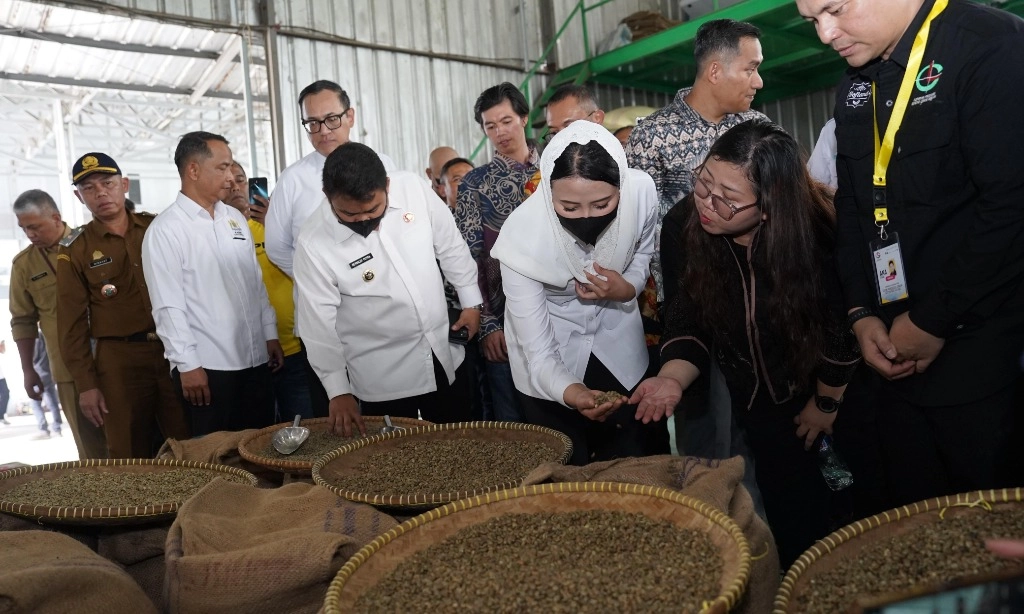
Jakarta – The government has demonstrated its commitment to protecting consumer rights, particularly regarding the safety and quality of staple foods like rice. This action follows the discovery of the circulation of adulterated rice in premium packaging sold above the highest retail price (HET). Through cross-ministerial collaboration and strengthening technical regulations, the government is strengthening oversight of fraudulent practices that harm the public.
The Director General of Domestic Trade at the Ministry of Trade, Iqbal Shoffan Shofwan, said that the government, through the Ministry of Agriculture (Kementan) and the National Food Agency (Bapanas), has issued a number of technical regulations governing food safety.
“The government has endeavored to provide protection and certainty (regarding the quality and standard of rice) to the public as consumers in consuming rice commodities that are safe for health by issuing several technical regulations, both by the Ministry of Agriculture and Bapanas,” said Iqbal.
According to him, rice is one type of Fresh Food of Plant Origin (PSAT) which is regulated in the Minister of Agriculture Regulation Number 53 of 2018 concerning the Safety and Quality of Fresh Food of Plant Origin.
“Business actors packaging PSAT are required to include labels inside and/or on the packaging. This measure aims to ensure the safety and quality of food distributed to the public,” Iqbal added.
In addition, there are also provisions in Article 108 paragraph (3) letter c of Law Number 18 of 2012 concerning Food. Iqbal explained that supervision of fresh food labels is carried out by government agencies that organize government affairs in the food sector.
“On rice packaging labels, it is stipulated that one of the minimum information listed on the label is the registration number,” he explained.
In line with this, the Ministry of Trade stated that Bapanas issued Regulation Number 2 of 2023 concerning Rice Quality and Labeling Requirements to provide protection to the public in consuming rice that is safe for health.
Eliza Mardian, a researcher at the Center of Reform on Economics (CORE) Indonesia, believes strengthening government regulations is a crucial step in maintaining the quality of premium rice. She cited the need for routine testing of the physical quality of rice, mandatory producer certification, and ensuring clear labeling on packaging.
“Consumers must understand what they’re buying. Traceability, or product origin tracking, is also crucial for building public trust,” he said.
Meanwhile, Rizal Taufiqurrahman, Head of the Macroeconomics Center at the Institute for Development of Economics and Finance (INDEF), emphasized the need for a more systemic approach to food distribution oversight. He proposed a shift from a raid system to intelligent, digital-based oversight.
“Digitalization of the distribution chain is needed, with QR code tracking, regular audits, and a blacklist of adulterated producers. Strict administrative sanctions, such as permanent license revocation and corporate impoverishment, must be enforced,” he stressed.
Rizal also highlighted the importance of cross-agency cooperation and the establishment of a dedicated law enforcement unit in the strategic food sector. All actors, including local governments, must work within a single oversight framework that is measurable, monitored, and subject to swift intervention.
“The state must be present with a system that closes all loopholes for deviation,” he concluded.
With these concrete steps, the government is affirming its position as the primary protector of consumers and a key actor in maintaining stability and public trust in the national food supply chain.
