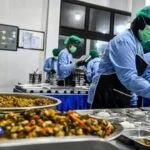

Jakarta — In addition to improving children’s nutritional quality, the Free Nutritious Meal Program (MBG) has also empowered micro, small, and medium enterprises (MSMEs) across Indonesia. The program has proven to deliver tangible benefits to the community while opening up major opportunities for local MSMEs to scale up and penetrate regional markets.
Minister of MSMEs, Maman Abdurrahman, stated that his ministry continues to encourage more MSME entrepreneurs to take part in the MBG supply chain, an initiative launched by President Prabowo Subianto.
“So far, the MBG program has clearly brought significant and extraordinary benefits to the people of Indonesia,” said Maman.
He explained that MSMEs involved in the MBG ecosystem have gained substantial advantages. Many have been able to supply greater quantities of food ingredients to Nutrition Fulfillment Service Units (SPPG)—reaching up to one ton of vegetables in some cases.
“What started as a micro-business run by just two women has now grown to involve 100 women. The supply that was initially limited to South Tangerang now extends to Bogor,” he added.
Echoing this, Head of the National Nutrition Agency (BGN), Dadan Hindayana, emphasized that MBG does more than improve child nutrition—it also delivers significant economic impact through the involvement of MSMEs, cooperatives, and village-owned enterprises (BUMDes) across Indonesia.
“Besides providing essential nutrition to children, the MBG program has generated massive economic ripple effects. There is a simple economic principle at work here—driving grassroots economic activity,” said Dadan.
He noted that the program has already created large-scale employment. For instance, during a visit to a vegetable supplier in Pamulang, he observed that the business had hired 15 local workers.
“Even the kitchen workers in the nutrition service units have been registered as participants in the national employment insurance program (BPJS Ketenagakerjaan). The aim is to ensure proper social protection,” he explained.
The government remains optimistic that the sustained implementation of MBG will lead to the development of a healthy and self-reliant local economic ecosystem. The program stands as a real-life example of how state intervention can deliver dual-impact outcomes—nurturing a healthier generation while elevating MSMEs to a higher level.
The success of MBG is expected to serve as a benchmark for improving both public welfare and health. Therefore, collaboration among government institutions and stakeholders will be the key to ensuring the program’s long-term success.
