
By: Sylvia Mote)*
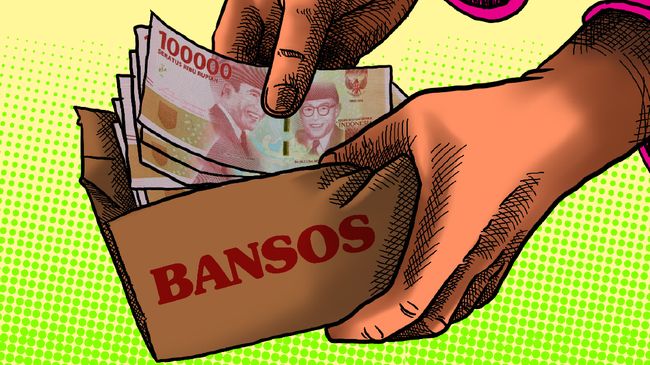
Amid the complex development challenges in Papua, the Indonesian government continues to demonstrate a strong commitment to ensuring that every segment of society, no matter how small, receives the attention it deserves. One concrete manifestation of this commitment can be seen in the distribution of social assistance (bansos) carried out by the Jayawijaya Regency Government through its Social Affairs Office, targeting vulnerable groups in several districts and customary communities.
This initiative is not only part of a broader agenda to strengthen social and food security, but also reflects the government’s sincere effort to uphold inclusive humanitarian values. In Jayawijaya, this care was symbolized in a simple yet meaningful way—a sack of rice handed to elderly members of the Mee Tribe remaining in Wamena. This moment serves as a reminder that the presence of the state must be felt even in the remotest areas, regardless of population size or ethnic background.
The pioneering mama-mama (women elders) of the Mee Tribe, who have long lived under constrained conditions, received the aid with great emotion. Images of the event quickly spread among Papuan communities, serving as a powerful representation that government policies are genuinely grounded in the principle of social justice for all citizens.
According to Yosua Douw, a young leader of the Mee Tribe and currently the Regional Secretary of Tolikara, the assistance received by the Mee elders goes beyond merely fulfilling food needs. He sees it as a recognition of the existence and contributions of the Mee people in Papua. For Yosua, this attention embodies a humanitarian spirit that should be the foundation of all development policies, especially in regions with complex social dynamics like Papua.
Though the distribution of aid to the Mee community in Wamena may only reach a handful of individuals, its impact far exceeds mere statistical figures. It reinforces the idea that government policies are not solely based on numbers and macro data, but also consider the deeper, more human dimensions. The social justice that has long been the goal of development is realized through concrete actions that touch the lives of people at the grassroots level.
Similar efforts have been implemented in three other districts—Wosi, Kurulu, and Wedangku—where the government distributes social assistance funds using a transparent and participatory approach. Beni Asso, Head of the Social Assistance Division of the Jayawijaya Social Affairs Office, emphasized that all distribution processes are carried out under the direct instructions of the Regent and Deputy Regent to ensure the aid reaches the right targets. The government guarantees that the distributed funds reach grassroots communities evenly down to the village level.
The participatory approach employed in the distribution process is a vital element in maintaining the program’s accountability. Natalis Surabut, Head of the Kurulu District in Jayawijaya, initiated open discussions with community leaders and village heads before distributing the aid. This step ensures that the assistance is not merely divided administratively but also accommodates feedback from local communities to maintain targeting accuracy. As part of the process, renewed data collection based on National ID and Family Cards (KK) is encouraged to ensure future aid distribution is more orderly and precise.
Through this policy, the Jayawijaya Regency Government is not just distributing aid but also reinforcing the social foundations at the community level. Social assistance is no longer viewed as mere charity but as a strategic instrument to strengthen community resilience against socio-economic pressures, especially in remote areas. By ensuring that every policy favors vulnerable groups, the government is also nurturing public trust in the state.
The real steps taken by the Jayawijaya government are expected to serve as a model for other regions in designing and implementing inclusive and impactful social programs. Behind every sack of rice and budget allocation lies a strong moral message—that the presence of the state must be felt by every citizen, no matter how small or remote their community.
This moment also reinforces that social policies in Papua should not be confined to population-based paradigms. In regions like Papua, with small and scattered populations, approaches grounded in empathy and recognition of unique socio-cultural characteristics become especially relevant. The government continues to prioritize policies that are not only administratively effective but also sensitive to the local values embedded in society.
The social assistance policy implemented in Jayawijaya proves that attention to vulnerable groups does not always require grand or ceremonial gestures. On the contrary, policies that directly address the concrete needs of communities—no matter how simple—can build strong emotional ties between the government and its people.
With the continuation of this program, the spirit of social justice, which lies at the heart of national development, will become increasingly tangible in Papua. The Jayawijaya government has made it clear that attention to society knows no limits—be it in numbers, regions, or ethnic backgrounds. This is the true embodiment of inclusivity and humanity, the core principles behind every social policy in Indonesia, particularly in Papua.
*) Social Policy Analyst in Papua
