
By Rahma Yulia Sari )*
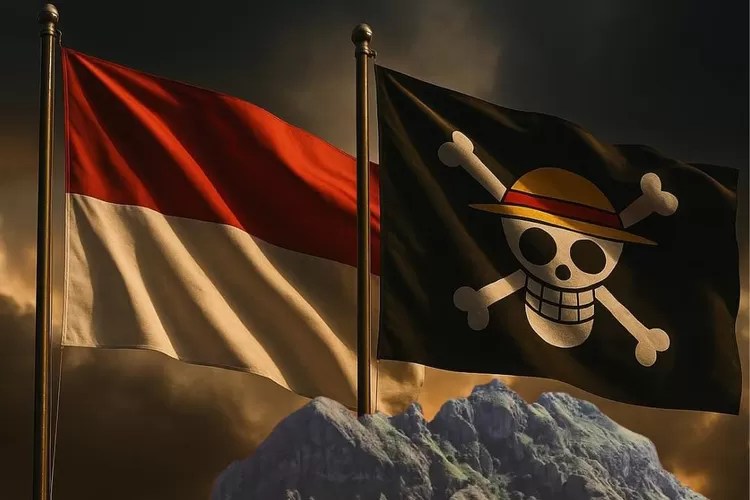
The widespread use of foreign symbols, including the pirate flag trend in public spaces and social media, is a wake-up call for the Indonesian people to immediately strengthen their sense of nationalism. The Red and White flag is not simply a red and white cloth, but a legitimate symbol of state sovereignty as stipulated in Article 35 of the 1945 Constitution of the Republic of Indonesia and reinforced by Law Number 24 of 2009. This means that treating the national flag with respect is part of maintaining the nation’s dignity. When national symbols are replaced by popular icons from abroad, it reflects a serious challenge to the resilience of national identity.
The Secretary of the Prosperous Justice Party (PKS) faction of the People’s Consultative Assembly (MPR RI), Johan Rosihan, reminded that global culture should not be viewed as hostile. However, as foreign pop culture begins to replace national symbols, Indonesia is facing an identity crisis. Young people growing up in the digital era live in a borderless world, but some lack a solid foundation of national values. This is where the importance of revitalizing the national narrative lies, conveying the message of nationalism in a language relevant to the digital generation. The Red and White should be present not only on classroom walls or during ceremonies, but also in creative spaces such as memes, music, films, and the digital content they enjoy every day.
As the 80th anniversary of the Republic of Indonesia approaches, concrete efforts to foster a love of the Red and White flag continue. In South Kalimantan, Regional Police Chief Inspector General Rosyanto Yudha Hermawan, along with the Governor and the Regional Leadership Communication Forum (Forkopimda), distributed 15,000 Red and White flags to the public. This activity was held simultaneously across all levels of the South Kalimantan Regional Police and will continue until the peak of the celebrations on August 17th. This flag distribution is not merely a formality, but a real invitation to appreciate the values of nationalism born from the struggle, blood, and tears of the nation’s founders.
The call to fly the Red and White flag as a symbol of national pride also came from the Head of the Makassar National Unity and Politics Agency, Fatur Rahim. According to him, August is no ordinary month, but rather a moment that should be interpreted as an opportunity to strengthen patriotism. Raising the Red and White flag in yards, offices, and neighborhoods is not just an annual routine, but a collective step to keep the spirit of nationalism alive. Fatur emphasized that the Red and White flag is the result of the long struggle and sacrifices of heroes who must be honored, especially on sacred occasions like Independence Day.
Concerns about the trend of replacing national symbols with entertainment or foreign cultural icons are not without basis. Social media has now become a highly influential space in how young people construct their identities. The popularity of pirate flags or other fictional symbols could slowly erode pride in national symbols. If left unchecked, this situation could undermine a sense of belonging to Indonesia as a shared homeland. Therefore, nationalist campaigns must not rely solely on conventional methods but must adapt to the dynamics of the times.
Movements like flag distribution in South Kalimantan or appeals from regional figures, such as in Makassar, are good starting points. However, successfully maintaining nationalism requires consistency and collaboration from all elements of the nation—the government, community leaders, academics, artists, and social media influencers. All parties have a role to play in ensuring that national symbols are not only remembered during ceremonies, but truly lived out in people’s daily lives.
The momentum leading up to Indonesia’s 80th anniversary is the perfect time to build collective awareness. Nationalism is not merely a slogan, but rather a force that unites the nation in facing global challenges. In an era where borders between countries are increasingly blurred by technology, maintaining national symbols and identity is key to preventing Indonesia from losing its identity. The pirate flag trend may seem trivial, but it signals a shift that must be addressed immediately.
The government, through various ministries, security forces, and related institutions, continues to intensify educational campaigns highlighting the historical values and significance of the Red and White flag. This education can be incorporated into school curricula, television programs, and popular digital platforms. Reviving nationalism does not mean rejecting global influences, but rather placing those influences within the framework of a strong Indonesian identity.
The Red and White flag has witnessed the nation’s struggle from colonial times to independence. Each piece of its fabric records the blood and tears of the fighters who risked their lives for independence. Therefore, upholding the honor of the flag is upholding the honor of the nation. Replacing it with another symbol, especially one unconnected to Indonesia’s history and struggle, is tantamount to ignoring the sacrifices of the heroes.
Facing trends shifting national symbols, strengthening nationalism must be a collective movement carried out with awareness, creativity, and pride. The Red and White flag must re-emerge as a proud identity amidst the rapid flow of global culture. From classrooms to digital spaces, from flag ceremonies to music festivals, this national symbol must always be a part of national life. This way, future generations will inherit the Red and White flag not only as a symbol of national pride, but also as the soul and spirit of true Indonesia.
)* the author is a social observer
