
By: Rahmawati Nur )*
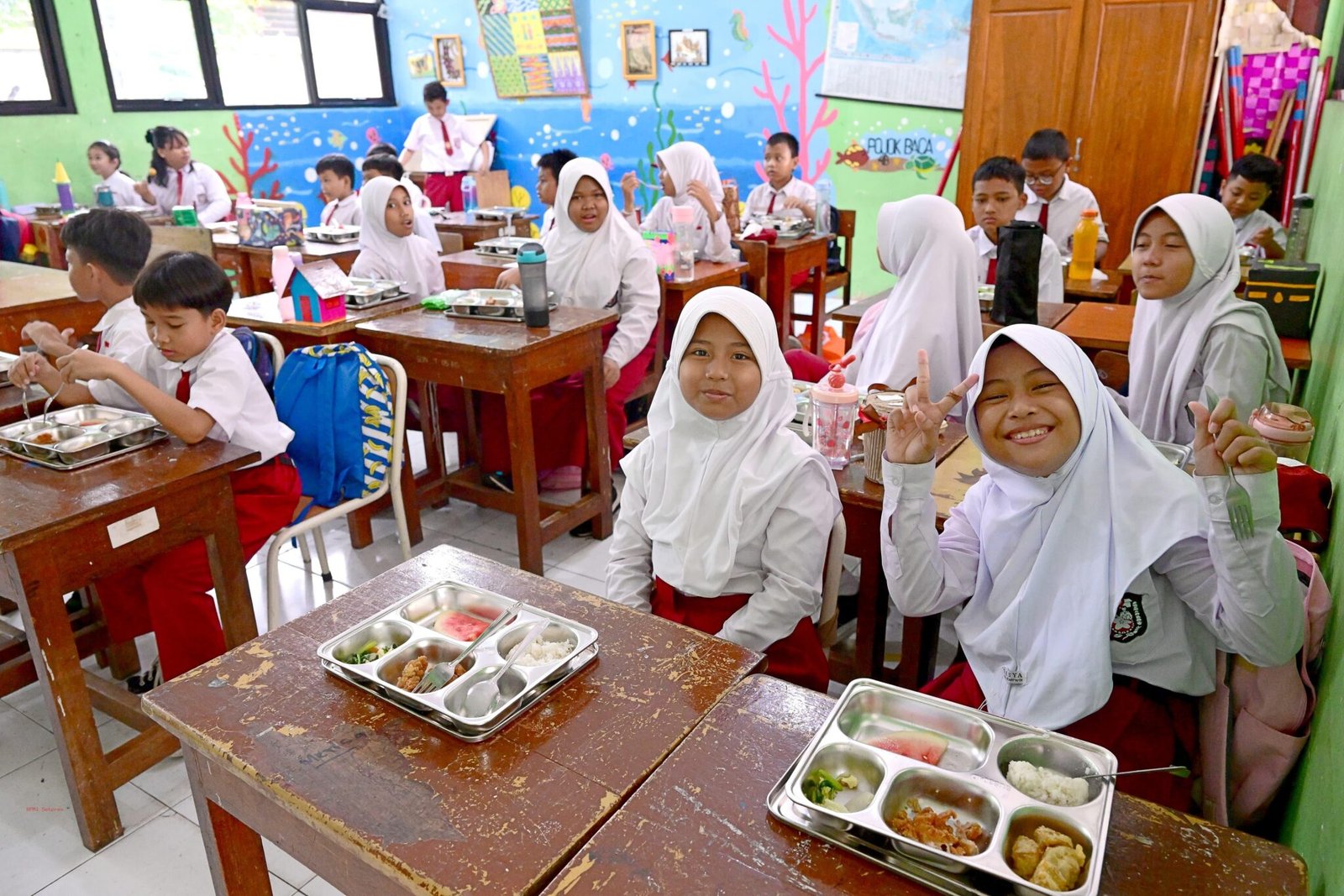
The Free Nutritious Meals (MBG) Program is more than just a nutrition intervention policy. It is the starting point in a broader strategy to develop superior and globally competitive Indonesian human resources. In this context, the MBG serves as an extension of the government’s efforts to instill health resilience values from an early age, while simultaneously addressing the gap in access to healthy food across various regions.
The central government, through the National Nutrition Agency (BGN), has made the MBG a priority program. BGN targets millions of schoolchildren, pregnant and breastfeeding mothers, and toddlers as primary beneficiaries. The focus goes beyond meeting basic food needs to ensuring that their intake meets national nutritional standards to support optimal growth and development. In a long-term development strategy, adequate nutritional quality is the foundation for the productivity and intelligence of future generations.
The MBG program is also continuously promoted in various regions as a first step in building collective awareness of the importance of nutritional fulfillment. This outreach is not merely about introducing the program but also encouraging the community to actively participate in its implementation. In North Bengkulu Regency, a joint outreach with Eko Kurnia Ningsih, a member of Commission IX of the Indonesian House of Representatives, clearly demonstrated how the public is beginning to recognize the importance of synergy between access to nutritious food and improving quality of life. Eko stated that with the support of appropriate policies, communities will be increasingly able to overcome the problems of stunting and malnutrition, two crucial issues that have hampered human resource development in many regions.
Data collected from the National Agency for National Nutrition (BGN) also reflects a serious commitment. In West Java Province, for example, 600 of the planned 5,000 Nutrition Fulfillment Service Units (SPPG) have been built. West Java Deputy Governor Erwan Setiawan revealed that the remaining 4,000 SPPGs are in the final stages of construction, with the hope that all MBG kitchens will be fully operational by the end of October. If this target is achieved, West Java will become a national pilot province for successful community-based nutrition distribution.
It’s important to note that 85 percent of the MBG budget is allocated to purchasing food from local farmers and MSMEs. The Head of the National Food Security Agency (BGN), Dadan Hindayana, emphasized that this will boost the productivity of the agricultural sector and small-scale food industries. This means that the MBG is not only about nutrition but also a driver of the people’s economy. Thus, the program’s dual impact includes improving public health while increasing local incomes.
The contribution of non-governmental actors is equally significant. For example, the Nahdlatul Ulama Executive Board (PBNU) has integrated the MBG program into the Islamic boarding school ecosystem. Over a thousand MBG kitchens are targeted to be built in NU-affiliated educational institutions, with dozens already operational. The PBNU’s nutrition-based approach also introduces a new narrative that eating is not just about satiating children, but also about supporting comprehensive child growth and development.
The chairman of the Nahdlatul Ulama Executive Board (PBNU), KH Yahya Cholil Staquf, stated that changing the mindset regarding food is the first step in an educational revolution. When children’s nutrition is guaranteed, their learning and thinking capacity will increase. This will accelerate the achievement of the grand vision of Golden Indonesia 2045. PBNU also ensures that kitchen management is carried out by professionals from the Indonesian Development Driving Scholars (SPPI) program, to ensure consistent quality and effectiveness of interventions.
In the national context, the number of beneficiaries is still far from the target. Only 9 percent of the total 82.9 million targets have been reached by mid-2025. However, this demonstrates the scale of the MBG program’s commitment. Compared to other countries, this achievement is equivalent to feeding the entire population of Denmark or Finland. But Indonesia is different: its vast territory, logistical challenges, and population demand boldness and policy consistency. In this regard, the presence of the MBG is a concrete manifestation of the state’s commitment to its most vulnerable citizens.
Mochamad Halim, Senior Human Resources Policy Analyst at the National Education Agency (BGN), emphasized the importance of involving all stakeholders, including schools, parents, MSMEs, and local governments. He emphasized that no child should learn while hungry. With this inclusive principle, MBG is directed not only as a nutrition provider but also as a platform for education about the importance of healthy eating. Nutrition education must begin in schools and household kitchens to ensure sustainable changes in consumption behavior.
This series of policies emphasizes that the MBG is not a temporary program. It is designed as a long-term investment rooted in the social and economic fabric of society. The government articulates this commitment through cross-sector collaboration and equitable resource distribution. In the best-case scenario, the MBG will become the foundation for the transformation of national human resources, which has often been hampered by fundamental issues such as hunger, malnutrition, and unequal access to food.
Through policy sustainability and consistency, Indonesia has a significant opportunity to escape the middle-income trap and enter the demographic dividend era fully prepared. Superior human resources are not just about intellectual intelligence, but also physical health and endurance. It all starts with one simple step: ensuring every Indonesian child has access to nutritious food every day. With MBG, that hope becomes closer and more real.
*) Nutrition and Public Health Observer
