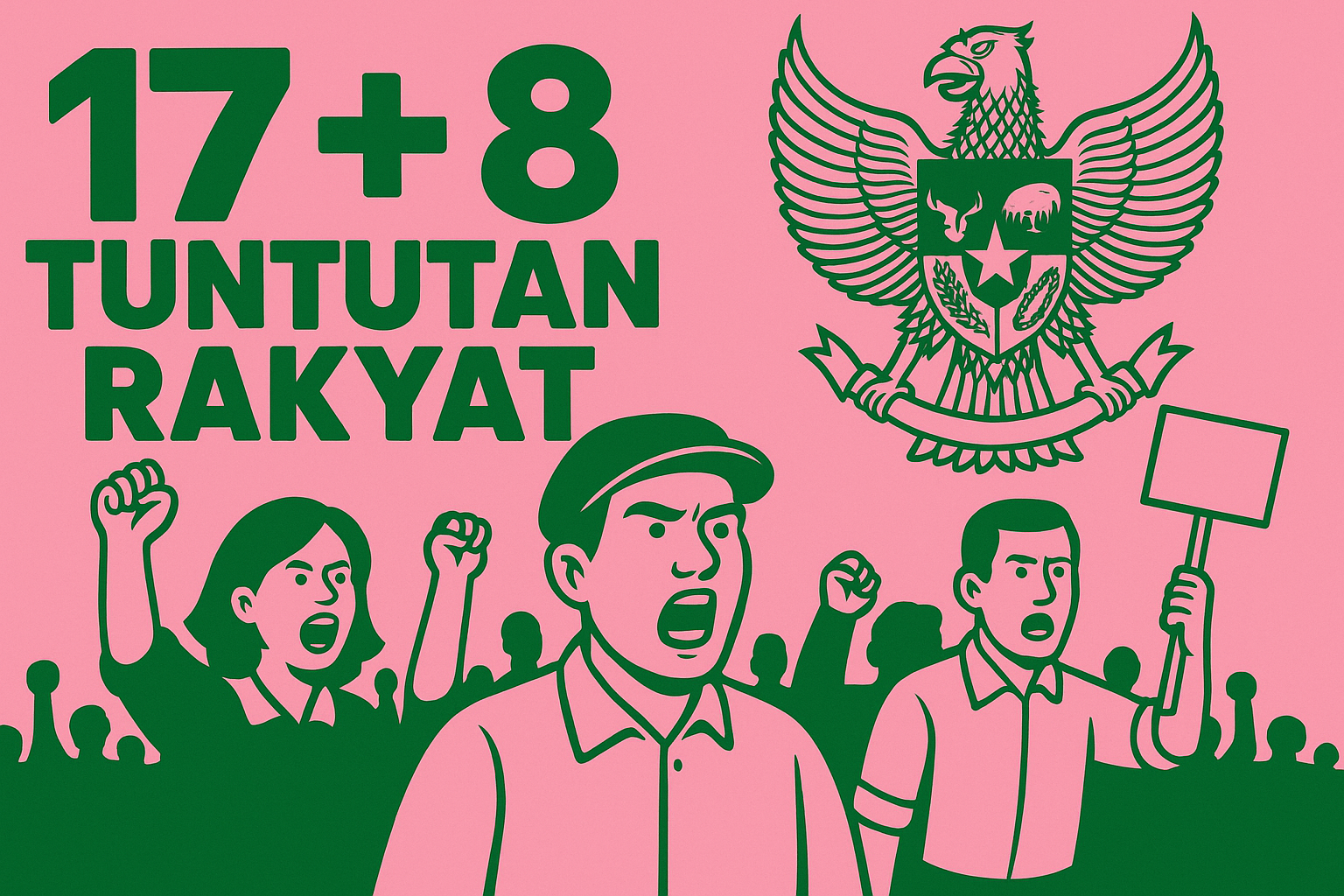
The Asset Confiscation Bill Becomes a New Pillar for Strengthening Corruption Eradication and a Concrete Response to 17+8

By: Gavin Asadit )*
In September 2025, the government and the House of Representatives (DPR) took a significant step by including the Asset Confiscation Bill (RUU) in the priority National Legislation Program (Prolegnas). This policy emerged amid mounting public pressure, particularly through the wave of protests and demands known as “17+8.” The public demanded a concrete response to the rampant corruption cases and the recovery of state losses. By placing this bill on the fast-track for deliberation, the government and DPR want to demonstrate that they are listening to the people.
The Asset Confiscation Bill itself is not a new idea. The initial draft was discussed more than a decade ago, but was repeatedly delayed due to political tensions and human rights concerns. Now, the political momentum is different. The House of Representatives (DPR), through the Legislative Body (Baleg), is targeting completion of deliberations by 2025, adhering to the principle of transparency. The Chairman of the DPR’s Baleg, Bob Hasan, stated that the public must be able to understand the contents of the bill, not just hear the title. A transparent process is considered crucial to prevent further erosion of public trust.
In essence, this bill authorizes the state to seize or confiscate assets of unexplained origin, including assets suspected of being linked to corruption or money laundering. Unlike the current mechanism, which requires a final criminal verdict, asset confiscation can be carried out through a special court with limited reversal of the burden of proof. This scheme mimics practices in several other countries, such as Australia and the United Kingdom, which have proven effective in restricting opportunities for corruptors to benefit from the proceeds of their crimes. However, to comply with the principle of due process, each step must still be carried out through a transparent and fair court process.
The government, through the Minister of Law, Supratman Andi Agtas, views the bill as a strategic step. He believes that asset confiscation can be an effective tool to strengthen the state’s ability to recover losses from corruption. The government emphasizes that although confiscation powers will be expanded, clear limitations must be formulated to ensure they do not deviate from the criminal procedure framework. This view reflects a balance between the drive to strengthen law enforcement and the need to uphold the principle of legal justice.
The Corruption Eradication Commission (KPK) also views this bill as an opportunity to increase the effectiveness of corruption eradication efforts. KPK Chairman Setyo Budiyanto believes this legal instrument can expedite the recovery of state assets and prevent corruptors from enjoying the proceeds of crime. The KPK emphasized the importance of synchronizing the bill with existing criminal procedural law, as well as establishing strict oversight mechanisms, so that the authority to confiscate assets is truly utilized for the benefit of the state and society.
On the other hand, several legal experts emphasize the need to consider the international dimension. Many assets resulting from crime are diverted abroad through bank accounts or investments. Without a clear international framework, confiscation efforts will only be effective domestically. Therefore, this bill must also accommodate mutual legal assistance (MLA) mechanisms and the recognition and enforcement of foreign court judgments, so that assets held abroad can be returned to the state treasury.
The management of confiscated assets is equally important. The public has frequently questioned the transparency of the use of assets seized through corruption. The government needs to ensure that these assets are not only channeled into state coffers but are also channeled into programs that directly impact the community, such as education, health, or regional development. This way, the public can experience tangible benefits from the asset recovery process.
From an economic perspective, this law is also expected to create a deterrent effect. Corruptors will no longer feel safe hiding the proceeds of their crimes in the form of assets. Going forward, the potential state losses due to corruption, which reach trillions of rupiah annually, can be reduced. This will also increase foreign investor confidence in Indonesia’s legal governance, as the country demonstrates a real commitment to eradicating financial crime.
The government views the Asset Confiscation Bill as a step forward in strengthening anti-corruption efforts while addressing public demands. If passed through a transparent and accountable mechanism, this regulation is believed to be a new pillar in ensuring the return of state assets to the people. The government also emphasizes the importance of public involvement in every stage of the deliberations, as public oversight will be crucial to ensuring this instrument’s effective implementation.
The success of the Asset Confiscation Bill will ultimately be determined by the consistency and commitment of all parties. The government, the House of Representatives (DPR), law enforcement agencies, and the public must work together to ensure this law truly serves as an instrument for recovering people’s assets, not simply a political symbol.
)* The author is an observer of social and community issues
