
By: Puteri Anindita*
The first year of the Free Nutritious Meals Program (MBG) marks a significant milestone in the history of national development. President Prabowo Subianto’s flagship program has brought tangible changes to the lives of millions of Indonesian children and significantly boosted regional economic growth. The public views the MBG as a bold step that successfully integrates health, education, and economic aspects simultaneously.
In less than a year, the MBG program has reached nearly 30 million beneficiaries. This figure demonstrates the country’s commitment to being present among the people by providing healthy and nutritious food for the younger generation. President Prabowo emphasized that this achievement represents a major undertaking unprecedented in Indonesian history. He stated that this success is not only about numbers, but also about the determination to reverse the trend of development to favor rural and regional communities. With a budget allocation of Rp335 trillion, this program has channeled significant funds directly to villages, creating real economic equality.
The existence of the MBG not only ensures adequate nutrition for schoolchildren but also creates a ripple effect for the national economy. This program involves farmers, fishermen, MSMEs, and local service providers, creating a new economic ecosystem that grows from the ground up. The President even projects that by early next year, this program will create 1.5 million new jobs. This is not just a promise, but a concrete strategy to make the MBG a driving force for the national economy.
Coordinating Minister for Community Empowerment, Muhaimin Iskandar, emphasized that the MBG program is a long-term investment for the nation. He believes the program’s benefits are felt not only in the short term through improved child nutrition, but also in the long term through growing public awareness of the importance of healthy eating. The MBG program is considered capable of encouraging a nutrition education movement, making Indonesian families more aware of healthy and hygienic food intake. He added that the success of the MBG program also reflects a spirit of mutual cooperation, as its implementation involves the central and regional governments, businesses, and the community.
Strong support also came from the legislature. Said Abdullah, Chairman of the House of Representatives Budget Agency, stated that the MBG is a positive step that must be further strengthened. He believes this program aligns with the country’s vision of improving the quality of human resources. Meanwhile, Felly Estelita Runtuwene, Chair of Commission IX of the House of Representatives, emphasized that the MBG plays a crucial role in accelerating the reduction of stunting rates, which currently stand at 14.5 percent. She is optimistic that with the program’s sustainability, Indonesia can achieve its target of zero stunting in the future.
Lalu Hadrian Irfani, Deputy Chairman of Commission X of the Indonesian House of Representatives (DPR RI), also views the MBG as a highly strategic program. He believes that the involvement of schools and teachers in supporting the program’s implementation will strengthen public trust and ensure children receive healthy food every day. This is clear evidence that the MBG not only addresses health aspects but also directly contributes to the quality of national education.
From the academic community, Kristian Widya Wicaksono of Parahyangan University, Bandung, believes that the success of MBG is largely determined by collaboration between various parties. He emphasized that a program of this scale requires the support of local governments, schools, and local networks for effective implementation. He believes that the involvement of local networks is an asset that accelerates the program’s success because they directly understand community needs.
These statements from figures illustrate the public’s strong trust in the benefits of the MBG. This program is not simply a populist policy, but a visionary strategy to prepare Indonesia’s golden generation for 2045. With adequate nutrition, Indonesian children can grow up healthier, smarter, and ready to compete on the global stage. At the same time, the local economy will become more dynamic, jobs will be created, and community well-being will improve.
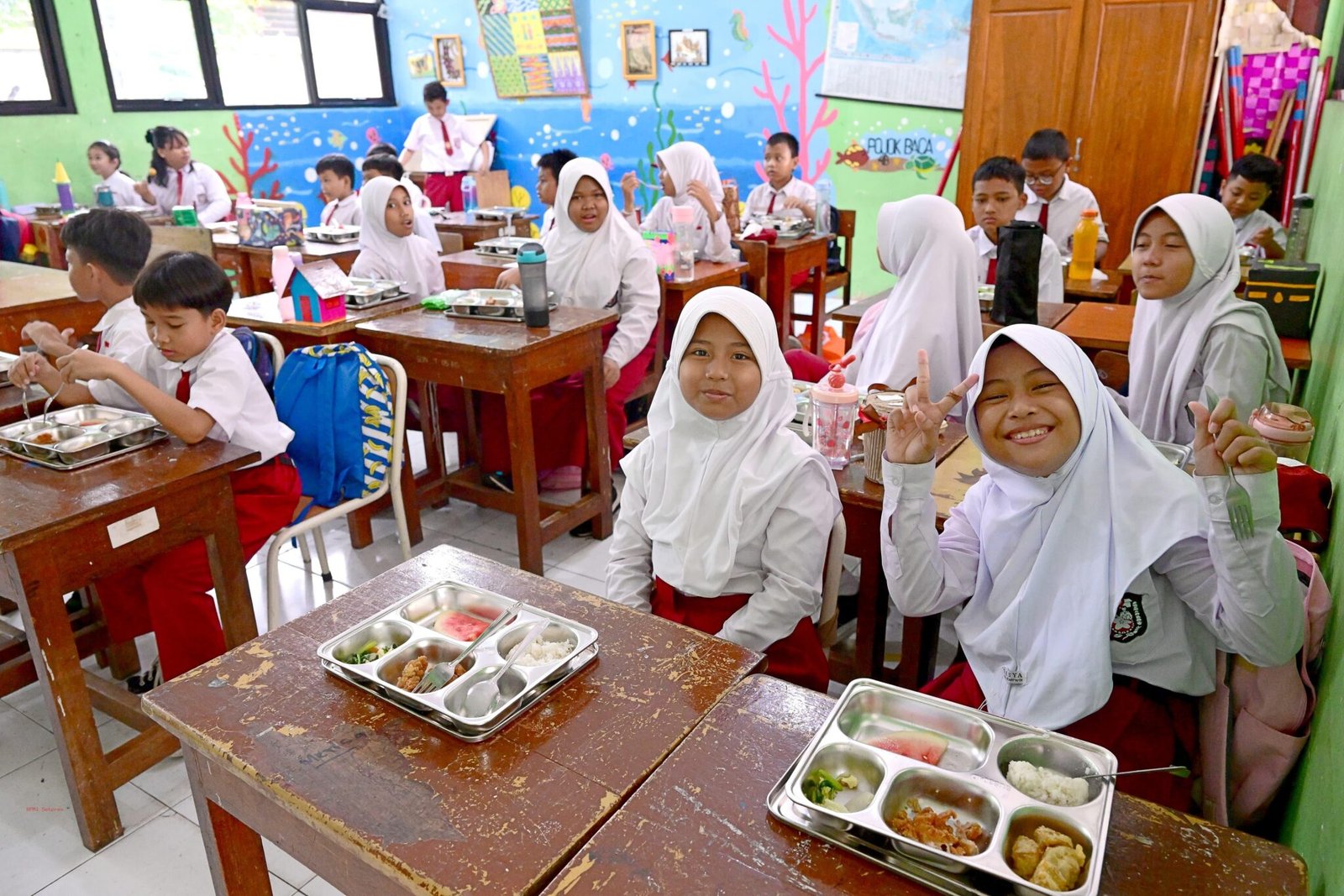
The MBG program has become a symbol of social justice. The government ensures that no Indonesian child goes to school on an empty stomach. Every portion of nutritious food that reaches a student’s table not only satisfies them but also brings hope. Hope that children will grow up healthy, concentrate better in their studies, and one day become a superior generation that will lead Indonesia to greatness.
A year of MBG’s journey has proven that the government’s massive program can provide multiple benefits. From a health perspective, stunting rates are starting to show a downward trend. Economically, previously inactive villages are now thriving thanks to the influx of funds directly reaching farmers, small traders, and MSMEs. Socially, a spirit of community cooperation is growing in support of the program’s success.
Given these achievements, the public rightly recognizes that the MBG is a valuable legacy for the nation’s future. This program builds a foundation for national resilience in a simple yet impactful manner. With cross-stakeholder synergy, transparency, and strict oversight, the MBG has the potential to become an icon of Indonesia’s success internationally as a country capable of simultaneously combining economic development with improving the quality of human resources.
Looking ahead, public expectations are even greater. The target of 82 million children and pregnant women as beneficiaries presents both a challenge and an opportunity. If the success of the first year serves as a foundation, it’s no exaggeration to be optimistic that the MBG will grow stronger and reach even more people. A healthy, intelligent, and competitive Indonesian golden generation in 2045 is no longer just a dream, but a vision that is beginning to be realized through the MBG.
A year into the MBG program, the public has seen and felt its benefits. This program is tangible evidence of the state’s commitment to the people, and proof that development is not just about infrastructure, but also about people. With the MBG, Indonesia is taking a more confident step toward a healthy, just, and prosperous future.
*The author is an independent journalist
