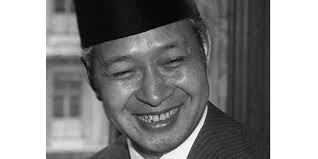

Jakarta — This year’s Heroes Day commemoration is not only a time to reflect on the struggles of Indonesia’s freedom fighters but also a crucial moment for the nation to reaffirm its respect for leaders who laid the foundations of national development. One figure once again at the center of public discussion is Indonesia’s 2nd President, H. M. Soeharto, who is considered worthy of being granted the title of National Hero for his dedication and contributions to the nation’s progress.
Deputy Speaker of the People’s Consultative Assembly (MPR RI), Eddy Soeparno, stated that every head of state who has led the Republic of Indonesia has made valuable contributions in their own way. In his view, Soeharto was a leader who rose to prominence during difficult times and succeeded in lifting Indonesia out of economic turmoil following political upheaval.
“I believe every head of state has rendered great service to the republic. Based on his track record, President Soeharto was one of the leaders who took charge of the nation when Indonesia was in severe economic distress,” said Eddy.
He emphasized that under Soeharto’s leadership, Indonesia managed to restore economic stability and achieve significant growth.
“In my opinion, that was one of his greatest contributions,” Eddy added.
Eddy noted that this year’s Heroes Day serves as a timely opportunity for the public and the state to reassess Soeharto’s crucial role with objectivity. He urged all segments of society to support the proposal to honor Soeharto as a National Hero — a reflection of a great nation that values the legacy of its leaders.
“A great nation is one that honors its heroes and leaders, including those who helped lay the foundations of this country,” he stated.
Meanwhile, researcher and Deputy Director of the Intelligence and National Security Studies (INSS) institute, Yusup Rahman Hakim, argued that Soeharto’s strategic policies had a profound impact on shaping the nation’s character, governance system, and economic foundations.
“Several policies from the Soeharto era significantly strengthened state capacity — particularly in basic education, administrative governance, and food security,” Yusup explained.
He cited examples such as the massive elementary school construction program in the early 1970s, the reformulation of national development planning structures, and agricultural modernization in the 1980s — all of which were part of the nation-building process that continues to shape Indonesia’s social and economic structure today.
“Development during that period was not only physical but also focused on building the productive capacity of the Indonesian people. That is a tangible legacy still felt today,” he emphasized.
Yusup further reminded that the process of granting the title of National Hero already follows a clear legal framework and rigorous verification mechanisms. Therefore, he believes that discussions about Soeharto’s candidacy should be conducted openly and academically.
“Debating Soeharto’s status as a potential National Hero is entirely legitimate, as long as the assessment is based on historical data and facts — not on opposing opinions or political bias,” he said.
In line with the spirit of Heroes Day, the discourse on granting Soeharto the title of National Hero is seen as a moral step for the nation — reaffirming that Indonesia does not forget the contributions of its past leaders. Honoring Soeharto means recognizing the nation’s long history of struggle in building independence and stability — a reflection of a great nation that values its past to stride more confidently into the future.
