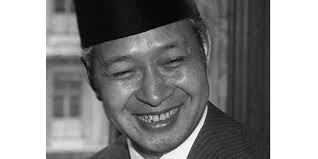
Debate Over Soeharto’s National Hero Title Grows Stronger: Analyst Urges Historical Maturity

Jakarta — The public debate over granting the title of National Hero to Indonesia’s second president, H.M. Soeharto, has resurfaced, sparking divided opinions. Some see Soeharto as the leader who laid the foundations of Indonesia’s modern economy, while others continue to recall the political rigidity of the New Order era.
Researcher and Director of Communications and Network at the Institute for National Security Studies (INSS), Afri Darmawan, said the discussion is important but must be approached through a comprehensive historical perspective.
“We often want history to be black and white. But a figure as significant as Soeharto cannot be read in such simplistic terms. He emerged at a time when the nation was on the brink of collapse, and the decisions he made cannot be separated from the context of that era,” Afri said on Saturday (Nov 8).
Afri emphasized that the foundations of Indonesia’s modern development are inseparable from Soeharto’s era. He cited several concrete achievements: the Five-Year Development Plan (Repelita) as a long-term framework for national development, the Inpres Primary School program that expanded education access to rural areas, irrigation and infrastructure networks, and the 1984 rice self-sufficiency milestone recognized by the FAO. Between 1976 and 1996, Indonesia’s poverty rate dropped by around 31.7 million people—the fastest reduction in the nation’s history.
“These are undeniable facts. We continue to benefit from them today—from local health clinics to village roads. Ignoring these contributions simply because of the New Order’s darker sides would be deeply unfair,” Afri noted.
However, he acknowledged that political restrictions during that period must also be viewed critically.
“Criticism of the New Order is legitimate. But dismissing its developmental legacy solely because of political shortcomings reflects our immaturity in reading history,” he added.
Afri argued that the debate over Soeharto’s potential national hero status is, in essence, a test of Indonesia’s democratic maturity. He believes Indonesians must recognize that history always carries two sides: achievements and flaws.
In conclusion, Afri urged that the discussion should not devolve into emotional polarization but rather promote balanced and evidence-based understanding.
“What truly matters is how we draw lessons from history and use them as a foundation for the future. That is what defines the maturity of a nation,” he said.
