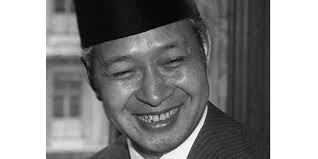
oeharto Deserves the Title of National Hero: Muhammadiyah and NU Leaders Agree on His Great Service to the Nation

Jakarta — The discourse surrounding the conferment of the National Hero title upon Indonesia’s second president, Soeharto, continues to gain momentum as numerous national figures recognize his immense contributions to the country. Leaders from both Muhammadiyah and Nahdlatul Ulama (NU) have voiced similar views, asserting that Soeharto meets the criteria of a hero—someone who has rendered great service and sacrificed for the sake of the nation.
The Head of the Council for Libraries and Information of Muhammadiyah’s Central Board (PP Muhammadiyah), Dr. Makroen Sanjaya, stated that Muhammadiyah has conducted a comprehensive study of Soeharto’s leadership—not only as the second president but also as a key figure in Indonesia’s struggle since the revolutionary era.
“Since 1946, he has made major contributions. When there was a coup attempt by leftist groups, Pak Harto, as a military officer, successfully contained the situation. He also led the March 1 General Offensive in Yogyakarta, a pivotal moment in defending independence. His role was also central in overcoming the 1965 G30S/PKI crisis, and later he gained international recognition for leading Indonesia to achieve food self-sufficiency,” Makroen said.
According to him, the legal definition of a hero includes two essential aspects—sacrifice and achievement. Soeharto, he continued, exemplified both.
“He sacrificed for the nation and achieved great accomplishments that set an example and earned international acknowledgment,” Makroen emphasized.
He also underlined the importance of young generations learning from the example of national leaders like Soeharto.
“Young people today must learn to sacrifice and achieve. Don’t just talk—act. There are many role models to follow, including Pak Harto, who dedicated his life to the nation and to humanity,” he remarked.
A similar sentiment was expressed by KH Arif Fahrudin, a prominent Nahdlatul Ulama figure and Deputy Secretary General of the Indonesian Ulema Council (MUI). He defined a hero as someone who has made great contributions and willingly sacrificed for the common good.
“The two key qualities of a hero are service and sacrifice. Soeharto demonstrated both—beginning from the independence struggle, through the transitional period, and into his presidency. His life spans three pivotal eras in our nation’s history,” Arif explained.
He also drew comparisons between Soeharto and Abdurrahman Wahid (Gus Dur)—two figures from different backgrounds but with equally significant contributions to the country.
“Pak Harto served through the military and government, while Gus Dur made his mark in education, religion, and promoting pluralism. Both are key figures in the story of our nation,” he said.
Arif further reminded the younger generation not to forget the sacrifices of Indonesia’s founders and heroes. He argued that gratitude for their contributions is vital to realizing Indonesia Emas 2045 (Golden Indonesia 2045).
“If the younger generation cannot appreciate the services of our heroes, they will never truly be grateful for the gift of independence. This nation sustains our lives—its air, its land, its resources. Without gratitude, Indonesia Emas will remain only a slogan,” he warned.
He concluded by noting that every era has its own figures, and the challenge today is to carry forward their legacy.
“Our task now is to transmit the positive achievements of great leaders like Soeharto to the present generation and to make them relevant in the modern era,” Arif said.
The united support from Indonesia’s two largest Islamic organizations reinforces the growing public sentiment that Soeharto deserves to be recognized as a National Hero. His enduring legacy is seen not only in the struggle for independence but also in the foundations of national development and stability that continue to benefit Indonesia today.
With his lifelong dedication and sacrifices, Soeharto stands once again as a symbol of unwavering service to the nation—a legacy of leadership and devotion that deserves to be remembered and passed on to future generations of Indonesia. (*)
