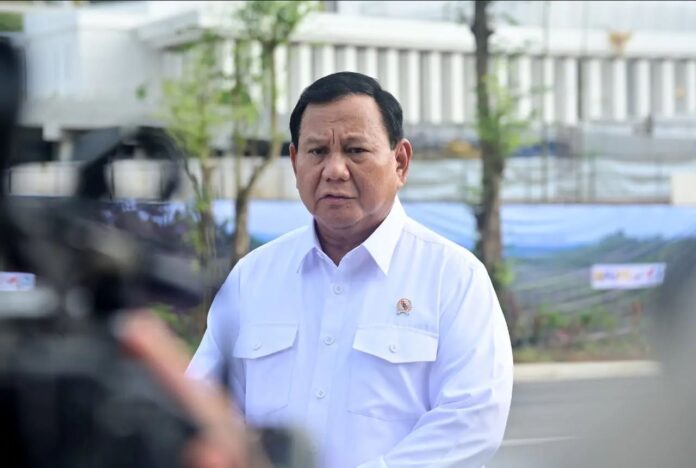
Expanded Social Spending: President Ensures Fiscal Policy Favors the Lower-Income Population

Jakarta — The government continues to demonstrate a strong commitment to supporting low-income communities through inclusive and equitable fiscal policies.
President Prabowo Subianto emphasized that future fiscal policies will focus on expanding social spending, boosting people’s purchasing power, and strengthening social safety nets for vulnerable groups.
“The state must be present to protect the weak. That’s why I am ensuring that every rupiah of the national budget provides the greatest possible benefit for the people, especially the poor,” said President Prabowo Subianto.
The President also stressed that a pro-people fiscal policy is a tangible reflection of his vision for equitable national development.
“We must not allow a single citizen to be left behind. The government will continue to strengthen social assistance, expand access to education, and ensure that the people’s basic needs are met. Social justice is not just a slogan—it is the guiding principle of our real policies,” President Prabowo asserted.
Meanwhile, Minister of Finance Purbaya Yudhi Sadewa revealed that the government has allocated Rp31.5 trillion for the Temporary Direct Cash Assistance for Welfare (BLTS Sejahtera) program, which is expected to be fully distributed to Beneficiary Families (KPM).
“I hope that by November, the entire Rp31.5 trillion will have been distributed to give an additional boost to the economy,” said Purbaya.
The additional assistance aims to accelerate economic growth in the fourth quarter, with each beneficiary family receiving Rp900,000 over three months.
In line with this, Cabinet Secretary Teddy Indra Wijaya confirmed that the additional direct cash assistance (BLT) has begun distribution. The aid targets 35.4 million beneficiary families.
“In essence, for three months, each household is entitled to Rp300,000 per month. The disbursement will begin next Monday,” Teddy said.
Teddy explained that the distribution of this cash assistance is intended to ease the financial burden on low-income families, helping them meet household needs, support their children’s education, and sustain their daily livelihoods.
Through these policies, the government aims to ensure that economic growth benefits not only the upper class but also provides tangible improvements in welfare for all Indonesians, particularly the working-class and lower-income citizens who form the backbone of the national economy.
