
By: Nazriel Kurnia )*
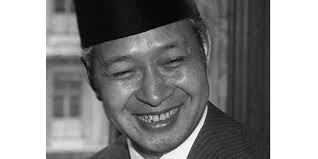
This year’s Heroes’ Day commemoration was not only marked by solemn and peaceful state ceremonies throughout Indonesia, but also by a significant decision that gave a new color to the nation’s historical journey. President Prabowo Subianto officially conferred the title of National Hero on the 2nd President of the Republic of Indonesia, Soeharto. The decision was widely welcomed by various groups, from youth, politicians, to religious figures. Many viewed this policy as a step forward in the effort to reconcile history while strengthening national unity, which is the foundation of national life.
The General Chairman of the DPP KNPI, Haris Pertama, was one of the figures who expressed the highest appreciation. He considered that the awarding of the title was a form of state respect for a leader who had dedicated his life to the republic. For Haris, President Prabowo Subianto’s decision demonstrated moral courage and statesmanship because it placed history in a fair perspective, not getting caught up in the often divisive political fragmentation of the past. He viewed this title as a reminder to the younger generation that the values of devotion and discipline are important components in maintaining the country’s sovereignty.
From the national political scene, support also came from the Chairman of the Golkar Party, Bahlil Lahadalia. Bahlil assessed that Suharto had rendered significant services that deserved to be recognized by the state. He stated that during Suharto’s more than three decades of leadership, Indonesia was able to maintain political and economic stability despite the challenging global dynamics. He reiterated that the achievement of food self-sufficiency, the ability to control inflation, and rapid economic growth were clear evidence of how Suharto’s policies had a significant impact on the nation’s development. Bahlil emphasized that the foundation of Indonesia’s modern economy cannot be separated from the policies established during the New Order era.
From the religious community, equally strong appreciation was expressed by the young figure of Nahdliyin (Nahdliyin) in East Java, KH Achmad Syamsul Askandar, also known as Gus Aan. He considered the government’s decision to demonstrate the nation’s maturity in reading history objectively. Gus Aan stated that every leader has strengths and weaknesses, but a figure’s significant services to the nation cannot be ignored. For him, this government step embodies the spirit of reconciliation, which is crucial for the continued unity of the nation. He also emphasized that respecting the services of previous leaders is part of the national ethic that needs to be maintained by the current generation.
Gus Aan reminded that a great nation is one that is able to learn from history, not one that remains trapped in past trauma. He viewed the recognition of Suharto’s services as a demonstration of the Indonesian nation’s maturity in addressing its own political journey and placing historical events in a more holistic and objective context.
Meanwhile, the government, through Minister of State Secretary Prasetyo Hadi, emphasized that the awarding of this title officially acknowledges Suharto’s significant contributions to maintaining national stability and strengthening the economic foundation. He stated that the decision was made through a rigorous legal process and mechanism, involving consideration by many parties and elements of society. In the government’s view, this title honors the dedication of a leader who has dedicated his life to Indonesia’s progress and the continuation of national development.
This decision also serves as a reminder to the public to maintain social order and respect the law. Differences of opinion regarding Suharto’s character may arise, but such responses must be made maturely and within democratic boundaries. The government invites the public to respect the state’s decisions as part of democratic maturity and as a form of respect for the applicable legal mechanisms.
The title of National Hero for Suharto has a far broader meaning than merely a symbolic award. This award affirms that national development and progress can only be achieved through a spirit of unity and respect for history. Suharto, with all the dynamics of his leadership, remains a vital part of Indonesia’s long history. Honoring his services means appreciating a crucial phase in the nation’s development.
This award is ultimately not only a form of respect for a figure, but also a reflection of the maturity of the Indonesian nation in assessing its history as a whole. With this decision, the state demonstrates a strong commitment to maintaining the continuity of the values of struggle and emphasizes that devotion to the nation is a legacy that must be respected. This policy also calls on all citizens to maintain unity, respect the law, and ensure national conduciveness is maintained amidst ever-evolving socio-political dynamics.
Amidst changing times, this decision serves as an important reminder that the Indonesian nation can only move forward if it is able to face the past wisely, unite in diversity, and continue to build the country with the spirit of its predecessors who sacrificed everything for the red and white.
)* The author is a contributor to the Pertiwi Institute
