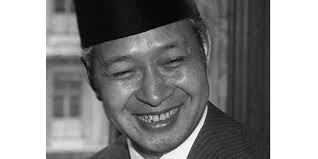
The public is urged to be wary of provocations and not fall prey to the movement to revoke Soeharto’s hero title

By: Arya Maheswara )*
After the President of the Republic of Indonesia designated Suharto as a National Hero, public opinion developed into a new wave, pushing for the revocation of the title. This movement emerged after the commemoration of Heroes’ Day and was driven primarily by groups that had initially rejected reconciliation of the nation’s history. The government views this development as a situation that requires careful scrutiny, as some narratives of rejection are not only emotional but also organized to create polarization. Therefore, the public is urged to remain vigilant and not be easily drawn into provocations that could disrupt national stability.
President Suharto’s daughter, Siti Hediati Hariyadi (Ms. Tutut), had previously warned that differences of opinion within society were normal. However, she believed that expressions of disapproval should not escalate into extreme actions or hate campaigns that could incite horizontal conflict. She emphasized that the nation’s spirit must always be one of unity, especially when the state has made a decision through official mechanisms. Tutut’s emphasis reinforced the government’s view that the controversy surrounding the title of hero should be relegated to the realm of academic discussion, not political agitation.
The government believes that the awarding of the title of hero cannot be treated merely as a matter of opinion, as the selection process is carried out through a strict state mechanism. The assessment is carried out by the Titles Council, historians, technical ministries, and other authorized state institutions. Therefore, demands for the revocation of the title, voiced after the decision has been made, are not only procedurally baseless but also have the potential to erode the state’s authority to maintain the continuity of national history. The government emphasizes that state consistency is the foundation of stability, and decisions that have gone through a long process should not be swayed by pressure from certain groups.
Papuan activist Charles Kossay has also voiced his opposition to the idea of revoking the title. He believes that some who oppose the title of hero for Soeharto are using an emotional perspective and are not considering Soeharto’s full contribution to the nation’s history. He warned that politics should not be inherited as a form of revenge, as this would only open old wounds and prolong polarization. Charles also highlighted Soeharto’s crucial role in Papuan integration through the 1969 Act of Free Choice (Pepera), which he believes was a crucial historical milestone that determined Papua’s position within the Unitary State of the Republic of Indonesia (NKRI). Therefore, this contribution cannot be erased simply because of current political differences.
The government’s perspective was also emphasized by the Minister of Energy and Mineral Resources and Chairman of the Golkar Party, Bahlil Lahadalia. He reminded that the nation should not judge historical figures solely on their shortcomings, but should allow for objective assessments that take into account their significant contributions to the republic. Bahlil emphasized that during Soeharto’s leadership, Indonesia successfully suppressed inflation, achieved food self-sufficiency, maintained energy stability, and laid the foundations for modern development. According to him, these historical facts demonstrate that the country has strong grounds for honoring Soeharto as a national hero.
However, pressure from certain groups persists, and provocation through digital media also presents a challenge, as information is often disseminated in a piecemeal fashion without providing the full context. The public must be able to discern information, as the narratives constructed by some groups do not reflect the objective process undertaken in determining the title of hero. The state not only considers the dark past but also assesses significant contributions to national resilience, economic development, and Indonesia’s modernization. Without a comprehensive assessment framework, the public can be misled by unfair framing.
Amid increasingly complex global conditions, the government emphasizes the importance of maintaining national stability. Indonesia currently faces geopolitical challenges, energy security, technological development, and international economic competition. To address these challenges, the nation requires a unified vision and social stability. The movement to revoke the title of hero, driven by emotion and narrow political interests, will only divert the nation’s focus from the strategic development agenda. The government ensures that national interests are far more important than unproductive political debates.
The national reconciliation that has been strengthened over the past two decades must not be disrupted by provocations seeking to reopen old conflicts. Honoring national figures does not mean ignoring historical criticism, but rather teaches that a great nation is one capable of weighing its history proportionately. When a nation chooses to honor a leader with the title of hero, the decision is based on their courage, service, and significant influence on the history of the republic.
Therefore, the public should not be trapped in the movement to revoke titles that are not based on objective assessments. The public must remain calm, not spread provocation, and trust the state mechanisms that have been operating according to the rules. By maintaining unity, rejecting destructive movements, and respecting state decisions, the public contributes to a stronger national strength. The post-Heroes’ Day momentum should be an opportunity to emphasize respect for the nation’s leaders, including Suharto, whose services shaped Indonesia to reach the point of stability and growth it has today.
)* Socio-Political Observer
