
Avoid Incitement to Demonstrate: Public Urged to Remain Calm Following Soeharto’s Award of Hero Title

By: Sandralina Magenta)*
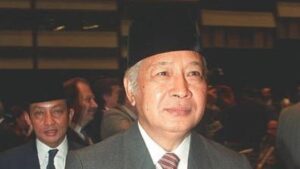
The government officially conferred the title of National Hero on the second President of the Republic of Indonesia, General H.M. Soeharto, during a state ceremony commemorating Heroes’ Day on November 10, 2025, at the State Palace. This award represents a significant decision, demonstrating the state’s respect for the significant contributions of a figure considered to have played a role in maintaining national unity and building the foundation of the Indonesian economy since the early days of national development.
Amidst the warm public appreciation, provocative calls for demonstrations against the decision have also emerged. This situation demands public maturity to resist being easily swayed by provocations that could potentially disrupt national stability. The government emphasized that the awarding of the title was based purely on an objective assessment of Suharto’s services, not a glorification of the entire dynamics of his past administration.
Suharto was designated as one of ten figures to receive the title of National Hero in 2025 through Presidential Decree No. 116/TK/2025. The selection process was conducted through a lengthy selection process by an independent team that assessed the figures’ contributions to the nation’s struggle and development. This designation also demonstrates the state’s commitment to placing history in a respectful light, recognizing individual contributions without eliminating the opportunity for critical evaluation.
State Secretary Prasetyo Hadi’s statement on the spirit of heroism was conveyed as a message that today’s generation faces a different challenge: not physical warfare, but maintaining unity amidst the rapid digital flow and differing opinions. The message was further emphasized, urging the public to demonstrate maturity by refraining from provocation and expressing opinions in constructive ways. In this context, the public needs to understand that today’s heroes are those who maintain social peace and strengthen solidarity.
From a security perspective, National Police Chief General Listyo Sigit Prabowo’s perspective on the police’s preparedness has been conveyed, stating that anticipatory measures have been prepared to ensure the national situation remains conducive. He also emphasized the security forces’ commitment to protecting the public and guaranteeing freedom of expression within the law. The public’s role is a key factor in preventing provocation, as national stability can only be maintained if the public does not respond to potentially divisive calls.
The government encourages the public to appreciate the occasion of the awarding of the title of hero as a space for reflection on the sacrifices of the nation’s founders. Positive activities such as community service, social activities, and participation in regional development continue to be encouraged as a tangible form of respect for heroic values. Maintaining public order is a manifestation of the values of unity inherited from the heroes.
Historically, Suharto’s designation as a National Hero also reflects the maturity of Indonesian democracy. Differences of opinion are considered normal in a democratic society, but a nation’s maturity is reflected in its ability to manage differences peacefully. Democracy is not measured by the intensity of street protests, but by the public’s ability to respond rationally, orderly, and proportionally to state decisions.
Proposals to award Soeharto the title came from various parties, including local governments, community organizations, political parties, and religious figures. The two largest Islamic organizations, Muhammadiyah and Nahdlatul Ulama, also expressed support, believing Soeharto had made significant contributions to national development and maintaining national stability.
Dr. Makroen Sanjaya of Muhammadiyah Central Executive Board (PP Muhammadiyah) stated that Soeharto’s position as a historical figure in the nation was conveyed, stating that his contribution to the struggle for independence, particularly during the General Offensive of March 1, 1949, was an important part of Indonesian history. He also emphasized the fact that Soeharto left a significant legacy of social and economic development through the Repelita program, rice self-sufficiency, and equitable development. Furthermore, he emphasized the objective view that places appreciation on merit without necessarily closing off space for criticism of the past, which is also an important principle in reading the nation’s history in a healthy manner.
Over time, political support for this award emerged from various parties in parliament. Singgih Januratmoko, Deputy Chairman of Commission VIII of the Indonesian House of Representatives (DPR RI), expressed his appreciation for Suharto’s success in restoring national stability and building an economic foundation during the early days of the New Order, which he interpreted as a significant milestone in structured development. Statements regarding the achievement of rice self-sufficiency in 1984 and the FAO’s recognition of Indonesia’s success were presented as historical facts that reinforced this assessment. Similarly, his view that New Order policies contributed to a harmonious religious life was conveyed in the passive voice as requested.
From within another political party, NasDem Party Deputy Chairman Saan Mustopa affirmed the need for public acceptance, which has also been translated into an affirmation that the government’s decision must be accepted as a state decree. His view that this award represents state recognition of the services of national figures, including Soeharto, Gus Dur, and Marsinah, has been conveyed as part of a national message regarding the importance of collectively respecting state decisions.
Ultimately, provocative calls for demonstrations should not be met with an emotional response from the public. Differences in opinion are no excuse for actions that could disrupt public order. Rejecting provocation is part of our moral responsibility to maintain unity. In the context of increasingly complex global conditions, the Indonesian nation needs political and social stability to continue moving toward a more solid future.
)* History Observer
