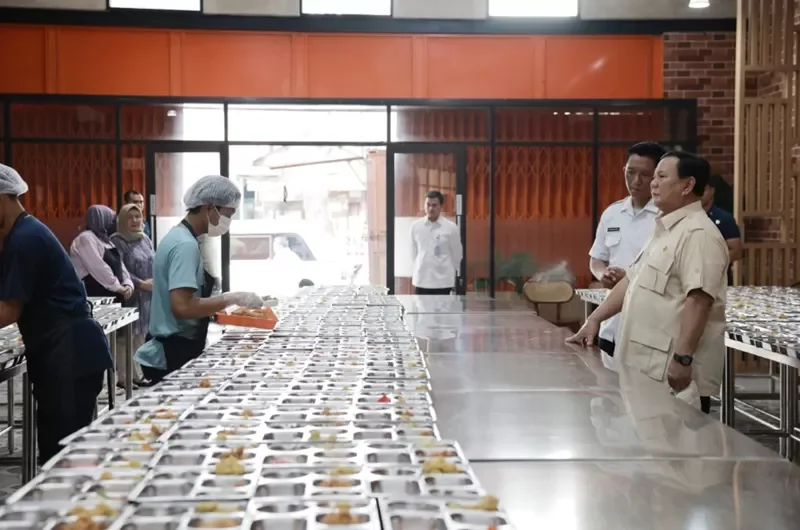

The Free Nutritious Meal Program (MBG) has once again affirmed its role as one of the national strategic policies delivering tangible impacts on public health, particularly for children and vulnerable groups. At the 2025 Annual Meeting of Bank Indonesia (BI) in Jakarta, Friday (28/11/2025), President Prabowo Subianto highlighted the program’s significant achievements, which he said have brought major progress in improving national nutritional quality.
“My fellow citizens, I would like to thank the Head of the National Nutrition Agency. As of today, we have reached more than 44 million beneficiaries receiving Free Nutritious Meals,” said President Prabowo Subianto.
The President added that by the end of November, the government had produced and distributed more than two billion portions of meals to beneficiaries across Indonesia. He considered this achievement one of the most progressive policies in improving national nutrition quality.
The MBG program, which began on January 6, 2025, has also received strong support from the academic community. Professor of the Department of Nutrition at the Faculty of Public Health, University of Indonesia (FKM UI), Prof. Sandra Fikawati, stated that MBG has significant momentum to close nutritional gaps while strengthening the foundation of Indonesia’s human resources.
“In the past, children’s growth was not considered, which made our human resources less competitive. MBG offers a tremendous opportunity because children are nurtured with good nutrition from an early age,” explained Prof. Sandra Fikawati.
She further noted that improvements in nutrition not only affect health but also influence learning ability, brain development, and children’s discipline in participating in educational activities, especially in frontier, outermost, and disadvantaged regions.
Research conducted by the Center for Nutrition and Health Studies (PKGK) of FKM UI has also produced findings that reinforce the urgency of the program. Intervention simulations carried out in 15 schools—from kindergarten to junior high school—and one posyandu in six regions revealed a decrease in severe malnutrition cases from 2 percent to 0.5 percent and undernutrition from 7.7 percent to 6.4 percent. Over 15 weeks, children’s average body weight increased by two kilograms and their height grew by 2.9 centimeters.
These findings further strengthen the belief that routine provision of nutritious meals is a strategic step in reducing nutritional deficiencies. Moreover, students’ understanding of balanced nutrition improved after receiving nutrition education alongside the meals.
Prof. Sandra Fikawati mentioned that the National Nutrition Agency (BGN), in cooperation with five universities including UI, is currently developing educational modules to enhance nutrition literacy among students and parents.
“Educational modules to support the MBG program are being prepared by BGN because children need to understand the benefits of the meals provided,” said Prof. Sandra Fikawati.
She added that BGN and academics are also preparing to launch nutritionist certification.
“We are currently preparing to open nutritionist certification so that in the future, nutrition personnel can ensure food safety while also providing public education,” she concluded.
With continuously improving achievements and growing academic support, the MBG Program demonstrates that strengthening nutrition from an early age is a strategic investment to ensure Indonesia nurtures a healthy, intelligent, and competitive generation.
