
By: Yuni Amanda )**
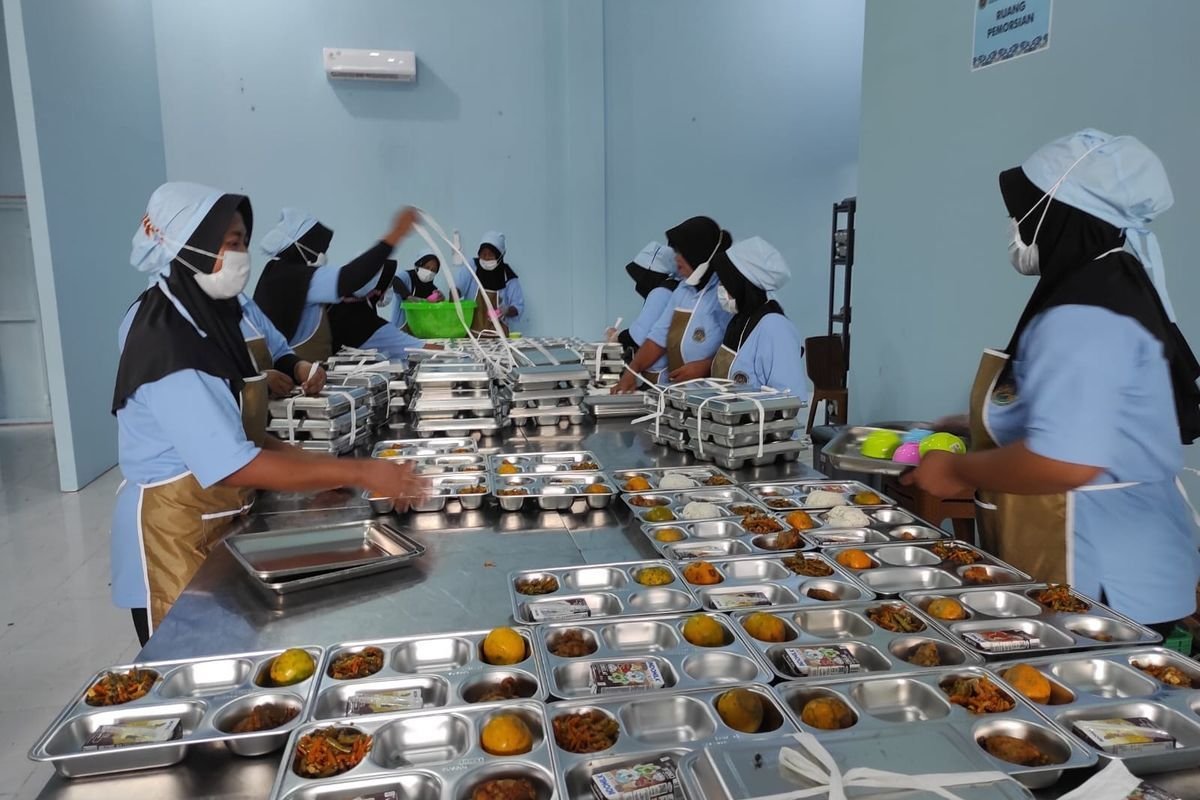
The Free Nutritious Meal Program (MBG), one of the top priorities of President Prabowo Subianto’s administration, continues to demonstrate concrete results that strengthen public optimism toward the nation’s broader human capital development agenda. During the 2025 Annual Meeting of Bank Indonesia, President Prabowo reiterated that the MBG program has achieved monumental milestones that reflect not only technical success but also the government’s strong commitment to ensuring every Indonesian child grows healthy, intelligent, and competitive.
The President explained that the program currently reaches more than 44 million beneficiaries, consisting of school children, early-age groups, and pregnant women who require daily nutritional support. President Prabowo emphasized that this achievement is not merely a matter of distribution numbers, but a clear representation of national policy direction that places nutritional resilience as a strategic foundation for realizing Golden Indonesia 2045. He further stated that more than 2 billion portions have been produced and directly delivered to the public—an achievement he described as an important milestone in the nation’s nutritional development history.
This policy direction has grown even stronger with full support from academics. Professor Sandra Fikawati of the Faculty of Public Health, University of Indonesia (FKM UI), highlighted that a nation’s competitiveness is heavily influenced by a child’s nutritional quality during the growth period—an issue that has long received insufficient attention. In her view, the MBG program presents a major opportunity to elevate Indonesia’s human capital to a more advanced level, as younger generations now receive consistent nutritional intake from an early age. She emphasized that the program has the potential to reduce health disparities across regions while strengthening the readiness of young Indonesians to face global challenges.
Academic evaluations highlight an important point: the benefits of MBG are especially significant in 3T areas (frontier, outermost, and underdeveloped regions), which have historically lacked access to nutritious food. The program is considered effective in narrowing the nutritional inequality gap that has persisted for years. Prof. Fikawati stressed that program sustainability is crucial to ensure the foundation of human capital development remains intact. She urged all elements of the nation to maintain MBG’s continuity as a long-term investment in building an excellent generation.
Preliminary research conducted by the Center for Nutrition and Health Studies (PKGK) of FKM UI provides concrete evidence of the positive impact of nutritious meal provision prior to MBG’s nationwide implementation. In a simulated intervention carried out in 15 schools and one community health post (posyandu) across several regions, there was a significant decrease in cases of malnutrition and undernutrition. After 15 weeks of intervention, children showed improvements in body weight and height, demonstrating the effectiveness of nutrition-based interventions. These findings show that programs like MBG not only provide temporary benefits but also help improve overall nutritional status.
Beyond physical improvements, one of the most notable impacts is the increased nutritional knowledge among elementary school students. Knowledge, attitudes, and practices concerning balanced nutrition improved significantly, indicating that the program has successfully built early awareness of the importance of nutritious food. These findings further reinforce MBG’s role as not just a food distribution program but a planned and comprehensive nutrition education strategy.
Looking ahead, the government has prepared further strengthening in the area of nutrition education to enhance the program’s effectiveness. Prof. Sandra Fikawati explained that the National Nutrition Agency (BGN) is developing nutrition education modules in collaboration with universities to ensure beneficiaries understand the function of each type of food they consume. These educational efforts are aimed not only at students, but also at parents, who play a vital role in implementing healthy eating practices at home.
In addition to educational modules, the government through BGN is also preparing to enhance the capacity of nutrition professionals in Indonesia. Prof. Fikawati noted that nutritionist certification will be strengthened to ensure every region has qualified experts capable of supporting MBG implementation more professionally. These nutritionists will play an essential role in ensuring food safety, nutrient fulfillment, and continuous public education.
The government’s seriousness in strengthening the nation’s nutritional foundation through MBG demonstrates that this program is not designed as a short-term populist policy, but as a strategic initiative with long-term structural impact for future generations. If sustainability and cross-sector collaboration are maintained, Indonesia has a great opportunity to produce a healthy, intelligent, and globally competitive generation.
In the broader context of human capital development—crucial to maximizing the demographic bonus—MBG serves as a social transformation instrument that enhances equal opportunities for all Indonesian children. MBG is not only about food; it is about building a future that is more prepared, stronger, and fairer for all citizens. This program deserves full support from all elements of society to ensure the nation’s aspiration of achieving Golden Indonesia can be realized through high-quality human resources.
*) The writer is a Young Journalist Activist of Batavia.
