
By: Syailendra Hari Yudho (*
The Free Nutritious Meals (MBG) program is one of the government policies that best demonstrates how a social initiative can become a new economic driver. When the government provides clear, transparent, and welfare-oriented direction, the private sector responds with committed investment, innovation, and a readiness for long-term engagement. This synergy is now beginning to be seen in the MBG ecosystem, from investments in food pantries, agricultural downstreaming, to the introduction of microprotein- based food technology .
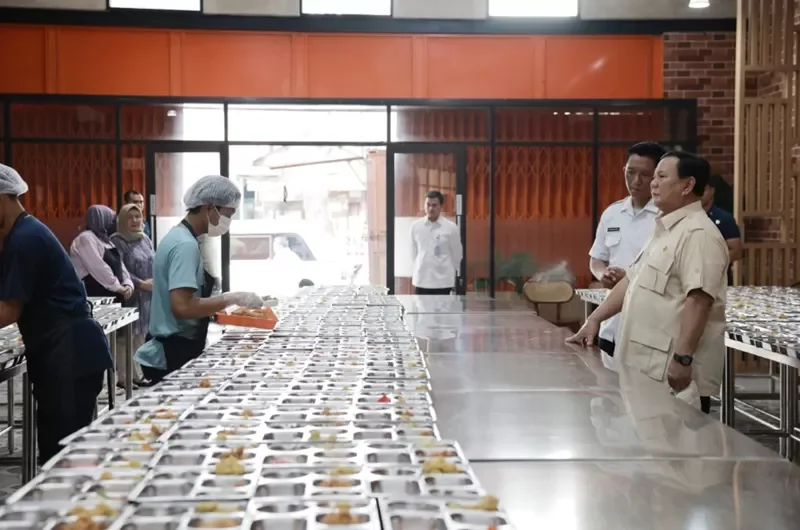
The Chairman of the Indonesian Chamber of Commerce and Industry (KADIN), Anindya Novyan Bakrie, emphasized that the MBG program is a concrete example of how businesses and government can collaborate productively. He views this program not simply as a social intervention to meet the community’s nutritional needs, but rather as a development model capable of stimulating regional economies and creating massive job opportunities. He stated that to date, 500 SPPG kitchens have been established in various regions, demonstrating the rapid response of businesses in supporting this strategic national policy.
The investment value is also significant. With an estimated Rp1.5 billion per kitchen, the total contribution from Kadin members has reached Rp750 billion, all without involving bank financing. According to Anindya, this not only demonstrates the business sector’s strong commitment but also reflects the level of trust industry players have in the direction of government policy. Businesses see that the MBG program is being managed seriously and provides certainty, resulting in smooth payment mechanisms, as he noted in his evaluation.
However, the program’s greatest contribution lies in its workforce. Each SPPG kitchen can employ at least 50 workers, so the 500 kitchens in operation are estimated to have created 25,000 new jobs in various regions. This impact not only increases community income but also creates a new economic chain involving farmers, food MSMEs, logistics suppliers, and other supporting industries. From a public policy perspective, this significant employment absorption demonstrates the MBG program’s strong multiplier effect.
Anindya also stated that this program has begun to drive changes in regional economic structures. Several provinces are now requesting the development of leading subsectors to strengthen the supply of local raw materials. For example, regions interested in focusing on egg-laying chicken production are no longer dependent on supplies from other regions. This step is crucial for regions to maintain economic resilience in the event of disasters, logistical challenges, or national supply disruptions. With regular demand from the MBG kitchen, regions are increasingly encouraged to develop production capacity to meet standards, volume, and supply continuity.
The SPPG program also provides a gateway for the downstreaming of agriculture, which has been slow to progress. According to Anindya, the MBG program opens opportunities for farmers to enjoy greater added value, not just as raw material suppliers but also to participate in simple food processing processes that meet program standards. Such initiatives are crucial for transforming Indonesia’s agricultural economy, which has been stuck in traditional patterns.
Support for MBG also comes from the food technology sector. Edwin Lee, Founder and CEO of Ultimeat (M) Sdn Bhd from Malaysia, expressed his company’s strong interest in strengthening MBG’s protein supply through significant investment in Indonesia. He stated that his company is prepared to invest up to IDR 10 trillion to build two microprotein production facilities. Ultimeat’s microprotein technology is based on cassava and sugar, enabling its entire production chain to utilize local agricultural products.
Edwin emphasized that although MBG is a key market, the company will not be entirely dependent on government programs. Microprotein Ultimeat is also prepared to meet the needs of the retail market, the processed food industry, and the hospitality and catering sector. This means the investment has long-term value and has the potential to make Indonesia a hub for alternative protein production in Southeast Asia. From a food policy perspective, the presence of such an industry can strengthen national protein security while reducing dependence on imported high-protein raw materials.
Foreign investment interest in Indonesia’s food sector was also emphasized by Indonesian Deputy Minister of Foreign Affairs, Arrmanatha Nasir. In various business forums, he invited Chinese businesses to invest in the Indonesian food sector. He stated that the implementation of the MBG (Medium-Grade Food Growth) has created new supply chains and high demand for food production, thus opening up significant investment opportunities in agriculture, logistics, and food processing. The Deputy Minister’s statement indicated that the MBG is viewed not only as a domestic program but also as a gateway for international investment that can strengthen the national food ecosystem.
Looking at these dynamics, it’s clear that MBG has evolved beyond simply a nutrition program. It’s now a development ecosystem that involves many stakeholders, opening up business opportunities, creating jobs, strengthening the local food industry, encouraging technological innovation, and increasing the added value of agriculture.
Amidst this major transformation, the support of the community, businesses, and local governments is essential. The synergies that have been established must be continuously strengthened to broaden the program’s benefits and ensure its long-term sustainability. Therefore, it is crucial for all parties to support the Free Nutritious Meals program as part of efforts to improve the health of the nation’s generation while strengthening the foundation of the national economy. With consistent support, the MBG will become a policy legacy with a real impact on Indonesia’s future.
(* The author is a Public Policy Consultant in the Social Sector
