
By: Yandi Arya Adinegara )*
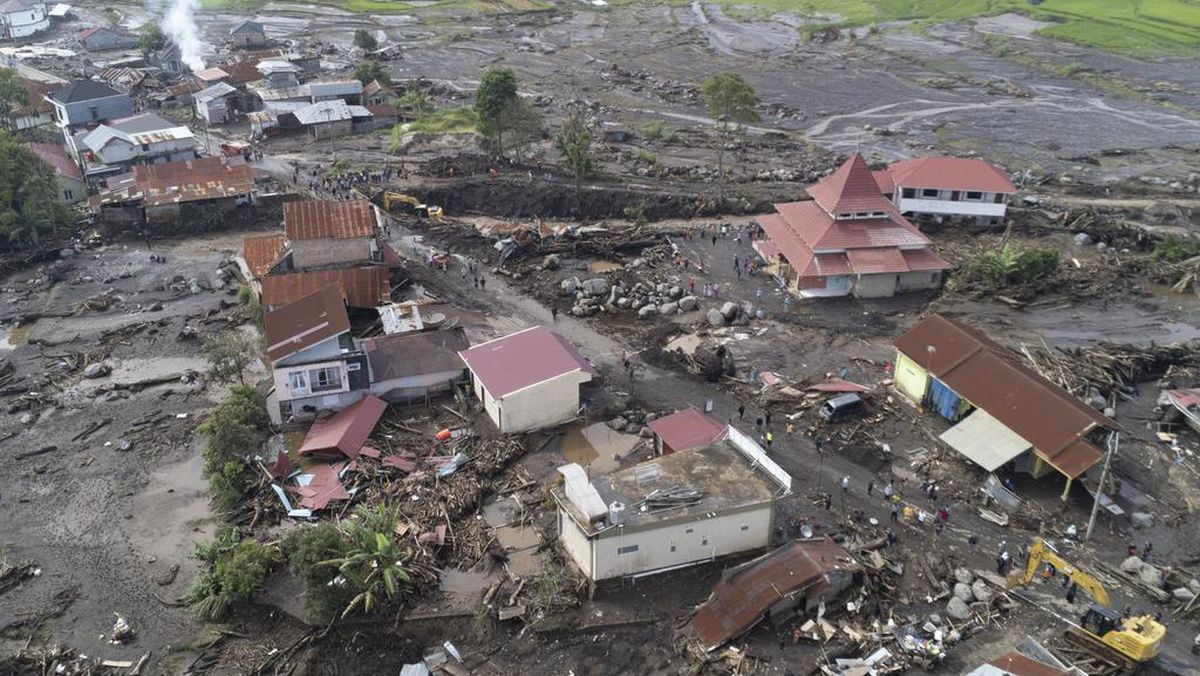
The natural disasters that have struck several regions in Sumatra—particularly Aceh, North Sumatra, and West Sumatra—since the end of last year have had a tremendous impact on the lives of local communities. Flash floods and landslides occurring almost simultaneously have damaged thousands of homes, displaced tens of thousands of residents, and claimed lives. Data from the National Disaster Management Agency (BNPB) show that as of early January 2026, as many as 1,178 people had fallen victim to these disasters. More than 170,000 houses suffered damage of varying severity, ranging from minor to severe.
In response to this major crisis, the Indonesian government, through the Sumatra Post-Disaster Rehabilitation and Reconstruction Task Force, has promptly formulated a series of rapid recovery measures. One of the most important steps is the provision of housing compensation for disaster victims. Through this initiative, the government aims to ensure that affected residents can begin rebuilding their lives after losing their homes and sources of livelihood.
Minister of Home Affairs Tito Karnavian, who also serves as Head of the Disaster Recovery Task Force, emphasized that housing compensation is one of the key symbols of accelerated post-disaster recovery. According to him, reducing the number of evacuees still living in emergency tents is an important indicator that conditions are returning closer to normal. This step is crucial to enable disaster victims to reorganize their lives without being trapped in prolonged displacement, which is often vulnerable to social and health problems.
The government’s plan to provide housing compensation is highly relevant to BNPB data showing that 76,588 houses were lightly damaged, 45,106 moderately damaged, and 53,432 severely damaged. Accordingly, the compensation scheme prepared by the government targets all victims whose homes were damaged across the three provinces. The housing compensation categories are designed based on the level of damage: IDR 15 million for lightly damaged houses, IDR 30 million for moderately damaged houses, and IDR 60 million for severely damaged houses.
The disbursement process will be carried out after victim data are verified and validated by the respective local governments. This validation involves district administrations issuing official decrees (SK) signed by authorized officials such as the regent, the police chief, and the district prosecutor. Once validated, the financial assistance will be disbursed through BNPB. Funds amounting to IDR 15 million and IDR 30 million for lightly and moderately damaged houses will be transferred directly to the heads of beneficiary households, helping to ease their burden as they begin rebuilding their lives.
For severely damaged houses, the government has prepared two key options. First, it will provide temporary housing facilities (huntara) that residents can occupy while awaiting the construction of permanent homes. Second, for those who choose not to stay in temporary housing, the government will provide Temporary Housing Allowance (Dana Tunggu Hunian/DTH) to rent alternative accommodation. This scheme aims to rapidly reduce the number of evacuees living in emergency tents and offer residents more decent living options.
The urgent need to reduce the number of people living in emergency shelters cannot be overstated. Overcrowded evacuation conditions can give rise to various social and economic problems, including high living costs, increased vulnerability to disease outbreaks, and psychological distress among evacuees. These challenges underscore why the government must act swiftly in the recovery process.
In addition to housing compensation, the government has also prepared a range of social assistance measures to ease the burden on victims. A monthly food allowance of IDR 450,000 per person for three months will be provided to those still residing in temporary housing or rented accommodations. To support economic recovery, the government is also offering business capital assistance to victims who have lost their jobs or sources of income. The government recognizes that post-disaster recovery is not only about restoring physical homes, but also about ensuring that communities can return to work and meet their economic needs.
Deputy Speaker of the House of Representatives (DPR) Sufmi Dasco Achmad also conveyed the government’s ambitious target, together with the Post-Disaster Rehabilitation and Reconstruction Acceleration Task Force, to restore all disaster-affected areas before Ramadan 2026. The task force, led by Minister of Home Affairs Tito Karnavian, is committed to ensuring that all governmental functions in affected regions return to normal before the fasting month.
With a comprehensive assistance scheme and a well-prepared recovery plan, the government is determined to reduce the social and economic impacts caused by these disasters. The rehabilitation and reconstruction process will continue to be closely monitored to ensure it proceeds smoothly and on schedule.
The government’s move to prepare housing compensation for flood and landslide victims in Sumatra reflects a swift and compassionate response to the plight of its citizens. Through well-targeted assistance and a structured housing recovery scheme, it is hoped that affected communities can reorganize their lives and enter the recovery phase more quickly.
*) The author is a Social Observer
