
By: Rizky Adiwicaksono *)
The government’s efforts to create national jobs are increasingly consistent through strengthening industrial downstreaming, empowering MSMEs, and accelerating National Strategic Projects (PSN). These three agendas are not standalone but mutually supportive in shaping a more productive, competitive economic structure capable of sustainably absorbing labor. Amidst fluctuating global challenges, this strategy reflects the government’s boldness in shifting development orientation from mere growth to creating added value and real job opportunities for the community.
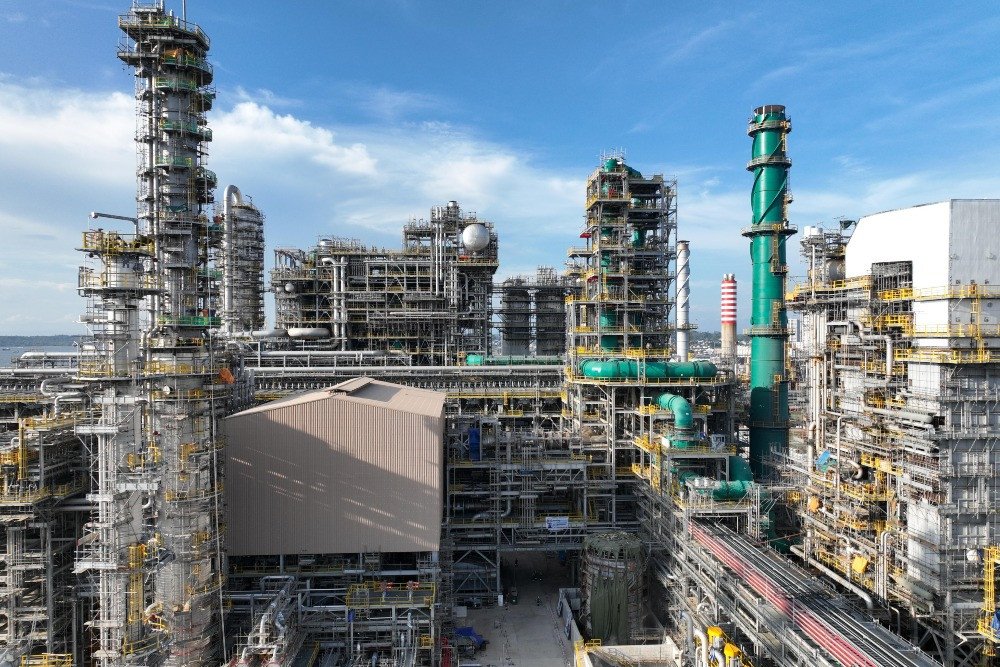
The inauguration of the Balikpapan Refinery Development Master Plan (RDMP) by President Prabowo Subianto provides a concrete illustration of how strategic industrial development is directly directed at strengthening the national workforce. The refinery modernization project, which has been underway since 2019 with an investment of approximately IDR 123 trillion, not only strengthens national energy security but also has a multiplier effect on employment, both during the construction and operational phases. On numerous occasions, President Prabowo has emphasized that strengthening the energy sector is the foundation of national independence and a crucial prerequisite for sustainable development and national economic stability.
The Balikpapan RDMP demonstrates that National Strategic Projects (PSN) are no longer solely measured by production capacity or investment size, but rather by their ability to stimulate the local economy and create vast employment opportunities. Tens of thousands of workers were involved during the construction phase, spanning sectors such as construction, engineering, logistics, and support services. As the refinery enters its operational phase, it will also require a sustainable skilled workforce, driving improvements in the quality of human resources in the region. Coordinating Minister for Economic Affairs Airlangga Hartarto’s assessment reinforces this view, stating that the operation of the Balikpapan RDMP is a significant milestone in energy independence and a broader economic impact, including job creation in the energy and related industries.
The downstreaming agenda, which forms the overall framework for national industrial development, further emphasizes the direction of value-added job creation. Data from the Ministry of Investment/BKPM shows that through 2025, realized downstream investment will reach IDR 584.1 trillion, or more than 30 percent of total national investment, with significant annual growth. This figure reflects growing investor confidence in government policies that consistently encourage domestic processing and demonstrates the significant potential for job creation in strategic sectors.
Minister of Investment/Head of the Investment Coordinating Board (BKPM) Rosan Roeslani emphasized that the mineral and coal sector remains the backbone of downstream investment, particularly in commodities such as nickel, copper, bauxite, and steel. However, the government’s policy direction extends beyond the extractive sector. Downstream processing in plantations, forestry, oil and gas, and even fisheries and maritime affairs continues to be strengthened, creating a broader and more inclusive spectrum of employment opportunities. This approach is crucial to ensuring that job creation is not concentrated in one sector but spreads across various regions and economic strata.
The national investment realization of Rp1,931.2 trillion throughout 2025, exceeding the target, is directly proportional to the increase in employment of more than 2.7 million people. This fact strengthens the argument that the downstreaming policy is not only an industrial strategy but also an effective instrument for maintaining the dynamics of the national labor market. The dominance of domestic investment in the investment structure also indicates the increasingly strong role of national businesses in supporting the job creation agenda.
On the other hand, the government recognizes that job creation depends not only on large-scale projects and industrial investments, but also on the sustainability of MSMEs, the largest workforce absorbers. The sustainability of the 2026 Economic Package demonstrates the government’s commitment to maintaining a balance between growth and worker protection. Coordinating Ministry for Economic Affairs Spokesperson Haryo Limanseto stated that various fiscal incentives and MSME strengthening programs are being continuously refined to ensure the resilience of the small business sector amidst economic dynamics.
The extension of the Final Income Tax incentive for MSMEs, the Government-borne Article 21 Income Tax for labor-intensive sectors, and the continuation of the National Internship Program demonstrate the government’s comprehensive approach to labor market management. These policies not only maintain existing jobs but also prepare new workers to be better prepared to enter the workforce. The National Internship Program’s success, exceeding its initial target, is a positive indicator that the government’s employment policies are beginning to address the readiness and quality of human resources.
Cash-for-labor programs and expanded social security coverage for informal workers complement the inclusive job creation strategy. By targeting vulnerable sectors, the government demonstrates that the job creation agenda is not exclusive but reaches diverse community groups. Going forward, the development of the urban economy and the digital-based gig economy in several cities will also open new opportunities for MSMEs and informal workers to adapt to changing economic structures.
Overall, the synergy between the National Strategic Projects (PSN), industrial downstreaming, and strengthening MSMEs underscores the government’s policy direction, which favors sustainable job creation. This approach not only addresses short-term needs but also builds the foundation of a more independent, inclusive, and competitive national economy. With consistent policies and strengthened implementation on the ground, the government’s agenda of expanding employment opportunities has a strong foundation to continue delivering tangible benefits to society and the national economy.
*) Strategic Economic and Industrial Analyst
