
By: Eza Bagaskara )*
The government continues to solidify the direction of national energy security policy by placing the optimization of local resources as its main strategy. This approach is considered crucial to strengthening energy sovereignty, reducing dependence on imports, and ensuring sustainable energy supplies amid increasingly dynamic global challenges.
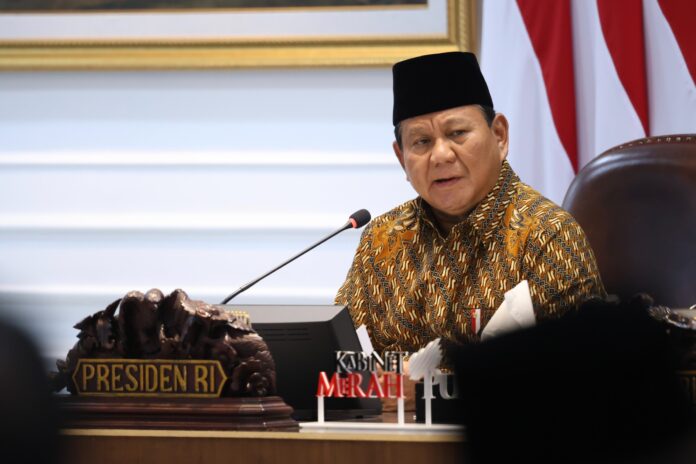
This commitment is reflected in the strengthened role of the National Energy Council (DEN) for the 2026–2030 period, inaugurated by President Prabowo Subianto. DEN is positioned as a strategic hub to synchronize cross-sectoral policies so that national energy management remains focused and aligned with national interests.
Minister of Agriculture Andi Amran Sulaiman, who serves as a member of DEN, emphasized that the agricultural sector holds a strategic position in supporting national energy security. The government sees significant potential in agricultural commodities as a foundation for green energy development while driving the transition toward renewable energy based on domestic resources.
As an agrarian country, Indonesia is viewed as having a comparative advantage in bioenergy development. Commodities such as palm oil, sugarcane, and cassava are expected to become the backbone of national renewable energy, while simultaneously strengthening energy independence and the people’s economy.
The government has long developed palm oil and sugarcane as the main sources of national biofuel. Going forward, cassava is projected to become a new alternative with substantial potential to expand the green energy base. Optimizing these commodities aligns with efforts to broaden the economic benefits of the agricultural sector.
Within the policy framework, the government has also strengthened the biodiesel mandate up to B50. This policy is projected to significantly reduce diesel imports and increase the absorption of domestically produced biofuels, while reinforcing national energy security.
Synergy between the agricultural and energy sectors continues to be strengthened through downstreaming programs and the expansion of biofuel crop cultivation. The government encourages integration from upstream to downstream so that added value can be directly enjoyed by farmers and domestic business actors.
Meanwhile, the Ministry of Energy and Mineral Resources continues to steer national energy policy toward four main objectives in line with President Prabowo Subianto’s directives. Minister of Energy and Mineral Resources Bahlil Lahadalia explained that resilience, sovereignty, independence, and energy self-sufficiency form the core foundation of all government strategies in the energy sector.
The government has noted the existing gap between domestic energy demand and production, particularly for diesel fuel. To address this gap, policy interventions are being implemented through biodiesel blending based on crude palm oil, which is considered capable of gradually reducing import dependence.
President Prabowo’s directives to DEN also emphasize the importance of gradually halting fuel imports. This step is accompanied by strengthening domestic energy reserves so that Indonesia can build greater resilience against global supply fluctuations.
One of the government’s main focuses is increasing the capacity of national strategic reserves. The government aims to enhance energy security—previously sufficient only for short-term needs—so that it can cover several months through the construction of energy storage facilities in various regions.
These efforts are complemented by regulatory improvements and accelerated policy implementation. The government ensures that all stages proceed in accordance with the national energy roadmap so that the impacts can be felt sustainably.
In addition to bioenergy and fuel oil, the utilization of natural gas is also a key pillar of energy security. PT Perusahaan Gas Negara Tbk (PGN), as Pertamina’s gas subholding, has reaffirmed its commitment to expanding household gas networks across various regions.
PGN’s Commercial Director, Aldiansyah Idham, views the development of city gas networks as a concrete contribution to reducing energy imports while providing clean, safe, and affordable energy for the public. The expansion of gas networks is also considered instrumental in improving the balance of the national oil and gas trade balance.
PGN actively opens opportunities for collaboration with local governments, property developers, and the private sector to accelerate the development of gas infrastructure. This partnership-based approach is seen as strategic for expanding the equitable utilization of domestic gas resources.
With extensive experience in pipeline development and gas network management, PGN is ready to support all stages of development, from design to maintenance. Such cross-sectoral synergy is expected to strengthen the foundation of national energy security.
Overall, the optimization of local resources serves as the common thread in the government’s energy strategy. Through strengthening the agricultural sector, a well-directed national energy policy, and the expansion of natural gas infrastructure, the government demonstrates concrete steps toward sustainable energy security and sovereignty.
With consistent policies and continuously strengthened cross-sectoral synergy, the government remains optimistic that energy security based on local resources can be achieved gradually. This effort not only ensures national energy availability but also strengthens economic independence and public welfare in the long term.
The sustainability of this policy is also projected to encourage domestic energy investment and create new employment opportunities in the regions. The government views energy security based on local resources not merely as a sectoral agenda, but as a foundation for inclusive, competitive, and long-term national development.
