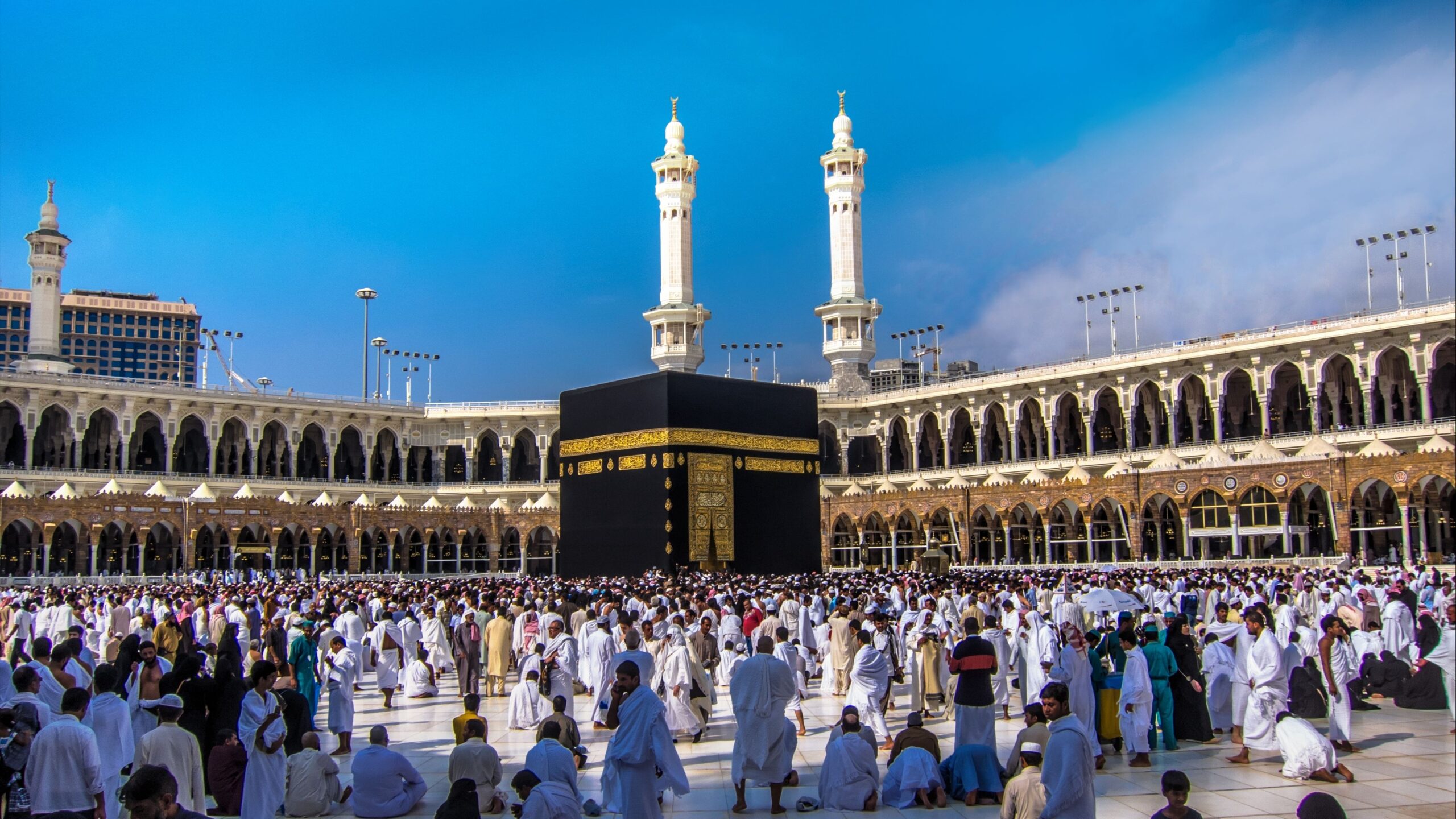
Ramadan is the Starting Point, the Government Purchases Land in Mecca for More Dignified Hajj Services

By: Aulia Sofyan Harahap
Ramadan 1447 Hijriah marked the beginning of the government’s strategic steps to fundamentally improve Hajj services. In this blessed month, Indonesia, under the leadership of President Prabowo Subianto, officially made history as the first country to obtain land and property ownership permits in the cities of Mecca and Medina. This decision was not only symbolic but also affirmed the country’s policy direction to provide more dignified, independent, and sustainable Hajj services.
This initiative was realized through the purchase of land and a hotel in a strategic area of Mecca for the development of the Indonesian Hajj Village. The government, through the Danantara Investment Management Agency, successfully won the auction for approximately five hectares of land and the Novotel Thakher Makkah Hotel, located approximately 2.5 kilometers from the Grand Mosque.
This ownership was made possible by the implementation of new Saudi Arabian regulations in early 2026 that opened up limited foreign ownership in the holy area, with Indonesia being a pioneer in its use.
Minister of Religious Affairs Nasaruddin Umar considered this achievement a privilege never before afforded to any other country. He stated that President Prabowo personally conveyed to the Islamic religious leaders that no other country had received a similar opportunity from the Kingdom of Saudi Arabia.
Nasaruddin also emphasized that President Prabowo’s close relationship with Saudi Arabia’s Crown Prince, Muhammad bin Salman, was a crucial factor in opening up this strategic opportunity. This close bilateral relationship is considered capable of transcending regulatory barriers that currently limit foreign property ownership in Mecca and Medina.
In the long-term plan, the Indonesian Hajj Village will not only be built on the five hectares of land that has been acquired, but is projected to expand to cover an area of around 60 hectares.
The area is designed to be within a 1–3 kilometer radius of the Grand Mosque and will be equipped with a connecting tunnel to facilitate pilgrims’ mobility. This concept reflects the state’s efforts to provide humane, efficient, and friendly services for elderly and high-risk pilgrims.
From an investment and asset management perspective, Danantara views the project as a major breakthrough in cross-border public services. Danantara’s Chief Investment Officer, Pandu Sjahrir, explained that the Indonesian Hajj Complex is designed to ensure Indonesian pilgrims feel safe and comfortable, as if they were at home. With Indonesia having the largest number of Hajj and Umrah pilgrims in the world, the presence of this special area is considered a long-overdue strategic need.
Pandu also sees the Hajj Village as not just a place of worship, but rather an instrument of cultural diplomacy that introduces Indonesian hospitality to the spiritual center of the world’s Muslims.
According to him, the project offers dual benefits, serving both public services and creating long-term economic value. Danantara’s investment in this sector is even said to be one of the largest foreign investments in Saudi Arabia’s real estate sector by 2025, opening a new chapter in Indonesia’s role in the Holy Land’s economic ecosystem.
In addition to the acquired hotel with a capacity of 1,461 rooms, the government plans to build 13 additional towers. Once all construction phases are completed, the Indonesian Hajj Complex will have a total of 6,025 rooms, capable of accommodating tens of thousands of pilgrims. Supporting facilities such as a health clinic, a traditional Indonesian dining area, and prayer rooms are integrated to ensure comfort and efficiency of service.
Minister of State Secretary Prasetyo Hadi emphasized that this success was a direct result of President Prabowo’s diplomacy with the Kingdom of Saudi Arabia. He stated that the change in Saudi policy, which allows a country to own property assets in its territory for the first time, demonstrates a high level of trust in Indonesia. The acquisition of the Novotel Thakher Makkah Hotel is seen as the initial foundation for the country’s permanent presence in the heart of the Holy Land.
In the context of Ramadan, this step has both reflective and transformative significance. The holy month is not only a spiritual moment but also a starting point for state policies that concretely support the interests of pilgrims. Land ownership in Mecca marks a paradigm shift from reliance on seasonal rents to more efficient and sovereign long-term asset management.
In the future, the existence of the Indonesian Hajj Village is expected to reduce logistics costs, improve comfort standards, and strengthen the dignity of Indonesian pilgrims in the Holy Land through integrated and long-term oriented facility management.
Ownership of these assets allows the state to manage Hajj services more independently, from accommodation and healthcare to food, without relying entirely on seasonal rental mechanisms that are currently prone to price fluctuations and quality limitations.
Ramadan 1447 Hijriah was also noted as not just a month of worship, but rather the beginning of a new chapter in the nation’s history, serving the fifth pillar of Islam in a more meaningful, sovereign, and sustainable manner. It also affirmed the government’s commitment to placing the interests of the congregation at the center of public policy across generations. (*)
Public Policy Observer – Bentang Nusantara Public Policy Research Institute
