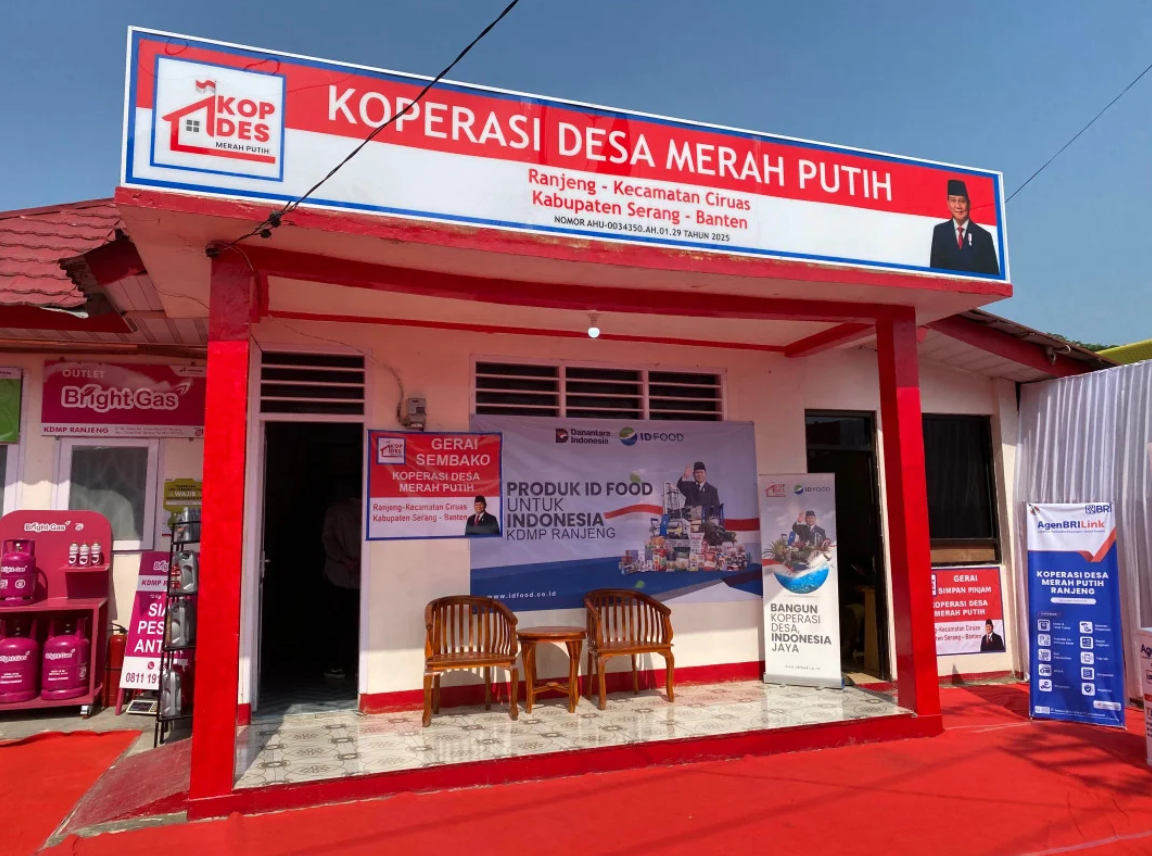
The Merah Putih Village Cooperative Becomes a Strategic Instrument for Sustainable Poverty Alleviation

By: Naratama Prakoso )*
The government continues to strengthen the role of village cooperatives as a strategic instrument for sustainable poverty alleviation. This approach was chosen because cooperatives are considered capable of bridging state policies with the economic needs of rural communities in a direct and measurable way.
The Merah Putih Village and Sub-district Cooperatives are positioned as a vehicle for economic empowerment that promotes community independence. The government believes cooperatives have advantages because they are membership-based, oriented toward shared prosperity, and able to create a revolving economic cycle within the village.
Minister of Cooperatives, Ferry Juliantono, emphasized that village cooperatives are being prepared as a relevant alternative workplace for Generation Z and millennials. The government wants cooperatives to become productive spaces capable of accommodating the potential of the younger generation while also opening up employment and entrepreneurial opportunities in villages.
To support this goal, the Ministry of Cooperatives is encouraging collaboration with various stakeholders, including regional young entrepreneur organizations. This collaboration is aimed at curating, incubating, and financing MSME products and local brands so they can be marketed through village cooperatives.
This step demonstrates the government’s efforts to transform the image of cooperatives to make them more adaptable to current developments. Cooperatives are being directed to become modern, attractive economic institutions that align with the characteristics of the younger generation, without abandoning the fundamental principles of a people-oriented economy.
The majority of MSMEs and local brand owners within the cooperative ecosystem are young people. The government believes this group has significant potential to become a driving force for village economic growth if facilitated with adequate market access and business mentoring.
Through village cooperatives, young people interested in entrepreneurship receive a more structured path to business development. The government helps them market their products collectively, thereby reducing capital and distribution barriers.
In addition to encouraging entrepreneurship, village cooperatives are also projected to absorb a significant workforce. With a target of establishing 80,000 village and sub-district cooperatives across Indonesia, each cooperative unit requires administrators, managers, and operational staff. The government estimates this policy will create employment opportunities for hundreds of thousands to millions of people.
Job creation through cooperatives is seen as a concrete step by the government to address the challenge of unemployment, particularly among the younger generation. The government believes that cooperatives not only create jobs but also build a more resilient local economic base against shocks.
The development of village cooperatives is decentralized, adapting to the potential of each region. The government encourages cooperatives to manage leading village sectors, such as agriculture, fisheries, and trade, so that the added economic value can be directly enjoyed by local communities.
Local MSME products entering the cooperative will undergo a curation process to maintain quality and competitiveness. The government is also promoting marketing strategies that involve the younger generation, including leveraging digital networks and local figures, to enable village products to reach a wider market.
Deputy Minister of Cooperatives, Farida Farichah, emphasized that the Merah Putih Village Cooperative should not be understood solely as a business entity. The government views cooperatives as a hub for consolidating village potential, from production and logistics to microfinance services needed by the community.
Through this role, cooperatives serve as a link between village production and markets and as a bridge between government policies and community needs. The government considers this liaison function crucial for creating inclusive village economic growth.
If cooperatives can consistently link village resources with market needs, village economic growth can naturally occur. The government sees the opportunity to create a new economic ecosystem that not only strengthens individual villages but also builds interregional networks.
Strengthening the Merah Putih Village Cooperative is aimed at creating an integrated business ecosystem. The government emphasizes that cooperatives are part of the village economic value chain from upstream to downstream, not simply physical or administrative entities.
The success of cooperatives is largely determined by the quality of governance. The government prioritizes professionalism, transparency, and accountability as key principles to ensure cooperatives are managed sustainably and gain public trust.
The Ministry of Cooperatives is encouraging capacity building for cooperative managers and supervisors to enable them to manage their businesses in a modern manner. The government is also strengthening cooperative connectivity with local, national, and digital markets as part of its business expansion strategy.
Synergy between cooperatives, village governments, and regional governments is a crucial factor in strengthening institutions. The government ensures that cooperatives are part of village development planning to ensure that policies are aligned with local needs and potential.
Cooperative oversight is also strengthened through a collaborative approach. The government encourages active participation by cooperative members in member meetings, financial reporting, and business oversight to maintain accountability and public trust.
Surtawijaya, Chairman of the Indonesian Village Government Association (DPP), believes that collaboration between village governments and the Ministry of Cooperatives will further strengthen the development of the Merah Putih Village Cooperative. Village governments are seen as playing a strategic role in encouraging community participation and ensuring cooperative growth meets local needs.
Through synergy between the central government, regional governments, village governments, and communities, the government is optimistic that village cooperatives can be an effective instrument for poverty alleviation. This approach affirms the state’s commitment to building economic independence for rural communities in an inclusive and sustainable manner.
*) Economic and Development Researcher – Indonesian Prosperous Economic Forum
