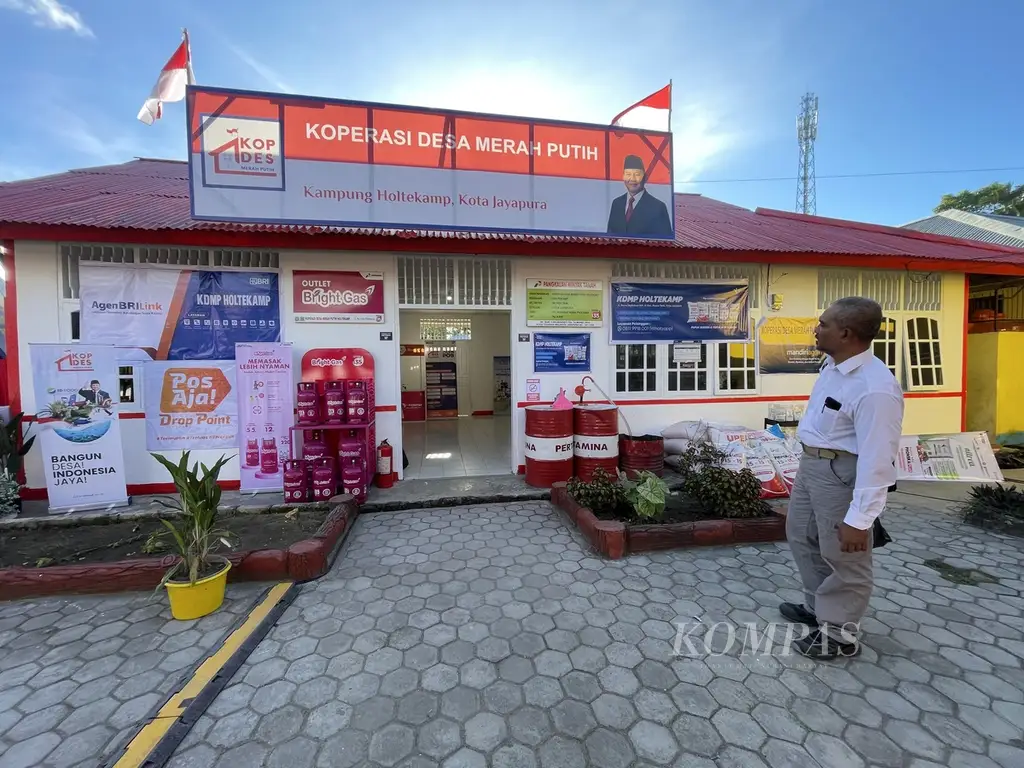
Strengthening Village Cooperatives is the Government’s Strategy for Building Independent Villages

By: Rina Marlina
The government has positioned strengthening village cooperatives as a key strategy for building independent and competitive villages. This policy is seen as a concrete step to ensure that national economic growth stems from strengthening the people’s economy at the most grassroots level, namely villages and sub-districts.
The Merah Putih Village Cooperative is a key instrument in this policy. The government not only encourages the establishment of cooperative institutions but also ensures the readiness of physical infrastructure so that cooperatives can operate optimally and sustainably. This approach demonstrates the government’s commitment to building a strong foundation for the village economy.
Coordinating Minister for Food Affairs Zulkifli Hasan stated that the government is targeting completion of approximately 30,000 physical structures for the Merah Putih Village Cooperative by May and June before entering the operational phase. The government considers infrastructure completion a crucial prerequisite for the cooperative’s ability to immediately carry out its economic functions effectively.
Once the physical building is complete, the government plans to stock the cooperative with various commodities needed by the village community. Items such as fertilizer, basic necessities, and even three-kilogram LPG cylinders are being prepared for sale through the cooperative, as an effort to provide closer access to daily necessities for the community.
The government also emphasized the role of village cooperatives as absorbers of the output of micro, small, and medium enterprises (MSMEs) within the village. Through this scheme, cooperatives are expected to act as offtakers, providing market certainty for local products while increasing added value for village MSMEs.
The policy of strengthening village cooperatives is positioned as part of a broader national development agenda that is interconnected across sectors. The government ensures that the program is not implemented in isolation but is integrated with other policies aimed at strengthening food security and the people’s economy.
The President Director of PT Agrinas Pangan Nusantara, Joao Angelo De Sousa Mota, also reported on the progress of the physical construction of village cooperatives. To date, hundreds of Red and White Village Cooperative buildings have been fully completed, with the largest concentrations in Java, particularly Central Java, East Java, and West Java.
Meanwhile, the development of village cooperatives outside Java is still being pursued. The government, through various implementing partners, is pushing for acceleration to reduce development disparities between regions, ensuring that the benefits of village cooperatives are felt equally by all Indonesians.
Tens of thousands of physical buildings belonging to the Merah Putih Village Cooperative are still under construction. The government is targeting completion of all these units by April 2026 so that the cooperative can be optimized as a driver of the village economy.
Village cooperative development targets are also adjusted based on land availability and local community support. The government views village community enthusiasm as crucial social capital in accelerating program implementation and ensuring the cooperative’s sustainability after operations.
Meanwhile, the Ministry of Cooperatives is preparing to strengthen the business model of village cooperatives so they can function professionally. Minister of Cooperatives, Ferry Juliantono, believes that cooperatives must once again become the pillars of the people’s economy through a modern and measurable business approach.
The government has designated the People’s Convenience Store, or ToraSera, as a concrete example of strengthening village cooperatives. ToraSera’s presence in Kubu Raya Regency is projected to serve as a distribution center for basic necessities and a driver of the village economy based on cooperatives and MSMEs.
The ToraSera model is being prepared for national replication as part of the Merah Putih Village and Sub-district Cooperatives program. The government believes this model can address the need for goods distribution while strengthening the role of cooperatives as aggregators of community products.
Within the national framework, the government is targeting the establishment of up to 80,000 village and sub-district cooperatives across Indonesia. To date, tens of thousands of cooperatives have legal entities, and most are in the process of constructing physical facilities.
The government emphasized that village cooperatives will have a strategic role in selling basic necessities and subsidized goods, absorbing community production, and distributing various aid programs to ensure they reach their intended target. This dual function is designed to strengthen cooperatives’ position as centers of village economic activity.
Profits from cooperative activities are guaranteed to be returned to the community members. The government views this mechanism as a key difference between cooperatives and other business entities, as economic benefits do not flow out of the region but instead remain within the village itself.
To ensure the program’s success, the Ministry of Cooperatives has prepared business guidelines and a feasibility study based on field experience. These guidelines will serve as a reference for other regions in developing healthy and competitive village cooperatives.
With support from the central government, local governments, and active community participation, the government is optimistic that strengthening village cooperatives can become a driving force for the people’s economy. This policy is expected to not only stimulate village economic growth but also strengthen community independence in the long term.
By strengthening village cooperatives, the government affirms its commitment to developing Indonesia from the periphery. Villages are positioned as new growth centers with a strategic role in realizing an inclusive, equitable, and sustainable national economy.
*) Social Empowerment Consultant – National Welfare Center
