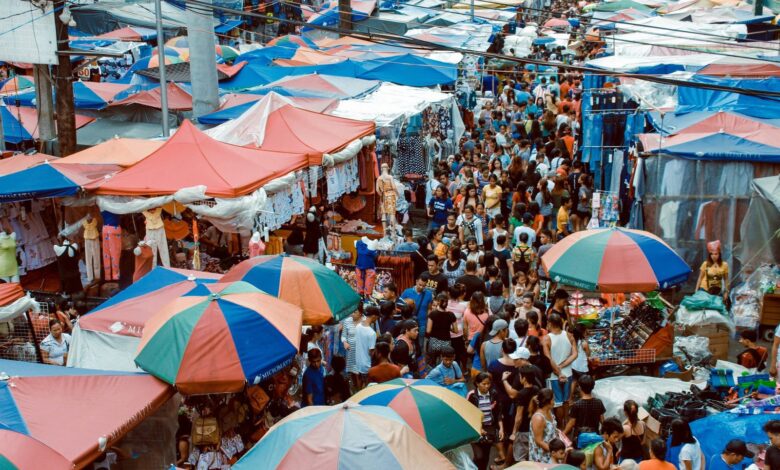

Jakarta — The government has intensified anticipatory measures to address potential food price pressures during Ramadan by strengthening market operations across various regions. This step aims to maintain price stability and ensure the availability of essential commodities amid rising public demand leading up to and throughout Ramadan until Eid al-Fitr.
Cross-ministerial and inter-agency coordination, along with regional governments, has been reinforced to ensure that interventions are well-targeted and capable of mitigating price volatility at an early stage.
Historically, Ramadan drives increased consumption, particularly for strategic commodities such as rice, sugar, cooking oil, broiler chicken, eggs, onions, and chili. To anticipate potential price spikes, market operations have been launched earlier and expanded in scope across traditional and community markets.
Perum Bulog, together with other state-owned food enterprises, has strengthened supply by distributing government rice reserves and other key commodities in accordance with regional needs.
Head of the Planning, Cooperation, and Public Relations Bureau of the Badan Pangan Nasional, Budi Waryanto, explained that several food commodities remain relatively stable as prices have not exceeded the Highest Retail Price (HET).
“Thank God, during the first few days of Ramadan, prices have remained as expected and have not surpassed the HET. So they are still relatively stable at this time,” Budi said.
In addition to physical market operations, a digital-based price monitoring system is being utilized to track price developments in real time. The data serve as a basis for determining priority intervention locations if irregular price increases are detected. Coordination between the central and regional governments has been carried out intensively to ensure smooth supply and distribution.
Maintaining food price stability has also become part of the national directive ahead of Ramadan. Minister of Agriculture and concurrently Head of the National Food Agency, Amran Sulaiman, emphasized that food price stability is a direct instruction from President Prabowo Subianto ahead of Ramadan.
“The government does not want price spikes that burden the public, and has even asked the National Police to supervise food trade practices to prevent pricing violations,” Amran stated.
Distribution oversight and trade practices have been tightened by involving multiple stakeholders to prevent hoarding and price speculation. Interregional logistics flows are also being maintained to avoid shortages that could trigger price increases in certain areas.
Through intensive market operations, strengthened supply, and strict distribution supervision, the government remains optimistic that price pressures during Ramadan can be controlled. This stability is expected to preserve public purchasing power and create a calm and conducive Ramadan atmosphere without concerns over rising staple food prices. (*)
