
By: Yudhistira Wijaya
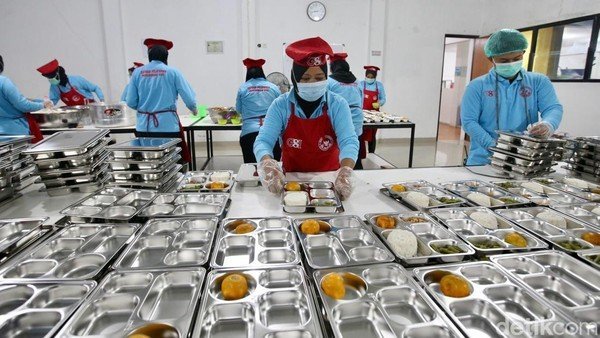
The government, together with the House of Representatives (DPR RI), has provided an open and comprehensive explanation that the implementation of the Free Nutritious Meals Program (MBG) does not reduce the education budget. Its recording under the education function is primarily a matter of budget classification, considering that the program is directly related to improving the quality of students through adequate nutrition. Thus, MBG is positioned as part of strengthening a holistic education ecosystem. In the latest budget structure, the education allocation remains intact and is even reinforced through the Additional Expenditure Budget (ABT) scheme. This means the constitutional mandate to allocate at least 20 percent of the State Budget (APBN) to education remains safeguarded. At the same time, the state is expanding its intervention in health and nutrition as key foundations for improving the quality of human resources.
The Minister of Primary and Secondary Education, Abdul Mu’ti, firmly stated that the assumption that MBG reduces education funding is incorrect. All priority education programs mandated by President Prabowo Subianto continue to run and have even been expanded. Following the introduction of MBG, the Ministry of Primary and Secondary Education’s budget has actually increased, as the President provided additional allocations through the ABT scheme. Therefore, there has been no reduction in core education programs, whether aimed at improving learning quality or expanding access.
The Vice Chairman of Commission X of the DPR RI, Lalu Hadrian Irfani, explained that in various working meetings between Commission X and relevant ministries, it was emphasized that the MBG budget is managed separately from the education budget. Although MBG is recorded under the education function in the APBN structure, from a policy standpoint there has been no reduction in allocations for ongoing education programs.
Furthermore, he revealed that there is an additional Rp181 trillion allocation for the Ministry of Primary and Secondary Education. This additional funding is focused on improving infrastructure, enhancing education quality, and increasing teachers’ welfare. This step demonstrates that the government is not only maintaining the education budget framework but also strengthening the quality of education spending to ensure greater impact.
Commitment to teachers’ welfare has become a key point in the discussion. The DPR views improving teachers’ living standards as a national priority, and the additional budget serves as a concrete instrument to realize that goal. This fiscal policy direction shows consistency in keeping the education sector at the forefront of national priorities.
A similar affirmation was conveyed by a member of Commission IX of the DPR RI, Muazzim Akbar, who stated that education funds have their own allocation within the APBN structure and are not affected by the implementation of MBG. The School Operational Assistance (BOS) funds, the Smart Indonesia Program (PIP), and various scholarship schemes continue to operate according to existing regulations. He assessed that MBG is part of a national strategy to improve children’s nutrition and health, which ultimately supports better learning outcomes.
In the 2026 State Budget document, the MBG allocation is recorded at Rp335 trillion. Part of this allocation is categorized under the education function because students are the primary beneficiaries. However, it is important to understand that functional classification in budgeting does not equate to a reduction of funds in the respective sector. A function-based budgeting system allows a program to be categorized under a specific function due to its impact on that sector, without reducing the core budget that has already been planned.
The debate surrounding this classification highlights the importance of budget literacy in the public sphere. The constitutional requirement to allocate at least 20 percent of the APBN to education continues to be fulfilled. The government has even utilized the ABT mechanism to ensure that fiscal space for education is not eroded by other programs. Thus, from both a regulatory and implementation perspective, there is no policy that cuts into the rights of the education sector.
Substantively, MBG has a strong intersection with the goals of national education. Adequate nutrition contributes to better concentration, stronger immunity, and improved learning readiness among students. Children who receive sufficient nutritional intake tend to have higher attendance rates and better academic performance. In this context, MBG can be viewed as an upstream intervention that enhances the effectiveness of education spending.
Human resource development cannot be carried out partially. Education, health, and nutrition are three interrelated pillars. The government places MBG as part of a grand strategy toward Indonesia Emas 2045, where the younger generation is prepared to be not only intellectually capable but also physically healthy. This integrative approach reflects a more comprehensive policy paradigm.
Looking ahead, the greatest challenge is to ensure that MBG is implemented in an accountable, transparent, and well-targeted manner, without diminishing focus on education reform. The government must continue to open channels of public communication to prevent misunderstandings regarding the budget structure. Synergy among ministries, the DPR, and regional governments will be key to the program’s success.
Thus, the narrative that MBG taps into or erodes education funds is not aligned with the policy facts and official budget dynamics that have been clearly presented. Education remains the top priority, with its budget framework preserved and even strengthened. MBG serves to reinforce the foundation of the nation’s future generation, positioning nutrition as an integral part of Indonesia’s sustainable and competitive human development strategy.
*) The author is an observer of nutrition and food policy
