
By: Antonio Janur Parikesit *)
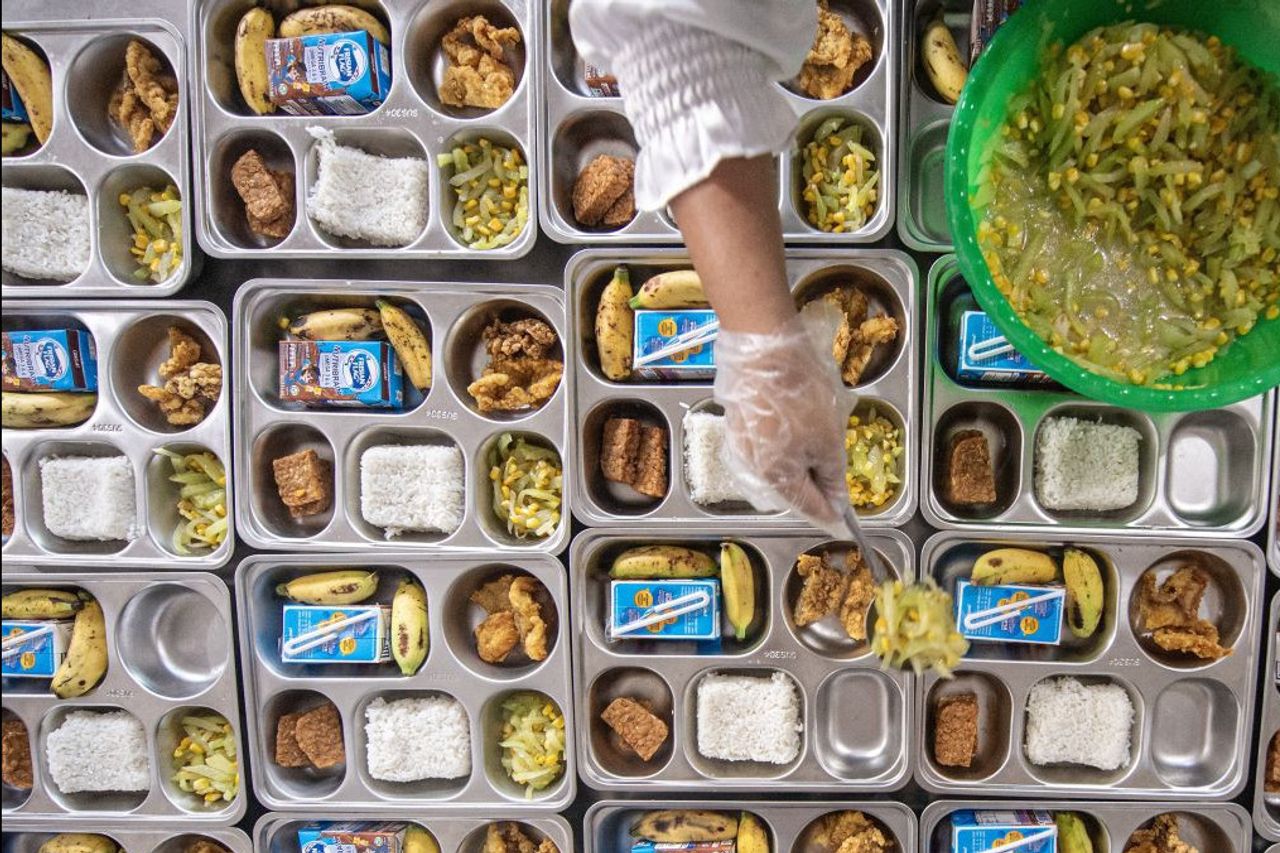
Amidst the heated debate, the Free Nutritional Meals Program (MBG) is actually demonstrating something often overlooked: the government is beginning to build nutritional infrastructure as a foundation for quality education and human resources. MBG is more than just a matter of menus and distribution. It’s a grand scheme that links supply chains, cross-institutional governance, and changes in household eating behavior. Something that has been difficult to achieve with nutrition campaigns alone.
First, the issue of “MBG cutting education” needs to be addressed proportionally. Cabinet Secretary Teddy Indra Wijaya emphasized that education programs and budgets are continuing, and even being strengthened. MBG is present as a complement to ensure children grow up healthy and ready to learn, not as a replacement for educational programs. At this point, MBG actually helps schools fulfill their most basic mandate: ensuring students arrive ready to learn. In food management, this is called demand readiness —sufficient quality consumption will increase learning capacity, reduce the risk of absence due to illness, and reduce the “invisible costs” that families currently bear.
A similar affirmation also came from parliament. Chairman of the Budget Agency of the Indonesian House of Representatives (DPR RI), Said Abdullah, stated that the MBG budget was discussed and approved jointly by the government and the DPR during the deliberations on the State Budget (APBN); DPR support was positioned as part of the national priority program for improving child nutrition. Meanwhile, Deputy Chairman of Commission X of the DPR RI, Lalu Hadrian Irfani, emphasized that the implementation of the MBG did not disrupt the budget posture of the ministries of education, because there was a clear separation between routine education spending and MBG support. In public governance, this consistency is important. If the issue is efficiency and accountability, then the arena for improvement lies in the oversight and transparency mechanisms, not on the assumption that nutrition and education programs must cancel each other out.
Second, evidence of the impact of MBG is beginning to emerge at the habitual level. A study by the Research Institute of Socio-Economic Development (RISED), cited by several media outlets, showed changes in the eating habits of recipient children, including findings that some parents felt their children were consuming more nutritious food and were less picky eaters since the MBG program. It was even stated that the MBG program had benefited tens of millions of beneficiaries, approximately 59.86 million recipients as of January 20, 2026. Changes in eating habits are a highly valuable outcome, indicating that the program does not stop at the production kitchen but enters children’s consumption culture, which will ultimately reduce the burden of non-communicable diseases and increase long-term productivity.
Third, program quality is not just about portion size, but also about continuous improvement . The Chairman of the National Consumer Protection Agency (BPKN) of the Republic of Indonesia, Mufti Mubarok, supports a comprehensive evaluation conducted by the National Nutrition Agency during Ramadan 2026, covering packaging, nutritional composition, and transparency of budget use to ensure health standards and consumer protection are maintained. This assertiveness demonstrates the correct perspective, stating that a program as large as MBG must be treated like a national public service, where quality audits, food safety, and logistical improvements must become a habit, not a reaction to criticism.
Fourth, the MBG program is moving from a school program to a more inclusive scheme. The Ministry of Social Affairs, together with the National Nutrition Agency, is finalizing the implementation of the MBG for the elderly and people with disabilities, utilizing the Nutrition Fulfillment Service Unit (SPPG) network and existing outreach mechanisms within social services. From an operational management perspective, this means the government is consolidating nutrition fulfillment services for vulnerable groups to make them more standardized, measurable, and reachable.
Fifth, the MBG requires a well-organized governance mechanism from the central to the regional levels. Deputy Minister of Home Affairs Bima Arya Sugiarto emphasized that the MBG is designed not only for health, but also for economic empowerment and education. Therefore, he highlighted the need for measurable, coordinated, and integrated governance between the central and regional levels, including the role of regional governments in the ecosystem and food security. The key lies in food security and supply continuity, as large-scale nutrition programs will succeed if the supply chain is stable, vendors adhere to standards, and recipient data is accurate.
This is where supply chain innovation becomes crucial. BRIN, through data science research, is said to have developed an artificial intelligence-based marine protein potential mapping with a model accuracy rate of 94.6% to support the resilience of the MBG protein supply through a spatial data approach and the concept of precision fishing . This means the government is beginning to link MBG with supply chain science, not simply sourcing raw materials but planning protein sources precisely and sustainably. In modern food management, this is the difference between a program that lasts a short time and one that becomes an institution.
Finally, funding issues also need to be protected from disinformation. Minister of Religious Affairs Nasaruddin Umar emphasized that zakat should not be used outside the eight asnaf (charity) and dismissed information linking zakat to the MBG (Governing Body). This is crucial, as large public programs can only be strong if their ecosystem of trust is maintained.
The MBG is worth reading as an investment in food management for human development, to manage consumption, organize the supply chain, establish safety standards, and establish accountability. Going forward, with consistent evaluation, enhanced transparency, and stronger central-regional coordination, the MBG is not just about feeding schoolchildren; it is also about building the most silent prerequisite for education: a well-nourished body so that knowledge can grow.
*) Food Observer
