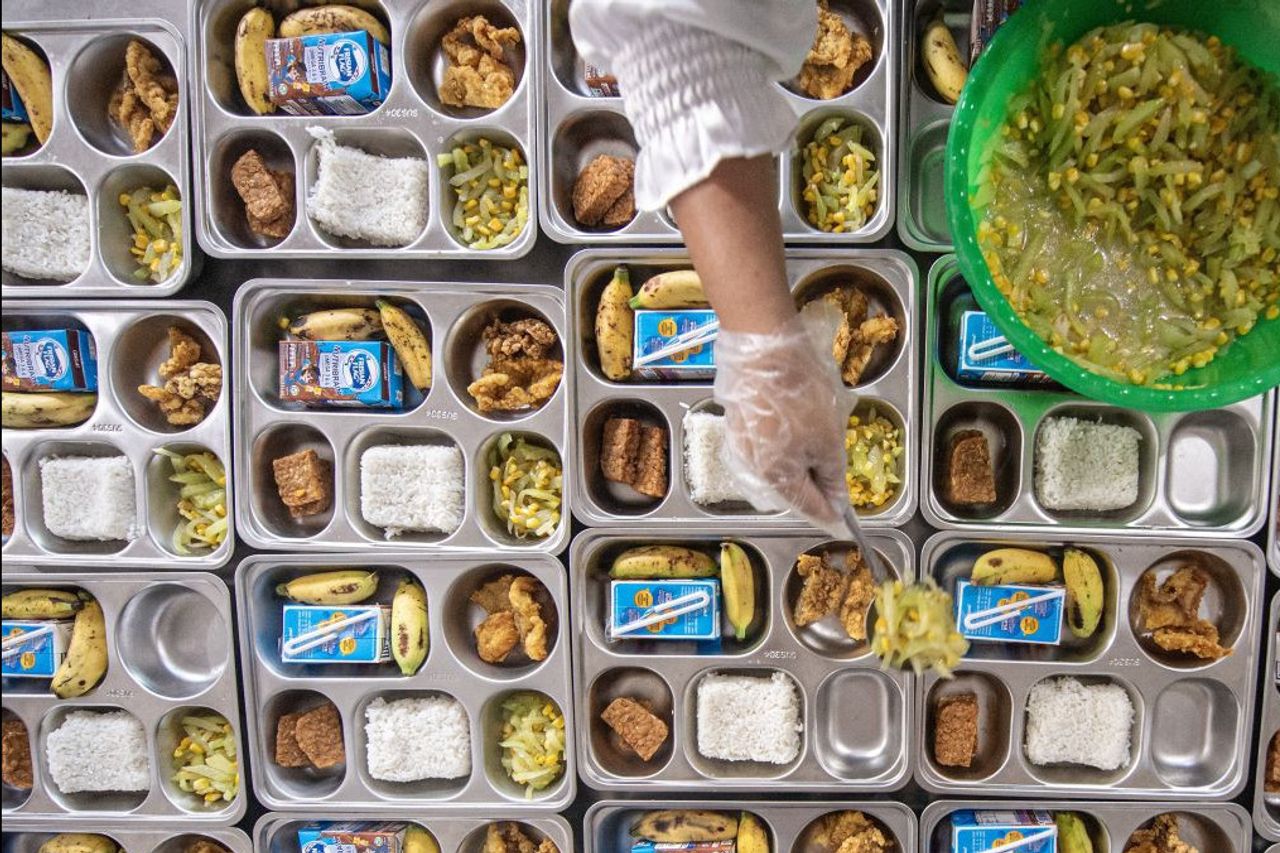
Jakarta – The Free Nutritious Meals (MBG) program, which has been running for one year, has succeeded in creating significant positive changes in the eating habits of Indonesian children.

The results of a study by the Research Institute of Socio-Economic Development (RISED) show that after participating in this program, many children became more regularly consuming nutritious foods and were no longer picky about their food choices.
RISED Director, M. Fajar Rachmadi, said that the findings from the in-depth survey illustrated parental involvement in changing children’s eating patterns.
“One of the findings from our in-depth interviews with parents of students receiving the MBG program was that they understand that parents are responsible for meeting their children’s nutritional needs. The presence of the MBG program actually provides families with a sense of peace of mind when their children are at school, and our survey showed that 55% of parents agreed that their children’s eating habits had changed, leading to them being less picky eaters after the MBG program,” Fajar said.
The results of a survey involving around 1,800 parents also showed strong support from underprivileged families for the continuation of this program, with 81 percent of respondents agreeing that MBG should continue to be implemented.
“What’s even more interesting is that when children can get food at school, parents also feel safe,” Fajar added.
Support for MBG doesn’t just come from parents. Internal Medicine Specialist Dr. Andi Khomeini Takdir, Sp.PD-KPsi, called MBG an excellent idea for establishing healthy eating habits from an early age.
“So, in my opinion, MBG is a program with good intentions. I can understand President Prabowo’s intentions in initiating MBG because I think it’s a very good idea,” said Dr. Andi, emphasizing that a diverse daily menu helps children consume a wider variety of healthy foods.
MBG also directly impacts students’ enthusiasm for learning at school. An evaluation by the University of Indonesia’s Sociology Laboratory (LabSosio UI) noted that 66.4 percent of students felt more enthusiastic about learning after receiving nutritious meals from the program, demonstrating the link between nutritional intake and energy and concentration.
The benefits of this program are increasingly being felt by schools in various regions.
“The children are more active in asking questions and are happier throughout the day,” said the Principal of Rufei 24 Elementary School in Sorong City, Sientje Martentji Ajomi.
With these various positive impacts, MBG is now seen as more than just a food distribution program, but a strategic effort to shape sustainable healthy eating habits and improve the quality of life of Indonesia’s future generations.
