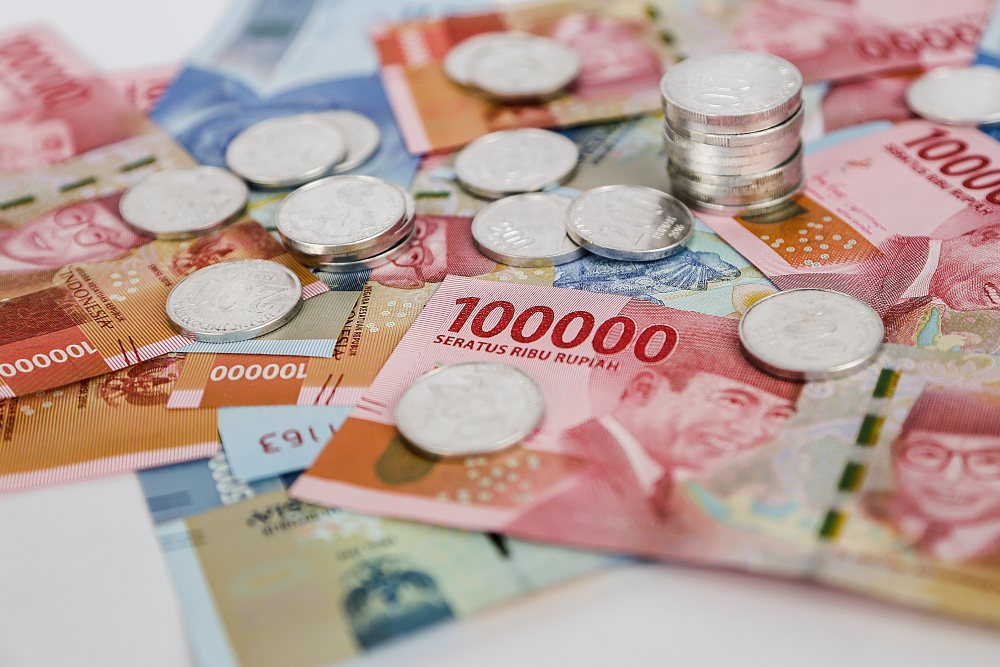

Jakarta — The Indonesian rupiah continues to show relative stability amid global financial market dynamics triggered by geopolitical tensions and the strengthening of the U.S. dollar.
The government, together with Bank Indonesia (BI), has ensured that various strategic measures are continuously implemented to maintain exchange rate stability while sustaining investor confidence in the national economy.
Bank Indonesia reaffirmed its commitment to actively intervene in the market to curb rupiah volatility. Senior Deputy Governor of BI, Destry Damayanti, stated that the monetary authority will remain proactive in maintaining stability amid increasingly complex global dynamics, including the impact of tensions related to conflicts in the Middle East.
“We will continue to carry out firm and consistent interventions through NDF transactions in the offshore market, spot and DNDF transactions in the domestic market, along with purchases of government bonds in the secondary market,” Destry said.
She explained that the current movement of the rupiah remains in line with trends seen in other regional currencies. On a month-to-date (MTD) basis, the rupiah has weakened by around 0.51 percent, but its performance is considered relatively better compared to several other regional currencies.
This condition indicates that pressure on the rupiah remains within a manageable range despite the strengthening of the U.S. dollar in global markets.
Indonesia’s economic resilience is also supported by strong foreign exchange reserves. As of the end of January 2026, Indonesia’s reserves reached US$154.6 billion.
In addition, foreign capital inflows into the domestic financial market throughout 2026 have reached Rp25.7 trillion, reflecting investor confidence in Indonesia’s economic prospects.
Governor of Bank Indonesia, Perry Warjiyo, emphasized that the national economy continues to demonstrate strong resilience despite the challenging global environment.
“Our economic outlook remains strong and resilient,” Perry stated.
According to him, Indonesia’s economic resilience is reflected in solid domestic growth, controlled inflation, and exchange rate stability maintained through various monetary policy measures.
Several analysts believe that pressure on emerging market currencies is largely influenced by the strengthening of the U.S. dollar, which has become a safe-haven asset amid global uncertainty.
However, market sentiment has begun to improve as expectations rise that geopolitical tensions in the Middle East may ease. Analyst from Doo Financial Futures, Lukman Leong, assessed that the rupiah has the potential to strengthen along with a weakening U.S. dollar and declining global oil prices.
