
By: Samson Mulya *)
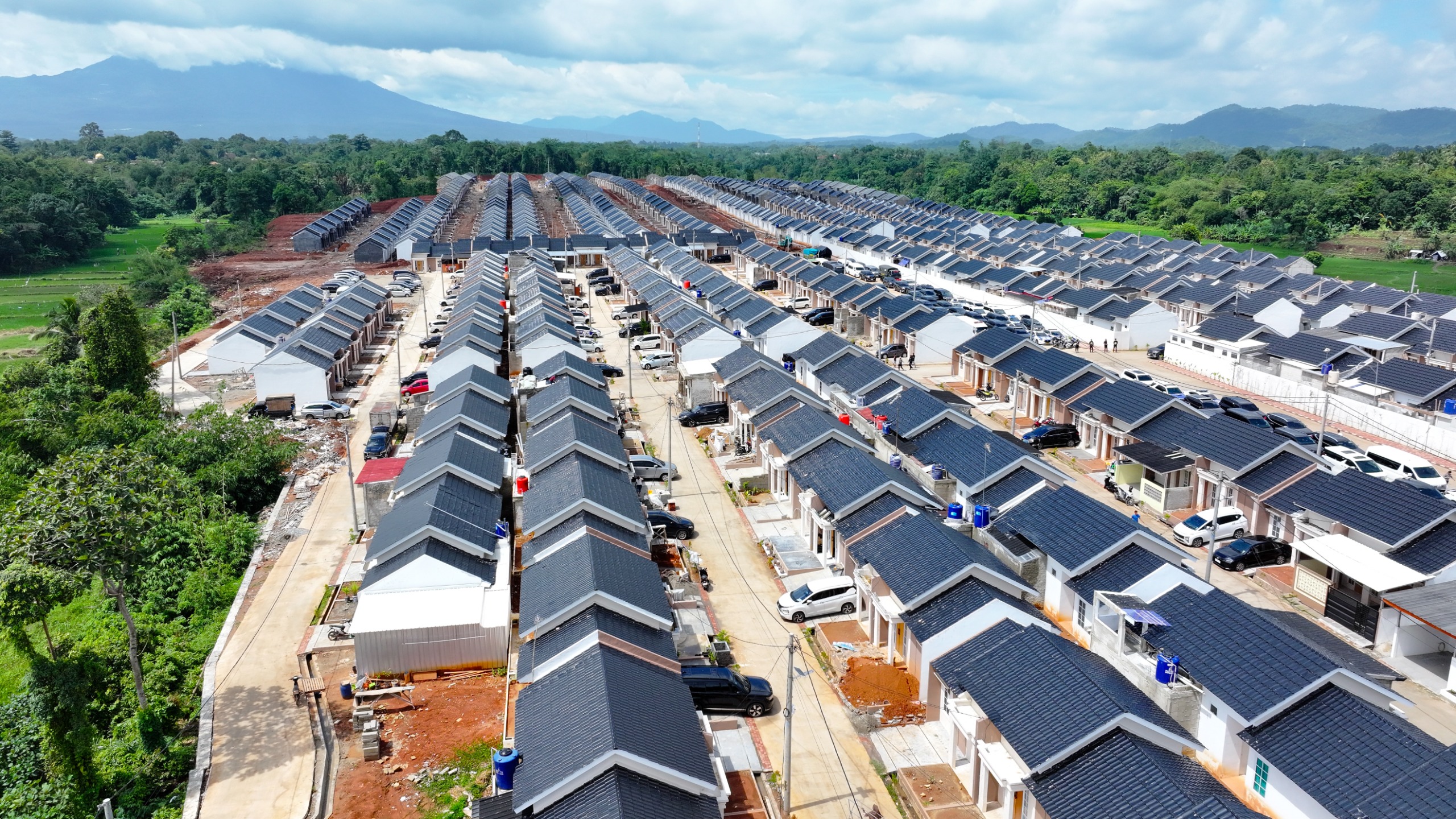
Meeting the need for adequate housing for the community, particularly low-income communities (MBR), is a fundamental pillar of national development based on social justice. The challenges of homeownership in urban areas are increasingly complex due to economic dynamics and increasing land constraints. Facing this reality, the Indonesian government has demonstrated a strong commitment through innovative policies in the subsidized housing program. This strategic step is a concrete manifestation of the state’s presence and deserves the full support of all elements of the nation.
The current national policy direction no longer focuses solely on physical quantity, but rather prioritizes the quality of life of beneficiaries. This vision is evident in efforts to accelerate the provision of housing, both landed and vertical housing. The government’s commitment under President Prabowo Subianto’s leadership is reflected in significantly increased operational targets. The Minister of Housing and Settlement Areas (PKP), Maruarar Sirait, emphasized a significant leap in addressing uninhabitable housing. By 2026, the target has been drastically increased to 400,000 units, surpassing the previous year’s achievement of 45,000 units. This surge demonstrates the government’s commitment to reducing the housing shortage and improving public health standards through adequate housing.
In line with this quality improvement, the government has set a record high for subsidized housing. Maruarar explained that the allocated quota reached 350,000 units, far exceeding the average of previous years, which typically hovered at 230,000 units. This historic achievement signifies a massive acceleration in expanding access to property ownership for the wider community. The government is also coordinating with the Ministry of Finance to increase the quota if the need persists, reflecting a policy responsive to the dynamics of housing needs.
The challenge of providing housing in urban areas requires a specific approach, given that the housing shortage in cities is three times higher than in rural areas, according to data from the Central Statistics Agency (BPS). To address this issue, the government is intensifying the construction of subsidized flats (rusun) as a rational land-efficient solution. This concrete step was initiated through the laying of the first stone in the Meikarta area of Bekasi, as part of the 3 Million Homes Program. This project, a synergy between the government, the private sector, and financial institutions, is projected to produce approximately 141,000 residential units on 30 hectares of land. Maruarar Sirait explained that the vertical development pattern offers extraordinary efficiency compared to the landed housing model, which would require up to 1,200 hectares of land for the same capacity.
This expansion continues to other areas, including the utilization of 45 hectares of land owned by the Ministry of Communication and Digital in Depok, which has the potential to accommodate 170,000 residential units. The focus on vertical housing in buffer zones demonstrates a modern urban planning strategy that brings residences closer to centers of economic activity. Solid financial support is key to the success of this ambition. Rosan Perkasa Roeslani, Minister of Investment and Downstream Development and CEO of Danantara Indonesia, assured that Danantara fully supports the project’s financing due to its significant impact on public welfare and national economic growth.
In addition to physical acceleration, the government is finalizing new regulations to ensure every policy is on target. Maruarar Sirait emphasized the importance of an inclusive ecosystem by gathering input from banks, developers, and institutions like the Presidential Staff Office. This approach positions the public as active subjects, not merely objects of policy. Furthermore, legal certainty is a top priority. Direct coordination with the Corruption Eradication Commission (KPK) is being conducted to ensure the entire process is transparent and free from practices that harm the state and the public.
The latest draft regulations on subsidized apartments feature a major breakthrough to facilitate financial access. The government has prepared a financing scheme with a tenor of up to 30 years and a fixed interest rate of 6%. This policy significantly helps maintain the stability of monthly installments and keeps them affordable. Furthermore, a pre-order construction system has been agreed upon with banks to accelerate unit availability in the market.
The most fundamental transformation lies in increasing the standard living space. Subsidized apartment units are planned to undergo significant expansion, from the previous maximum of 36 square meters to up to 45 square meters. This policy will allow each unit to have two to three bedrooms, making them a much more humane space for families. The Head of the Statistics Indonesia (BPS), Amalia Adininggar Widyasanti, validated this move by stating that the unit expansion will improve the quality of life in line with ideal per capita space requirements.
The government is also paying close attention to the burden of living costs after occupancy. Maruarar Sirait instructed a strict evaluation of environmental management fees and utility rates to avoid financial burdens on residents’ families. This humanitarian approach was warmly welcomed by the community, as expressed by Erlan Kalo of the Apartment Residents Association, who felt that residents’ aspirations were now being better heard. Through the Tapera Development Authority’s target of 10,000 units by 2026 and innovative lease-purchase schemes, the government continues to consistently narrow the housing gap. Strong synergy between the public, private, and community sectors will be the main foundation for creating a more equitable and sustainable subsidized housing ecosystem in the future.
*) Public Policy Observer
