
By: Muhammad Arya Bimantara)*
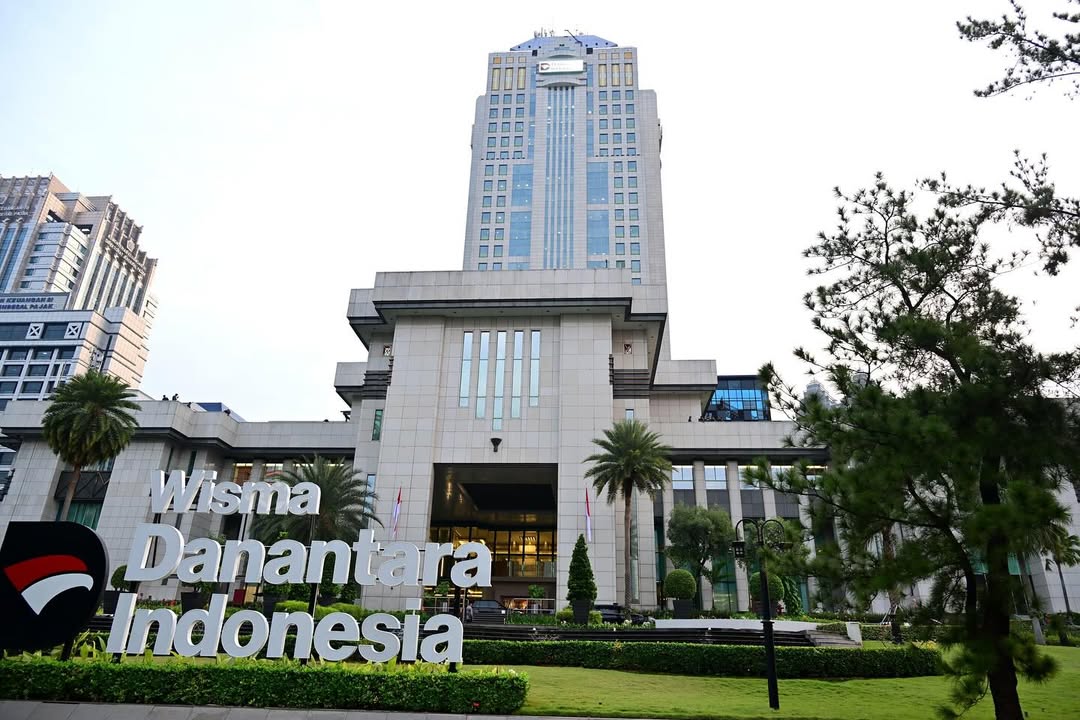
Indonesia’s entry into the global semiconductor industry increasingly demonstrates a planned and visionary direction. Amidst the dominance of developed countries in chip technology, the Indonesian government recognizes the opportunities opening up with the changing industrial landscape, particularly in the development of artificial intelligence-based chips. In this context, Danantara Indonesia’s role is crucial as a key driver bridging research, industry, and national policy interests.
The semiconductor industry has long been known as a sector with high levels of complexity and significant investment requirements. However, evolving global dynamics are ushering in a new, more inclusive phase, where developing countries have opportunities to enter through specific specializations, particularly in chip design, systems development, and the integration of artificial intelligence-based technologies. Indonesia, with its strong young talent pool and stable economic growth, has a strong starting point to take on this strategic role.
Danantara Indonesia’s Chief Technology Officer, Sigit Puji Santosa, believes that now is the right time for Indonesia to seriously start developing its semiconductor industry. He believes that the development of artificial intelligence-based chip technology opens up new opportunities that can be exploited through collaborative approaches, strengthening human resource capacity, and developing products tailored to global industry needs. This perspective emphasizes that the strategy adopted is not merely reactive but also anticipatory of future technological trends.
Efforts to strengthen this ecosystem became even more evident through the holding of the National Semiconductor Industry and Research Ecosystem Development Acceleration Workshop, which brought together various stakeholders. This forum served as a crucial platform for unifying perceptions, formulating policy direction, and accelerating the implementation of planned programs. The collaboration between Danantara and the Ministry of Higher Education, Science, and Technology demonstrates that semiconductor industry development is carried out with a comprehensive approach, simultaneously involving the government, academia, and industry.
Government support is a crucial factor in ensuring the success of this agenda. Minister of Higher Education, Science, and Technology, Brian Yuliarto, believes that accelerating the development of the semiconductor industry requires a clear regulatory framework and standardization to enable rapid commercialization. He believes that clarity regarding priority products, technology designs, and development roadmaps is key to creating a focused and sustainable ecosystem.
Brian further emphasized the importance of the industrial sector as a key driver in realizing productive investment. In his view, semiconductor development can no longer be positioned as a mere research project but must be directed as an industrial project that generates real economic value. Universities and research institutions continue to function as centers of innovation, but must be closely connected to market needs to ensure widespread adoption of research findings.
This strategic step aligns with the government’s broader vision of strengthening national technological independence. Dependence on imported technology components has historically been a challenge, impacting the trade balance and the resilience of the domestic industry. By developing a semiconductor industry, Indonesia will not only reduce this dependence but also open up new opportunities for creating higher added value.
Danantara’s role as an accelerator in this ecosystem is becoming increasingly important, as it integrates diverse interests into a single, clear direction. Through a collaborative approach, Danantara fosters synergy between research and industry, while ensuring that each initiative has a measurable impact. This demonstrates that government policies are not implemented in isolation but are supported by institutions with the capacity to oversee implementation on the ground.
In a global context, mastery of semiconductor technology is also closely linked to a country’s bargaining position in the global economy. Countries capable of producing and developing chip technology have a strategic advantage in various sectors, including defense, communications, and the digital industry. Therefore, Indonesia’s steps through Danantara and government support represent a long-term investment that will determine future national competitiveness.
Optimism for the successful development of the national semiconductor industry is growing with consistent policies and increasing synergy among stakeholders. While challenges cannot be ignored, with careful planning and strong commitment, opportunities are far greater. Indonesia is now on the right track to becoming not only a technology user but also a producer capable of competing in the global market.
With a continuously strengthened foundation and increasingly clear policy direction, Danantara’s role in accelerating the semiconductor industry symbolizes Indonesia’s economic transformation toward an innovation-driven era. Going forward, this initiative is expected to create a resilient, highly competitive industrial ecosystem and significantly contribute to national economic growth. Indonesia is no longer on the fringes of the industry, but is beginning to emerge as a key player in the global semiconductor industry landscape.
)* The author is a Strategic Issue Observer
