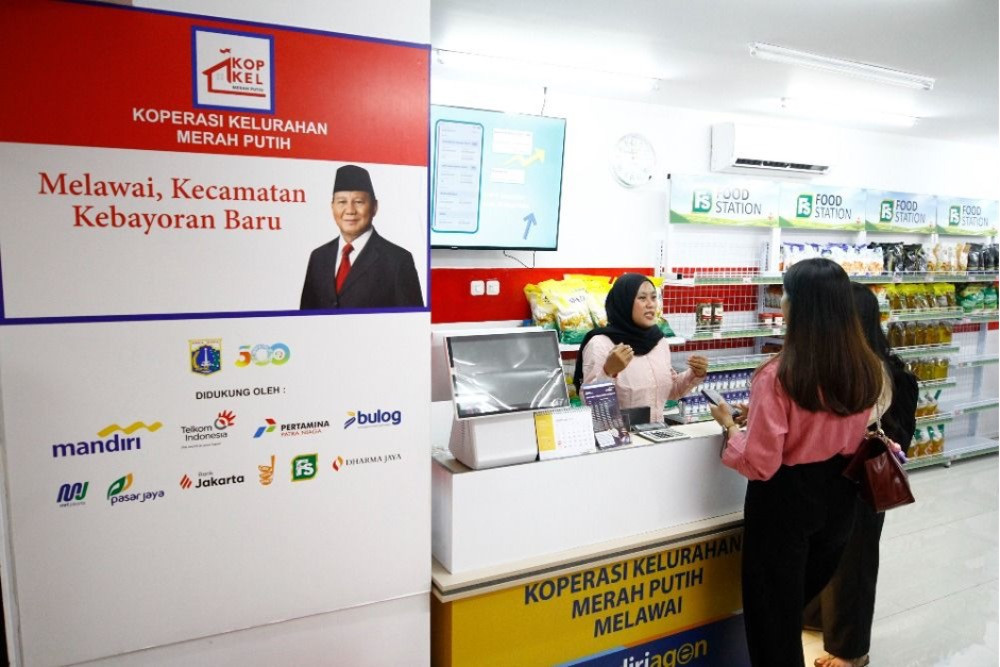
The Merah Putih Cooperative Expands Access to Affordable Credit for the CommunityBy: Ramadhani Putri

Strengthening the people’s economy has regained momentum through the presence of the Merah Putih Village/Sub-district Cooperative, designed as a strategic instrument to expand access to fair and affordable financing for the community. This initiative not only addresses the community’s basic need for affordable credit but also represents a concrete step towards building a more inclusive and equitable economic system. In the context of unequal access to finance, which remains a perennial problem in various regions, particularly rural areas, the presence of cooperatives with low-interest credit schemes is a relevant and urgent solution.
To date, limited access to formal financial institutions has pushed some communities, particularly ultra-micro businesses and farmers, into the trap of loan sharks and illegal online loans that offer instant convenience but at exorbitant interest rates. This situation not only worsens community welfare but also reinforces the cycle of structural poverty. Therefore, the policy of providing credit with an interest rate of around 6 percent per year through the Merah Putih Cooperative represents a significant breakthrough in creating a healthy and sustainable financing alternative.
In the view of the Minister of Cooperatives, Ferry Juliantono, the development of village cooperatives equipped with microfinance institutions is a crucial step in providing access to ultra-micro financing at low interest rates, so that communities have a safe option and are no longer dependent on detrimental lending practices. He also emphasized that cooperatives should not only function as financing providers but also be able to address the real needs of village communities through adaptive, locally-driven services.
This policy demonstrates the government’s support for economically disadvantaged groups by providing more humane access to financing. This scheme is expected to reduce community dependence on illegal lending practices and increase productive economic capacity at the grassroots level. Affordable credit distributed through cooperatives also offers flexibility because it is tailored to the economic conditions of each village, ensuring more targeted distribution.
More than just a credit distribution institution, the Red and White Cooperative is also encouraged to act as a center of village economic activity. Ferry Juliantono believes that the success of cooperatives is measured not only by financing distribution but also by their ability to provide necessities at more affordable prices and to function as offtakers that absorb community production. With market certainty for local products, farmers and small business owners are no longer dependent on middlemen who often suppress prices.
Furthermore, the ability of cooperatives to provide basic necessities at lower prices also strengthens people’s purchasing power. The combination of affordable financing access, stable markets, and controlled prices provides a crucial foundation for improving the welfare of rural communities. Thus, cooperatives function not only as economic institutions but also as social instruments capable of reducing inequality and improving the quality of life.
The development of the Red and White Cooperative, which has reached thousands of units, demonstrates the government’s serious commitment to expanding the reach of this program. Coordinating Minister for Food Affairs Zulkifli Hasan, or Zulhas, explained that thousands of village cooperatives have been physically established across various regions of Indonesia, with the largest distribution being in provinces with a strong rural economic base. He also revealed that tens of thousands of other locations are still under construction, demonstrating the program’s massive and sustainable expansion.
Furthermore, Zulkifli Hasan assessed that land availability and the development of adaptive cooperative development models, including the possibility of vertical development in areas with limited land, are part of the strategy to ensure that all villages are covered by this program. He also emphasized the task of assigning relevant parties to ensure optimal cooperative operations in the first few years, so that the benefits can be directly felt by the community.
Going forward, the challenge that must be anticipated is ensuring the quality of cooperative management, ensuring it remains professional, transparent, and accountable. Strengthening the human resource capacity of cooperative managers is key to optimally achieving this program’s overarching goals. Without good governance, cooperatives’ enormous potential can be hampered by recurring internal issues.
Furthermore, integrating cooperatives with the digital ecosystem is also a strategic step that needs to be encouraged. Utilizing technology will improve operational efficiency, expand service access, and strengthen transparency in financial management. This way, cooperatives can transform into modern institutions that remain rooted in the values of mutual cooperation while still being able to compete in the digital economy.
From a policy perspective, the sustainability of this program requires cross-sector synergy, including between the central and regional governments, as well as business actors. Consistent regulatory support, financing, and mentoring will determine the long-term success of the Merah Putih Cooperative. With its various potentials and achievements, this cooperative can become a key pillar in strengthening the national economy from the village level, while also providing a concrete solution in expanding access to affordable credit for all levels of society.
*The author is an Economic Observer
