
By: Alexander Royce)
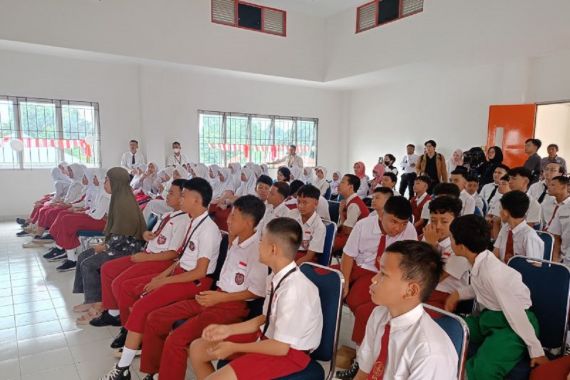
The government’s move to accelerate the expansion of Sekolah Rakyat (People’s Schools) reflects a progressive and well-directed social policy breakthrough within the broader human development agenda. This program demonstrates the state’s presence through concrete, timely, and targeted action, reaffirming that education remains a top priority in expanding opportunities for all segments of society.
Through a structured approach, Sekolah Rakyat strengthens the role of education as a strategic instrument for promoting social mobility. The program also serves as a critical foundation for building a generation that is capable, independent, and competitive—able to contribute optimally to sustainable national development.
From a series of site inspections conducted by Minister of Social Affairs Saifullah Yusuf, it is evident that the government is moving with a pragmatic yet visionary approach. During visits to prospective locations at PPI and BP3 Curug in Tangerang, the Minister assessed that these sites are highly prepared to begin operations as early as April. This optimism is well-founded, as essential facilities—including classrooms, dormitories, dining halls, healthcare services, and sports infrastructure—are already available and require only minor adjustments.
Popularly known as Gus Ipul, Saifullah Yusuf also noted that the Curug area is not only suitable as a temporary pilot school but has strong potential to develop into a permanent institution, supported by ample land and an established educational ecosystem. With an initial capacity to accommodate hundreds of students, this policy clearly demonstrates the government’s commitment to providing underprivileged children with access to quality boarding education.
This perspective is reinforced by Deputy Minister of Social Affairs Agus Jabo Priyono, who described the accelerated expansion of additional Sekolah Rakyat as a direct follow-up to presidential directives. In the context of public policy, this underscores strong political will at the highest level of government. Agus Jabo emphasized that this expansion goes beyond the previously planned development phases, indicating that the government is deliberately accelerating outreach to meet the growing needs of the population.
The first phase, which has already reached 166 locations, followed by the construction of permanent facilities in over 100 sites, is now being strengthened by additional locations targeted to be operational by April. This policy direction reflects a responsive governance model—where increasing social needs are met with immediate capacity expansion rather than delay.
Furthermore, the addition of new locations in Bogor and surrounding Jakarta areas highlights that Sekolah Rakyat is not merely a symbolic initiative, but part of a broader strategy for equitable access to education nationwide. By leveraging state assets across ministries—including the Ministry of Social Affairs, Ministry of Transportation, and support from local governments—the administration demonstrates an efficient governance model worthy of recognition.
This inter-agency synergy enables the expansion of educational access without the need to build entirely new infrastructure from scratch, allowing benefits to reach underprivileged communities more quickly—especially those who have long faced barriers related to cost, distance, and limited educational facilities.
From an infrastructure standpoint, insights from Essy Asiah, Secretary of the Directorate General of Strategic Infrastructure at the Ministry of Public Works, further reinforce public optimism. She noted that the prepared facilities are fundamentally suitable for use, both in terms of structural integrity and supporting amenities such as classrooms, dormitories, and other essential facilities. Required improvements are largely cosmetic or minor technical adjustments—such as fixing small cracks, ceilings, or refining teacher and dining spaces. With an estimated completion time of around two weeks, the April target appears realistic. This assurance is crucial, as the public expects that rapid program expansion remains grounded in proper standards rather than merely speed.
In a broader context, the expansion of Sekolah Rakyat aligns closely with the national agenda of improving human resources in preparation for Indonesia Emas 2045. The government is not only focused on macroeconomic growth but is also ensuring that development benefits reach the most vulnerable groups. Boarding education for underprivileged communities offers multiple benefits: improving learning quality, enhancing nutrition and discipline, and strengthening character development. In the long term, this model holds the potential to produce a new generation from rural and marginalized backgrounds capable of achieving upward social and economic mobility.
What makes this policy particularly noteworthy is the government’s ability to utilize existing assets, consolidate cross-ministerial coordination, accelerate execution, and direct efforts toward equitable access to education. This represents a clear example of how strong governance can translate the President’s vision into concrete programs that directly address public needs.
Ultimately, the expansion of Sekolah Rakyat is not merely about increasing the number of classrooms or dormitories, but about expanding hope for thousands of Indonesian children to achieve a better future. The government deserves recognition for its consistent commitment to education as a primary pathway for poverty alleviation. With a fast-paced work rhythm, strong inter-agency collaboration, and decisive leadership, this initiative sends a positive signal that the current administration is serious about ensuring that no child is left behind in accessing quality education.
*) Social Policy Analyst
