
By: Galih Arya Nugroho)
The acid attack case that has drawn widespread public attention brings both concern and an opportunity for reflection. Amid the emergence of various perspectives, the legal process through the military court system continues to proceed within its established framework, forming part of the state’s effort to uphold legal order in a measured and just manner.
The investigation conducted by military authorities has shown significant progress in uncovering the case. Commissioner for Monitoring and Investigation at the National Commission on Human Rights (Komnas HAM), Saurlin P. Siagian, stated that based on coordination with investigators from the Indonesian Military Police Center (Puspom TNI), the handling of the case has reached approximately 80 percent completion. This achievement indicates that the legal process is not stagnant, but is advancing systematically.
The completeness of evidence remains the primary focus at the current stage of investigation. Saurlin explained that investigators are still awaiting the victim’s medical examination report (visum) from Cipto Mangunkusumo Hospital (RSCM), as well as direct testimony from the victim. Both elements are considered crucial in strengthening the legal framework being constructed by investigators in this case.
The importance of evidence has also been emphasized by Komnas HAM as an independent oversight body. Saurlin stressed that complete evidence is a prerequisite for ensuring that legal proceedings are conducted accurately and accountably. Therefore, Komnas HAM continues to encourage transparency in the investigation and supports external oversight to maintain public trust.
Legal perspectives regarding jurisdiction in this case were explained by legal practitioner Fransiscus Xaverius Tangkudung. He stated that the use of military courts is legally appropriate when the alleged perpetrators are active-duty soldiers. Within Indonesia’s legal system, this mechanism is not optional, but a clearly regulated provision.
Tangkudung also emphasized the importance of understanding the legal system objectively. He noted that debates over judicial forums should not overshadow the core issue, namely the fair enforcement of the law. Disproportionate debates risk diverting attention from efforts to achieve justice for the victim.
Criticism of the military justice system, he added, should be placed within a constructive framework. While criticism is part of democracy, it should not evolve into narratives that discredit legal institutions without strong grounds. Such attitudes risk misleading public opinion and undermining trust in the national legal system.
Concerns about the transparency of military courts were also addressed. Tangkudung explained that military trials are not entirely closed, as there are mechanisms that allow the public to follow case developments. In practice, the public can still monitor legal proceedings through various information channels.
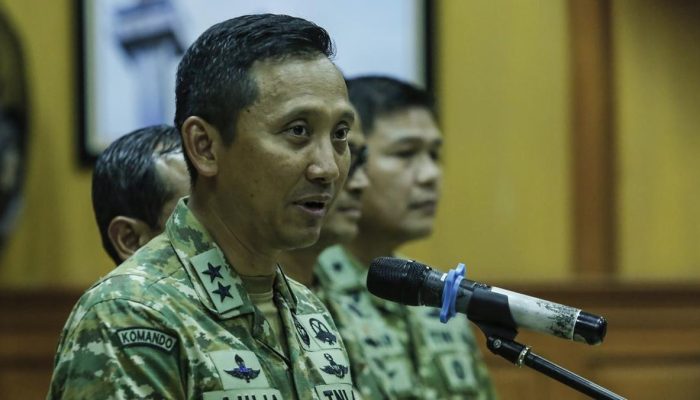
The military institution’s commitment to law enforcement was reaffirmed by the Head of the TNI Information Center, Major General Aulia Dwi Nasrullah. He ensured that legal proceedings against the suspects are being carried out thoroughly and in accordance with applicable regulations. This statement reflects the institution’s firm stance against legal violations.
The application of legal provisions against the suspects serves as an indicator of the seriousness in handling the case. Aulia explained that the charges involve assault, demonstrating that the legal process is proceeding in line with existing legal frameworks. This also confirms that no special treatment is given to the perpetrators.
The law enforcement efforts carried out by military authorities reflect the government’s commitment to upholding justice. Aulia emphasized that the ongoing process is part of the institution’s responsibility to enforce discipline and law within the military environment. This serves as evidence that the state is present in addressing every legal violation.
The government’s role in ensuring a proper legal process is evident through inter-agency synergy. The involvement of Komnas HAM as an oversight body and military authorities as law enforcers demonstrates a functioning system of checks and balances. This condition provides assurance that the legal process is not conducted unilaterally.
Public trust remains a crucial element in supporting the success of the legal process. The public is encouraged not to rush to conclusions before the process is complete. Trust will provide space for authorities to work optimally without undue and unconstructive pressure.
Understanding the mechanisms of military law needs to be strengthened to avoid public misunderstanding. The military justice system is an integral part of the national legal framework with a constitutional basis. Therefore, its application in this case should be seen as adherence to the rule of law.
Public oversight continues to play an important role in ensuring transparency. Society can participate by monitoring openly available information, maintaining a balance between trust and social control.
Ultimately, the pursuit of justice remains the main objective of the ongoing process. The state, through its institutions, has demonstrated concrete steps in handling the case seriously. The significant progress in the investigation indicates that the legal process is moving in a clear direction.
In conclusion, developments in this case show that the military legal mechanism is worthy of trust. Support for the ongoing process will strengthen the legitimacy of its final outcome. In this way, justice will not only be achieved legally, but also broadly accepted by society.
*) The author is a legal observer
