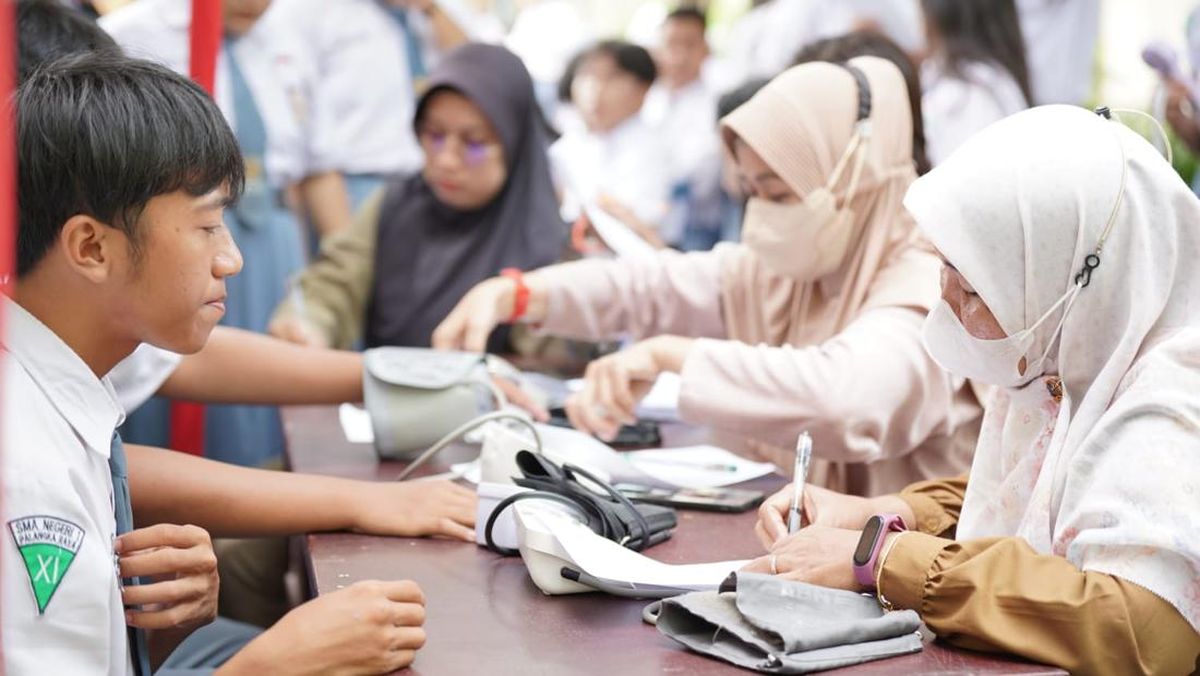

JAKARTA – The government’s efforts to strengthen student health through the Free Health Check Program (Cek Kesehatan Gratis/CKG) continue to show positive results. As part of President Prabowo Subianto’s Asta Cita agenda, the program not only increases health awareness but also enhances early detection of various diseases among school-age children.
The implementation of CKG across various regions has demonstrated tangible impacts. At Integrated Public School 58 Sempaja in Samarinda, for example, the program successfully identified several health issues that had previously gone undetected.
Vice Principal Yunita Ainur Rizkiah revealed that during the implementation of CKG, several students required further medical attention.
“There have been several children referred for follow-up treatment, for example due to dental caries, cavities, and persistent coughs lasting several days,” she said.
According to Yunita, the presence of this program has also encouraged behavioral changes among students. They have become more attentive to their health conditions and are no longer hesitant to report symptoms early.
“Students are now more aware of their physical condition. Even minor complaints such as stomach aches or flu symptoms are immediately reported,” she added.
From a service perspective, all students have been integrated into the BPJS Health system, making referral and treatment processes easier. This strengthens the program’s effectiveness in ensuring equitable access to healthcare services.
The strengthening of CKG is also being carried out in other regions. In Landak Regency, the local Health Office has urged parents to promptly follow up on their children’s health examination results. Head of the Landak Health Office, Subanri, emphasized the importance of this step to prevent diseases from developing into more serious conditions.
“If chronic illnesses are detected in children, they should immediately be taken to hospitals or community health centers for further treatment. That is the purpose of CKG,” he said.
He also highlighted that the program targets not only school-going children but also those who are not enrolled in school.
“It is easier to reach school children. However, for children who are not in school, parents are expected to ensure they also undergo CKG,” he explained.
Beyond physical health, CKG has expanded its scope to include mental health detection. In Trenggalek Regency, screening results revealed symptoms of anxiety and depression among some students. Head of the Trenggalek Health Office, Dr. Sunarto, stated that these findings are an important concern in protecting children’s health.
“For depression, mild symptoms were found in 0.81 percent of students, while severe depression was identified in 0.35 percent,” he said.
He explained that biological, psychological, and environmental factors contribute to these conditions. However, they remain manageable with proper support.
“With appropriate treatment and family support, these symptoms can be addressed,” he emphasized.
Nationally, the Ministry of Health also recorded that around 10 percent of Indonesian children show indications of mental health issues based on CKG screening results for the 2025–2026 period. Minister of Health Budi Gunadi Sadikin described this figure as an important signal for all stakeholders.
“This shows that mental health issues are quite significant,” he said.
The government will continue to expand screening coverage and strengthen cross-sector collaboration to ensure that every child receives proper care. With increasingly optimal early detection systems, the CKG program is expected to foster a healthier generation—both physically and mentally—thereby supporting more effective and sustainable learning processes.
