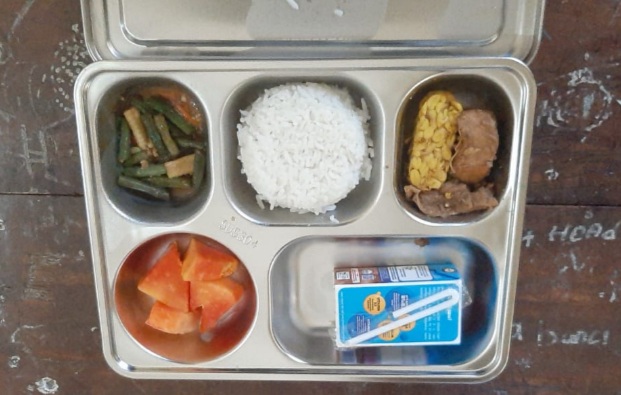

By: Bayu Kurniawan)
The government’s move to optimize the Free Nutritious Meals (MBG) Program into a five-day weekly scheme reflects a serious effort to balance public service quality with efficient state budget management. This policy comes amid increasingly complex fiscal challenges, as well as the need to ensure that social programs continue to reach a broad segment of society in a sustainable manner. The government’s approach demonstrates that efficiency does not necessarily mean reducing benefits, but rather refining systems to be more targeted and measurable.
Coordinating Minister for Economic Affairs, Airlangga Hartarto, emphasized that the optimization of MBG is designed to ensure the program continues to provide fresh and nutritious meals during five effective days each week. He noted that this step is part of a broader policy transformation, including strengthening work culture and improving energy efficiency measures implemented since April 1, 2026. As such, the adjustment is not a standalone policy, but part of a wider national strategy to enhance the effectiveness of government spending.
Despite the adjustment in distribution days, the government continues to prioritize vulnerable groups and regions. Boarding schools, underdeveloped, frontier, and outermost areas, as well as regions with high stunting rates, will still receive services six days a week. This affirmative policy underscores that fairness remains a core principle, ensuring that those most in need continue to receive maximum support.
From a fiscal perspective, the policy is projected to generate savings of up to IDR 20 trillion. This figure illustrates how improvements in governance can significantly enhance fiscal efficiency without compromising program quality. The government views these savings as an opportunity to reallocate resources to other priority sectors, thereby ensuring that development benefits are distributed more evenly.
As of early March 2026, the MBG program has demonstrated encouraging progress. More than 60 million beneficiaries across Indonesia have been reached, including school children, pregnant women, breastfeeding mothers, and the elderly. This wide coverage reflects the government’s commitment to strengthening national nutritional resilience as a foundation for developing high-quality human resources.
However, the government remains attentive to various implementation challenges. Coordinating Minister for Food Affairs, Zulkifli Hasan, emphasized the importance of strengthening oversight and conducting comprehensive evaluations. He highlighted the need to accelerate distribution to Islamic boarding schools in line with directives from Prabowo Subianto, with improvements targeted for completion before the end of the year. This reflects the government’s ongoing commitment to refining program implementation.
In addition, evaluations are focused on improving nutritional standards for priority groups, particularly toddlers, pregnant women, and breastfeeding mothers. The government is developing a more comprehensive monitoring system that not only assesses distribution but also examines long-term impacts on physical growth and cognitive development. Indicators such as height and intelligence development are becoming essential benchmarks in evaluating program effectiveness.
Oversight has also been strengthened for Nutrition Fulfillment Service Units, which serve as the frontline implementers of the MBG program. The government has taken firm action against units that fail to meet hygiene and sanitation standards. Of the thousands of units evaluated, many have been temporarily suspended until they meet the required criteria. This policy underscores that service quality remains a top priority.
Deputy Head of the National Nutrition Agency, Sony Sanjaya, stressed that MBG is a strategic national program that must be free from any form of leakage. He noted that the success of the program will significantly influence the nation’s future, particularly in creating a healthy and productive generation. Therefore, all stakeholders involved are expected to demonstrate high integrity and commitment.
Sony Sanjaya also revealed that President Prabowo Subianto has issued firm directives to ensure there is no corruption in the implementation of MBG. All allocated funds must be delivered directly to the intended beneficiaries. This directive serves as a critical foundation in maintaining transparency and accountability.
From a broader perspective, the optimization of MBG into a five-day scheme reflects the government’s progress over the past year in reforming social policy and fiscal management. Achievements such as strengthening data-driven social protection systems, improving spending efficiency, and accelerating the reduction of stunting rates demonstrate increasingly mature and well-directed policy implementation. The government has been able to maintain a balance between program expansion and fiscal discipline.
These achievements are the result of consistent efforts to improve governance, strengthen oversight, and ensure that every program is accurately targeted. This serves as a crucial foundation for building public trust and ensuring that policy benefits are genuinely felt by the wider community.
Ultimately, the five-day optimization of the MBG program should be understood as a strategic step toward strengthening its long-term sustainability. The government has demonstrated that efficiency can go hand in hand with improved service quality. With the support of all elements of society, the program is expected not only to continue, but to become increasingly effective in enhancing nutritional quality and public welfare in Indonesia—while also serving as a collective momentum to uphold integrity and ensure that every public policy delivers tangible benefits for the nation’s future.
*) Strategic National Issues Writer
