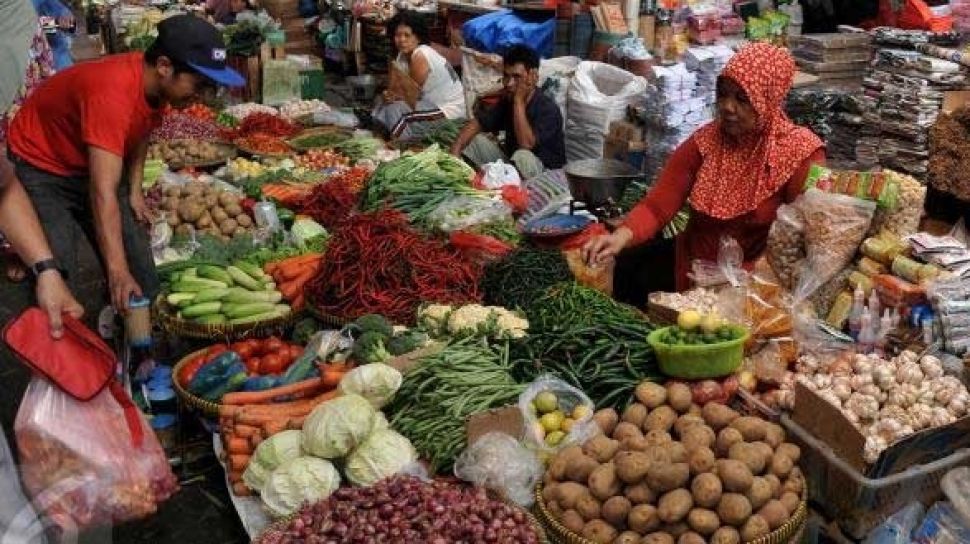

Jakarta – Head of the National Food Agency (Bapanas) and Minister of Agriculture, Andi Amran Sulaiman, emphasized that the government continues to strengthen national economic stability through the extension of food aid distribution for the public. This policy serves as a strategic measure to maintain purchasing power, particularly for low-income groups.
“In order to maintain the stability of food supply and prices, Bapanas is implementing strategic measures, one of which is the distribution of food assistance,” Amran stated.
The government has decided to extend the distribution of food assistance, consisting of rice and cooking oil, until April 2026. The program targets approximately 33.2 million beneficiary families across Indonesia, most of whom come from vulnerable groups.
This step reflects the government’s commitment to sustaining household consumption as one of the main drivers of national economic growth.
Deputy for Food Availability and Stabilization at Bapanas, I Gusti Ketut Astawa, affirmed that the food aid program represents the state’s tangible presence in protecting its citizens.
“This program is necessary to ensure that all low-income communities, totaling 33.2 million, can feel the presence of the government,” Ketut said.
Under the scheme, each beneficiary family receives 10 kilograms of rice and 2 liters of cooking oil per month. The assistance is expected to ease household expenses while maintaining consumption stability amid fluctuations in food prices.
As of the end of March 2026, the distribution has reached 382,529 beneficiaries across 24 provinces. In terms of volume, distribution has totaled 7.65 million kilograms of rice and 1.53 million liters of cooking oil.
These figures are expected to increase as the government accelerates distribution through Perum Bulog, which is tasked with implementing the program.
The food assistance program is supported by a budget allocation of IDR 11.92 trillion. The distribution is based on national policy decisions resulting from the 2026 High-Level Meeting of the Central Inflation Control Team (TPIP), as well as the availability of allocated funding.
In addition, the government has significantly expanded the number of beneficiaries, from 18.27 million to 33.24 million recipients. This reflects efforts to broaden intervention measures in maintaining public purchasing power more evenly.
Regionally, provinces on Java Island such as West Java, East Java, and Central Java account for the largest number of beneficiaries. However, distribution is also being expanded to eastern Indonesia, including Maluku and Papua, as part of the government’s commitment to equitable welfare distribution.
[w.R]
