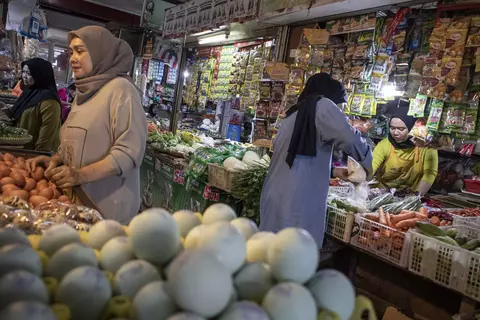

Jakarta – The government has extended its food assistance program for rice and cooking oil until April 2026. This policy serves as a strategic measure to maintain household purchasing power, particularly for low-income groups.
As an economic stimulus for the first quarter, the extension of food assistance is not merely about prolonging distribution, but also about strengthening public optimism regarding the government’s ability to sustain domestic consumption as a key driver of economic growth.
Amid ongoing global pressures affecting commodity prices and supply chains, this policy acts as an effective social cushion, ensuring that communities retain sufficient spending capacity, especially for basic necessities.
Deputy for Food Availability and Stabilization at the National Food Agency (Bapanas), I Gusti Ketut Astawa, emphasized that the extension is designed to ensure the program’s benefits are widely felt by the public.
“For food assistance in the form of rice and cooking oil, preparations by Perum Bulog are currently underway. Distribution will take place from March through April. There is an extension, and we at Bapanas have finalized the necessary arrangements,” Ketut stated.
In a separate statement, he also highlighted the social dimension of the policy as a tangible representation of the state’s presence.
“This program is necessary to ensure that all low-income communities, totaling 33.2 million beneficiary families, can feel the presence of the government,” he added.
Meanwhile, Minister of Agriculture and Head of Bapanas, Andi Amran Sulaiman, stressed that the success of the program is measured not only by the speed of distribution but also by its ability to maintain national supply stability.
“Therefore, in order to maintain food supply and price stability, the National Food Agency is implementing strategic measures, including the distribution of 10 kilograms of rice and 2 liters of cooking oil for two months to 33.2 million beneficiary families,” Amran said.
At the same time, the government continues to strengthen its Government Food Reserves (CPP) to anticipate potential disruptions caused by extreme weather conditions expected to begin in April, including the threat of El Niño, which could affect production.
This simultaneous approach—combining social assistance with stock reinforcement—reflects the government’s effort to safeguard public consumption while securing medium-term supply.
The policy is highly relevant in the current context, as maintaining public purchasing power directly impacts price stability, trade activity, and overall national economic sentiment. When household spending remains strong, local economic activity—from traditional markets to food distribution logistics—can continue to operate in a healthy and sustainable manner.
