
By: Abdul Razak)
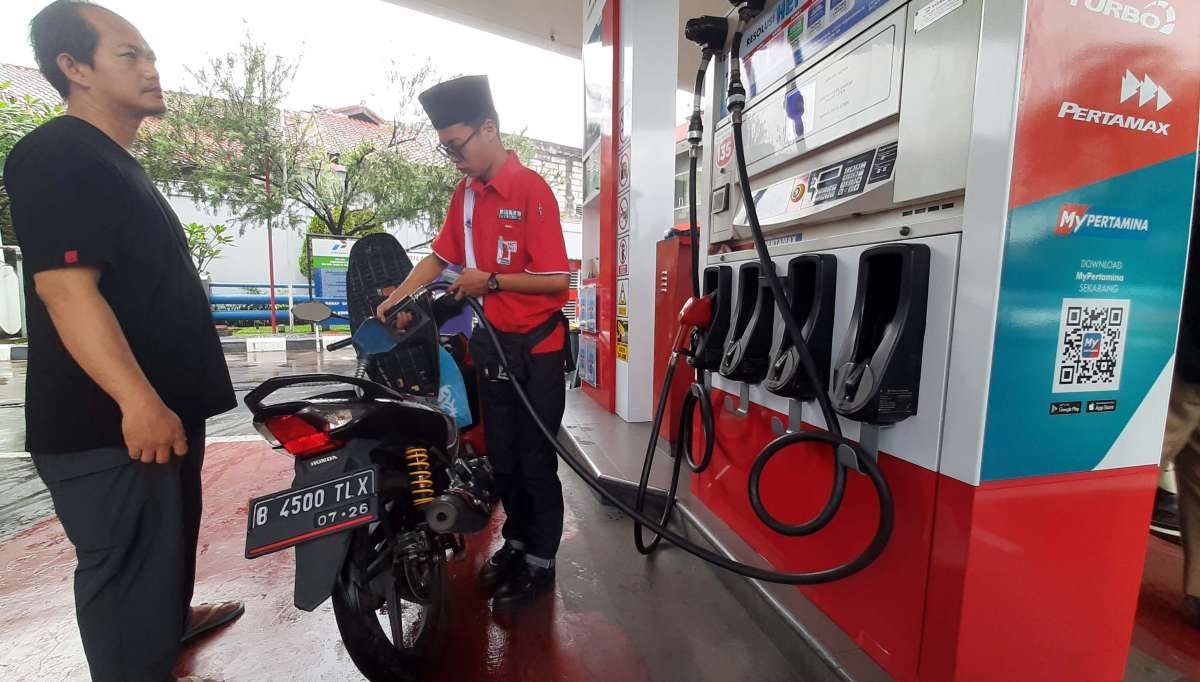
Amid global pressures driven by surging energy prices triggered by geopolitical conflicts, the Indonesian government has opted for a strategic policy by holding fuel prices (BBM) steady as of April 1, 2026. This move sends a strong signal that domestic economic stability remains the top priority.
The conflict between the United States and Iran has significantly pushed up global oil prices. In such circumstances, many countries choose to raise fuel prices to align with market rates. Indonesia, however, has taken a different approach by maintaining stable prices to protect people’s purchasing power.
Minister of Finance, Purbaya Yudhi Sadewa, explained that the gap between the economic price and the retail price of non-subsidized fuel is temporarily borne by PT Pertamina (Persero). He noted that this policy remains feasible due to Pertamina’s stable financial condition, supported by government compensation payments that are now made regularly each month.
Purbaya stated that Pertamina’s financial capacity is still strong, as the flow of government payments is running smoothly. He added that around 70 percent of compensation is disbursed periodically, allowing the company to absorb the burden in the short term without disrupting its financial health.
As an illustration, the economic price of Pertamax fuel is estimated to have reached around Rp17,850 per liter. However, the retail price remains at approximately Rp12,300 per liter. The difference of about Rp5,500 per liter represents an additional burden that must be absorbed by Pertamina.
On the other hand, this policy reflects the government’s strong commitment to maintaining economic stability and protecting public purchasing power. Support for the energy sector through carefully allocated budgets is part of a broader strategy to ensure that economic activities continue to run optimally amid global dynamics.
Purbaya further explained that the government is not solely relying on budget surpluses as the main solution. Instead, it is implementing gradual efficiency measures in ministry and institutional spending deemed less of a priority. He also revealed that the current budget surplus stands at around Rp420 trillion and can serve as a buffer if conditions become more pressing.
This step demonstrates that the policy of holding fuel prices is carried out with careful consideration. The government is striving to balance economic stability with fiscal sustainability so that the impact of global volatility is not directly felt by the wider public.
From the energy industry’s perspective, PT Pertamina, through Pertamina Patra Niaga, has confirmed its commitment to implementing government policies. Corporate Secretary of Pertamina Patra Niaga, Roberth M.V. Dumatubun, stated that various strategic measures have been taken to ensure secure energy supply.
Roberth said that Pertamina Patra Niaga continues to follow government directives in setting fuel prices while negotiating with suppliers and optimizing distribution to maintain energy availability. He also urged the public to use energy wisely and not be influenced by information that could trigger panic.
Efficiency efforts are also emerging at the regional level. The Mataram City Transportation Agency, for example, is reviewing the provision of shuttle buses for civil servants to reduce the use of official vehicles.
Head of the Mataram City Transportation Agency, Zulkarwin, explained that the program aims to reduce fuel consumption while improving vehicle use efficiency. He noted that echelon III officials will be facilitated with buses, while echelon II officials are encouraged to use more environmentally friendly transportation such as bicycles. He added that technical studies are still ongoing, including route planning and fleet requirements.
These measures reflect that the policy of maintaining fuel prices must be accompanied by changes in energy consumption patterns. Without collective awareness, the burden borne by the state will continue to grow.
Support has also come from the industrial sector. Vice President Director of PT Toyota Motor Manufacturing Indonesia, Bob Azzam, views the policy as an important step in maintaining public purchasing power.
Bob stated that his party appreciates the government’s decision, as fuel price increases would have widespread impacts on consumption. However, he warned that relatively affordable prices should not lead to complacency. He emphasized the importance of wise fuel usage, considering the government’s limited fiscal space.
Furthermore, Bob highlighted potential disruptions in industry due to shortages of plastic raw materials that could affect various sectors. He hopes the issue can be resolved soon to prevent hindering national production and to maintain price stability.
Ultimately, the policy of holding fuel prices is a strategic step in facing global pressures. In this context, calmness and vigilance are key. Calmness is needed to maintain public trust and prevent panic, while vigilance ensures that all parties remain disciplined in managing energy consumption.
Maintaining fuel prices indeed provides short-term protection. However, the sustainability of this policy depends heavily on efficiency, innovation, and collective awareness. With this combination, Indonesia can remain resilient in facing ever-changing global dynamics without sacrificing national stability.
)* Policy Analyst
