
By: Kirana Maheswari)
The resilience of a nation’s economy does not emerge in a vacuum, but rather from a precise orchestration of policies and a high degree of adaptability to external shocks. Amid an increasingly fragmented global geopolitical landscape and persistent uncertainty in international financial markets, Indonesia has managed to deliver performance that exceeds many observers’ expectations. The country’s economic fundamentals have demonstrated strong resilience, driven not by market luck but by consistent strategies in industrial downstreaming and the strengthening of domestic sectors. Measured responses to global supply chain disruptions further underscore that Indonesia is no longer a passive observer in international dynamics, but an active player capable of maintaining internal stability.
Maintained macroeconomic stability has become the central narrative in shaping current economic policy direction. Spokesperson for the Coordinating Ministry for Economic Affairs, Haryo Limanseto, stated that Indonesia’s economic fundamentals remain solid in facing external pressures. According to him, the 5.11 percent year-on-year economic growth recorded in 2025 serves as clear evidence that the growth engine continues to function optimally despite the shadow of global slowdown. This achievement reflects not merely statistical performance, but the effectiveness of price control policies and market stabilization efforts that have kept inflation within the targeted range. Strong coordination between monetary and fiscal authorities has ensured that public purchasing power remains protected from volatile global commodity prices.
The ability to sustain this growth momentum is largely supported by robust household consumption as the primary driver of the economy. Recognizing that maintaining public optimism is key, the government has strategically allocated fiscal stimulus and social assistance programs to ensure that economic activity at the grassroots level continues to run. By preserving this social buffer, the government has created a stable domestic environment, providing confidence for businesses to continue expanding. National manufacturing activity, which remains in the expansion zone, further reinforces this condition. The Purchasing Managers’ Index reaching 53.8 indicates that Indonesia’s production sector possesses high flexibility in adapting to logistical challenges and rising input costs.
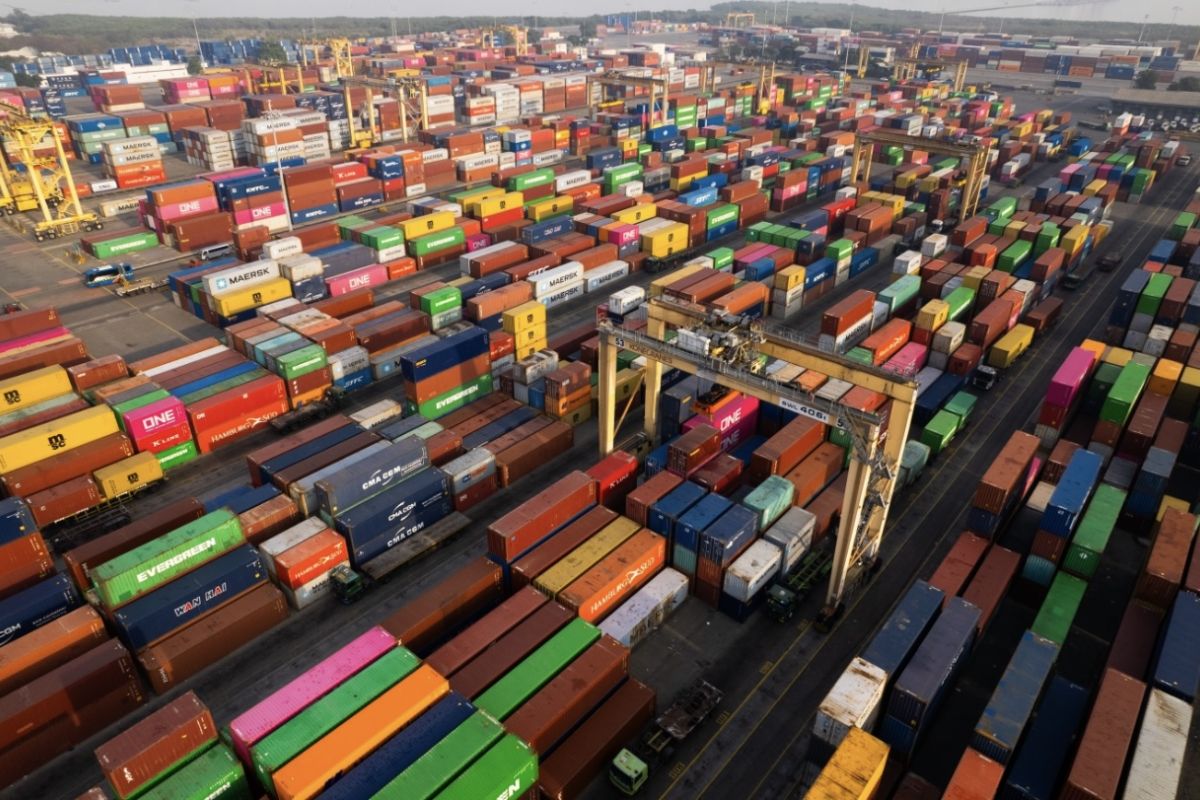
On the external front, the sector continues to contribute significantly through strong trade balance performance. According to the latest data from Statistics Indonesia, the country recorded a surplus of USD 1.27 billion in February 2026. This achievement extends a remarkable streak of 70 consecutive months of surplus—an outcome rarely seen amid a contracting global economy. Minister of Trade Budi Santoso noted that rising prices of key commodities such as crude palm oil and coal have acted as positive catalysts for export value. He explained that strong global demand, combined with production constraints in competing countries, has opened wider opportunities for Indonesia to sustainably expand its international market share.
The government’s strategy in leveraging global market gaps reflects a keen ability to identify opportunities amid crises. Despite rising logistics costs driven by conflicts in various regions, increased global commodity prices have helped offset these burdens, maintaining Indonesia’s export competitiveness. Additionally, carefully managed export levies ensure a balance between state revenue interests and business sustainability. The government’s focus extends beyond raw material exports, with a strong push toward economic transformation through industrial downstreaming. This approach is crucial in reshaping the economic structure toward higher value-added activities, reducing long-term dependence on volatile raw commodity prices.
Industrial downstreaming through mineral processing and the development of an electric vehicle ecosystem has become a cornerstone in strengthening the national industrial structure and building a solid defense against global supply chain disruptions. This strategy is complemented by accelerated digitalization and technological integration in the MSME sector, aimed at enhancing productivity and fostering inclusive economic growth. At the same time, the commitment to renewable energy development further strengthens energy sovereignty and Indonesia’s strategic position in the global transition toward a stable green economy. Through visionary cross-sectoral policy synergy, the government ensures that the economic ecosystem remains resilient, responsive, and sustainable in addressing future challenges.
Amid global uncertainty, the government’s clear policy direction in maintaining a balance between macroeconomic stability and real sector strengthening has instilled confidence among markets and investors. Indonesia has demonstrated that with strategic economic leadership, complex international dynamics can be transformed into opportunities to accelerate structural transformation. The continuity of downstreaming, digitalization, and domestic strengthening policies will be key in ensuring that Indonesia remains a resilient economic force both regionally and globally.
*) Public Policy Analyst
