
By: Teguh Prasetyo)
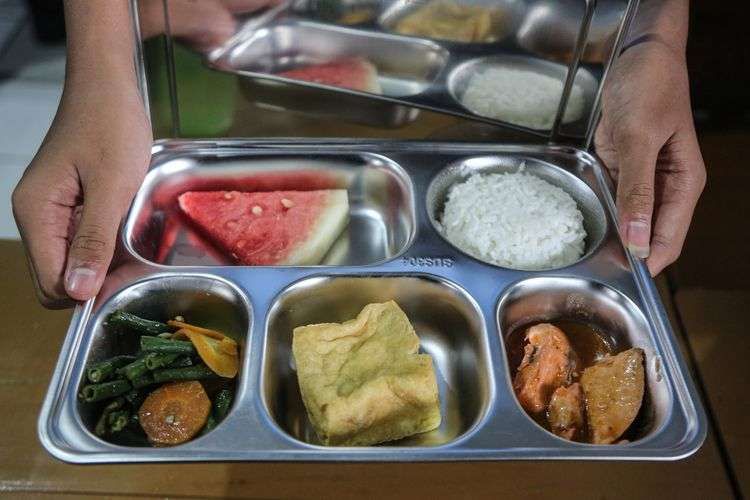
The adjustment of the Free Nutritious Meals (MBG) program implementation to five days a week is seen as an adaptive policy by the government to improve targeting accuracy while maintaining budget efficiency without compromising service quality. This decision follows a comprehensive evaluation involving multiple ministries and agencies, which found that the previous six-day distribution, including weekends, was not fully effective, as not all beneficiaries could optimally access the program. Through this new scheme, the government aims to ensure that every budget allocation delivers tangible impacts in improving nutritional quality, particularly for the most vulnerable groups, making the program more effective and sustainable.
Coordinating Minister for Economic Affairs, Airlangga Hartarto, stated that the policy has the potential to generate budget savings of up to approximately IDR 20 trillion. This figure is considered significant in supporting more efficient and targeted fiscal management, especially amid global economic challenges that require prudent allocation of state resources. Importantly, this efficiency does not imply a reduction in service quality, but rather the elimination of ineffective distribution.
In line with this, Coordinating Minister for Food Affairs, Zulkifli Hasan, explained that the change in the MBG distribution scheme is not merely about reducing days, but part of a broader effort to improve system effectiveness. The government has decided that MBG will now be distributed only on school days, as previous distribution during holidays was deemed less impactful. This approach ensures that distribution aligns with student attendance, thereby minimizing food waste.
Nevertheless, the government continues to provide special attention to certain regions, such as underdeveloped, frontier, and outermost areas, as well as regions with high stunting rates. In such cases, adjustments to the distribution schedule remain possible, including the addition of days when necessary. This policy reflects a flexible approach that considers real conditions on the ground, ensuring that the program remains relevant and impactful for those most in need.
The National Nutrition Agency, under the leadership of Dadan Hindayana, has ensured that MBG distribution continues for vulnerable groups, particularly pregnant women, breastfeeding mothers, and toddlers. These groups will continue to receive benefits six days a week, regardless of school holidays. This demonstrates that the government prioritizes the protection of vulnerable populations within its national nutrition policies.
In addition, students and Islamic boarding school residents (santri) will still have access to MBG during holidays through special mechanisms, particularly for schools or pesantren that remain operational. This reflects the flexibility of the policy design, ensuring continuity of benefits without fully halting program services.
In terms of oversight, the National Nutrition Agency has taken firm measures by issuing warnings to 2,100 Nutrition Fulfillment Service Units and temporarily suspending the operations of 1,789 units that failed to meet requirements. These requirements include hygiene and sanitation certification as well as the availability of wastewater treatment facilities. This step is a crucial part of maintaining food quality standards.
Dadan Hindayana emphasized that the temporary suspensions are not punitive measures, but part of a development process. Each unit is given the opportunity to address deficiencies before resuming operations. This reflects the government’s commitment to ensuring that all MBG service providers meet established standards.
Findings of several units producing menus that did not meet standards during Ramadan have also become an important part of the program’s evaluation. The government responded by temporarily halting operations of the affected units to allow improvements. This action demonstrates the government’s seriousness in maintaining service quality and responding swiftly to issues on the ground.
Over the past year, the government has recorded several positive achievements in the implementation of MBG. The number of beneficiaries has continued to increase, distribution has become more equitable, and inter-agency coordination has improved. Moreover, nutritional interventions through the program have begun to show an impact on reducing stunting rates in several priority regions, serving as a key indicator of the program’s success.
These achievements are the result of strengthened distribution systems, improved oversight quality, and the involvement of multiple stakeholders. Synergy between central and local governments, along with community participation, has become a critical factor in sustaining the MBG program.
With these adjustments and achievements, the government demonstrates a strong commitment to continuously refining the MBG program. The five-day policy is not merely a cost-saving measure, but part of a broader strategy to enhance overall program effectiveness.
Looking ahead, the success of this program will depend on consistent oversight, infrastructure readiness, and support from all elements of society. Therefore, active participation from all stakeholders is essential to ensure that the MBG program runs in line with its intended objectives, ultimately contributing to the sustainable improvement of nutritional quality among the Indonesian population.
*) Government Policy Columnist
