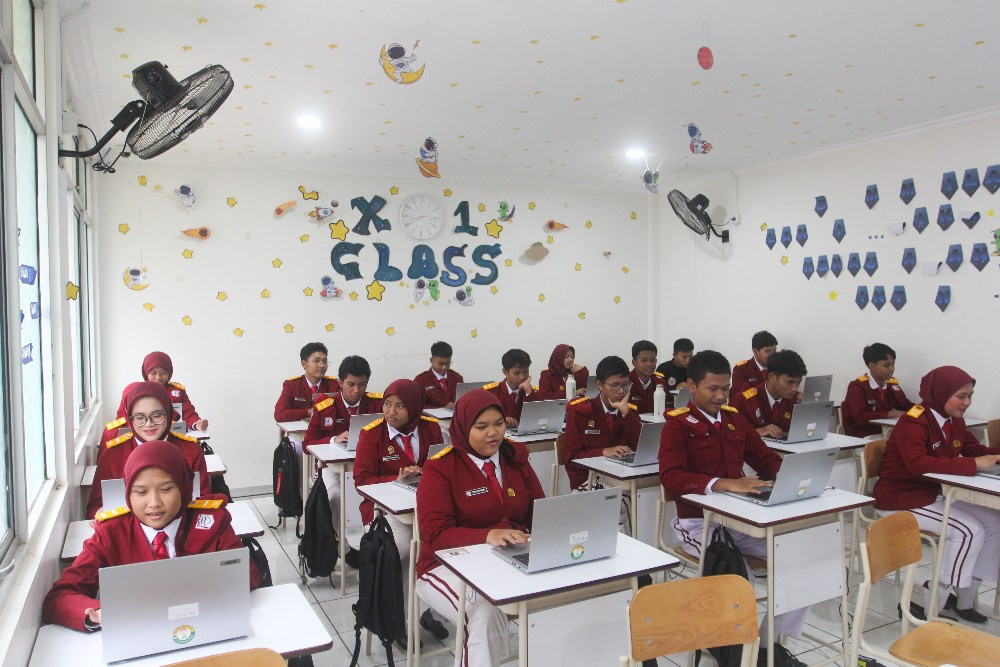

Jakarta – The People’s School program has been introduced as a government initiative to expand access to quality education for all Indonesian children, particularly those from underprivileged backgrounds. This initiative is expected to reduce educational disparities while fostering a more competitive future generation.
Minister of Women’s Empowerment and Child Protection (PPPA), Arifah Fauzi, stated that the People’s School program serves as a solution to help children from low-income families continue their education. Through this initiative, no Indonesian child should be deprived of access to schooling.
“How could the President not want every Indonesian child to have access to food and education? That is why People’s Schools are here as a solution, ensuring that children from disadvantaged families can continue their education,” said Arifah.
According to her, the presence of People’s Schools brings renewed hope to children who previously felt discouraged or unable to pursue further education, allowing them to engage in learning activities with greater enthusiasm.
“They feel that this program reignites their spirit to achieve their dreams,” she added.
Although the education provided is free, the government has prepared the People’s School program with great seriousness by ensuring high-quality infrastructure and governance. This is reflected, among other things, in the strict supervision of school development across various regions conducted by the central government.
Member of Commission E of the East Java Regional House of Representatives (DPRD), Cahyo Harjo Prakoso, expressed his appreciation for the government under President Prabowo Subianto for launching the People’s School program as a means of equalizing access to education and alleviating poverty.
According to Cahyo, in terms of facilities, People’s Schools are highly adequate, equipped with advanced technology to support the teaching and learning process. In addition, educational facilities also provide various aspects of personal development.
“He wants our public services in the education sector not only to produce intellectually capable young generations, but also individuals with strong character,” he explained.
The Chairman of the Gerindra Party’s Surabaya City branch believes that equal access to education is a crucial factor in achieving the vision of Indonesia Emas 2045. Therefore, such efforts must be collectively supported through the People’s School program.
“We, together with the East Java provincial government, are committed to building high-quality education services,” he concluded.
