
By: Dhita Karuniawati)
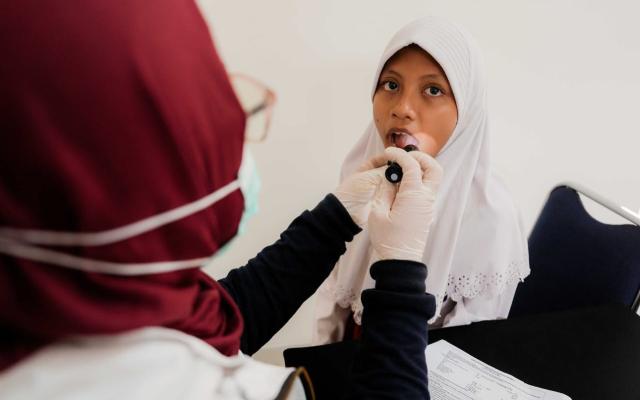
The Free Health Check Program (Cek Kesehatan Gratis/CKG) for students has become one of the government’s strategic initiatives to ensure that the younger generation grows up healthy, productive, and capable of achieving optimal performance. This program not only serves as an early detection effort for various health issues but also lays an important foundation for building a healthy lifestyle from an early age.
The importance of CKG for students is becoming increasingly relevant amid the health challenges faced by children and adolescents today. Sedentary lifestyles, unbalanced diets, as well as academic and social pressures can affect both physical and mental health. Therefore, the presence of an integrated and systematic program such as CKG is crucial. Through regular health screenings, potential health problems can be identified early, allowing for prompt and appropriate treatment.
Based on information from the Presidential Staff Office, the CKG program has shown significant achievements at the beginning of 2026. Head of the Presidential Staff Office, M. Qodari, stated that from January to February 2026, the program served 10,563,593 participants across 9,543 community health centers in 514 regencies/cities. Of these, 714,808 participants have received treatment, while 7,577,364 are still undergoing follow-up.
These achievements signal a positive trend in growing public awareness of the importance of health. However, sustainability and program expansion remain challenges that must be addressed. Students, as a strategic group, should be prioritized, considering they are in a critical phase of growth that determines future health quality. With regular check-ups, conditions such as anemia, vision problems, and nutritional issues can be detected early, preventing disruption to the learning process.
In addition to physical health, mental health has also become a key focus of the CKG program. Minister of Health Budi Gunadi Sadikin stated that the government plans to expand the program’s coverage to 14 million children in 2026 as part of promotive and preventive efforts to strengthen children’s mental health and prevent suicide.
He explained that in 2025, the program reached seven million children out of a target of 25 million. Of those screened, around 4.4 percent (338,000 children) showed symptoms of anxiety, while 4.8 percent (363,000 children) showed symptoms of depression.
According to Budi, there are two significant factors that may lead children to suicidal tendencies: family-related issues, such as conflict or parenting patterns, and environmental factors, such as bullying in academic settings. Therefore, expanding mental health screening is essential to identify at-risk children at an early stage.
The Ministry of Health will also educate teachers to identify social pressures such as bullying and intervene accordingly. In addition, emergency support services will remain available, and standardized treatment procedures are being prepared for children requiring further care. Community health centers (puskesmas) will be equipped with professional personnel capable of providing mental health services.
Budi also noted that the Ministry of Health, together with other ministries and institutions—including the Ministry of Religious Affairs, the Ministry of Primary and Secondary Education, the Ministry of Communication and Digital Affairs, and the Indonesian National Police—has signed a joint decree involving nine ministers and agency heads to strengthen efforts in safeguarding children’s mental health.
This comprehensive approach adds significant value to the CKG program. By incorporating mental health aspects, students not only receive physical examinations but also support in dealing with emotional and social pressures. Schools can serve as strategic partners in implementing the program by providing counseling services, mental health education, and fostering a supportive and inclusive learning environment.
CKG has a direct impact on students’ academic performance. Good health conditions enable students to be more focused, active, and productive in their studies. Conversely, undetected health issues can reduce concentration, attendance, and motivation. Therefore, investing in student health is essentially a long-term investment in improving the quality of national education.
The role of parents and the community is equally important in ensuring the success of the CKG program. Awareness of the importance of regular health check-ups and the adoption of healthy lifestyles at home are key success factors. Continuous health education is necessary to make healthy living a part of daily culture. In this regard, collaboration between the government, schools, healthcare providers, and families is essential.
Ultimately, CKG for students is not merely a health screening program but a strategic investment in building the nation’s future. By ensuring that every student has access to adequate healthcare services, the government is laying a strong foundation for a healthy, intelligent, and competitive generation.
The CKG program is expected to continue expanding and reach more students across Indonesia. With support from all stakeholders, CKG can become a key pillar in realizing the vision of an advanced Indonesia through a healthy and high-achieving younger generation.
