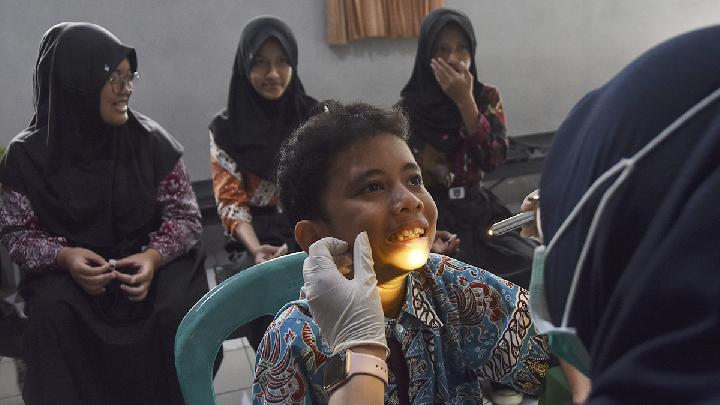
Student Health Screening (CKG) and the Urgency of Early Detection for the Younger Generation

By: Doni Wicaksono
The development of a high-quality young generation cannot be separated from a strong foundation of health from an early age. The Free Health Check Program (CKG) for students represents a progressive step that deserves appreciation, as it introduces a preventive approach to safeguarding the health of Indonesian children. Amid increasingly complex lifestyle changes—ranging from fast-food consumption to high dependence on digital technology—the risk of health problems among school-age children continues to rise.
The CKG Student Program is not merely a routine health check, but a strategic movement aimed at building collective awareness of the importance of health from a young age. Through various stages of examination—such as body mass index measurement, eye and dental check-ups, and mental health screening—students gain a comprehensive understanding of their health condition. This is crucial, as many health issues among children and adolescents often go undetected due to minimal symptoms or lack of awareness.
Deputy Minister for Women’s Empowerment and Child Protection, Veronica Tan, stated that the CKG program for students can foster awareness of healthy living and help prevent diseases. Through this program, children’s eating patterns and nutritional fulfillment can be better understood. This initiative is not only important but essential in sustaining the quality of Indonesia’s human resources.
The urgency of early health detection for the younger generation becomes more evident when observing the rising trend of non-communicable diseases affecting even school-age children. Habits such as consuming high-sugar and high-fat foods, lack of physical activity, and psychological pressure from academic and social demands contribute to various health problems. Without preventive measures like the CKG program, these conditions may develop into long-term issues that affect both individual quality of life and the national healthcare system.
Moreover, student health is closely linked to learning ability and academic achievement. Physically and mentally healthy students tend to have better concentration, higher information retention, and stronger motivation to learn. Conversely, undetected health issues can hinder learning processes, reduce productivity, and even lead to absenteeism. In this context, the CKG program serves as a bridge between the health and education sectors, ensuring that every child has an equal opportunity to develop optimally.
Meanwhile, Minister of Health Budi Gunadi Sadikin announced plans to expand the CKG program to cover up to 14 million children in 2026 as part of a promotive and preventive effort to enhance mental health support and prevent suicide. He also noted that in 2025, the program reached around seven million children out of a target of 25 million.
The implementation of the CKG Student Program also reflects a strong commitment to building an inclusive and prevention-oriented healthcare system. By reaching students across various regions, including remote areas, the program helps reduce disparities in access to healthcare services. This marks a concrete step toward achieving social equity in health, where every child—regardless of background—has the right to proper healthcare.
The success of the program depends heavily on the roles of multiple stakeholders. Schools, as the closest environment to students, play a strategic role in ensuring effective implementation. Teachers act not only as educators but also as agents of change who instill healthy lifestyle values. Parents also play a vital role in following up on health check results, ensuring that early detection leads to real improvements in daily life. Collaboration among schools, families, and healthcare providers is therefore essential.
Additionally, the CKG program has significant potential to improve health literacy among young people. By understanding their own health conditions, students become more aware of the importance of maintaining a balanced diet, exercising regularly, and taking care of their mental well-being.
From a broader national development perspective, the CKG Student Program is a highly strategic long-term investment. Early detection and treatment of health issues can reduce future healthcare costs while increasing overall productivity. A healthy younger generation will grow into a skilled, innovative workforce capable of competing globally.
Ultimately, the CKG program underscores that human development is not only about education, but also about ensuring that every child grows up healthy and well-supported. In the face of modern challenges, preventive initiatives like this are essential to maintaining the quality of future generations. With strong commitment and support from all sectors of society, the CKG Student Program can become a solid foundation for building a healthy, intelligent, and globally competitive golden generation of Indonesia.
