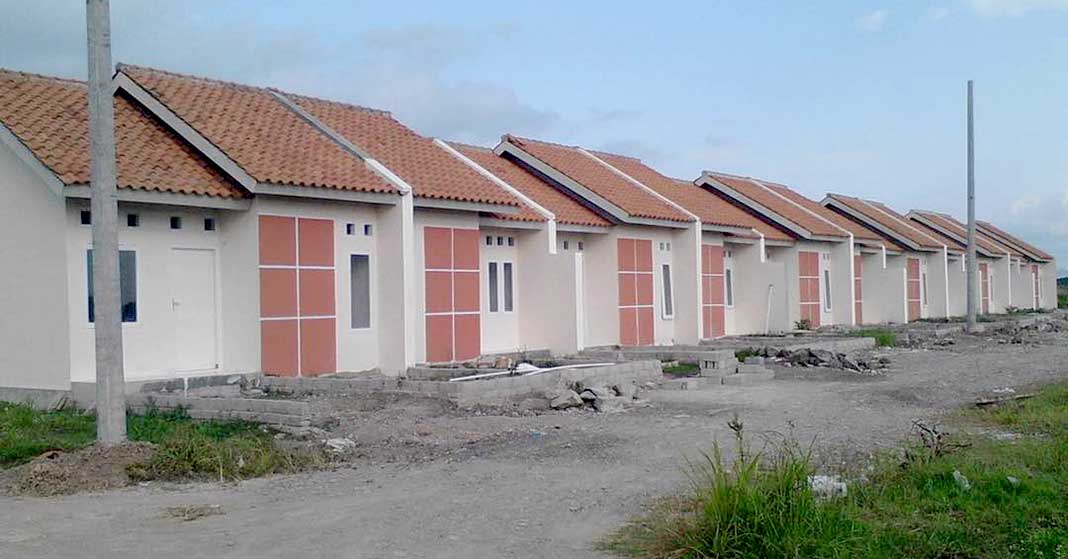

Jakarta — The government continues to strengthen its commitment to providing decent and affordable housing for low-income communities (MBR) through the development of cross-sector collaborative schemes and the expansion of increasingly inclusive financing access. In 2026, national housing policy is directed not only at increasing the number of subsidized housing units but also at strengthening the financing ecosystem involving multiple stakeholders.
The Ministry of Housing and Settlement Areas (PKP) emphasized that a collaborative approach is key to accelerating the realization of public housing programs. Synergy between the central government, regional governments, banks, financing institutions, and business actors continues to be reinforced to ensure broader and more equitable access to homeownership.
Minister of PKP, Maruarar Sirait, stated that the government is encouraging the integration of subsidized housing programs with the productive economic sectors of society.
“We want to create a link and match between subsidized housing programs and the empowerment of MSMEs,” he said.
This step underscores that housing policy is no longer a standalone agenda but part of a broader strategy for people-centered economic development. The government is also collaborating with financial institutions such as BP Tapera, national banks, and other financing bodies to strengthen the Housing Financing Liquidity Facility (FLPP), which serves as the backbone of subsidized housing financing.
In 2026, the government has set an FLPP quota of 350,000 subsidized housing units, supported by dozens of partner banks and developer associations. This scheme is expected to expand financing reach while maintaining housing affordability for the public.
In addition, participation from the banking sector has shown a positive trend. The government is targeting the distribution of subsidized housing financing by banks, including BRI, to reach tens of thousands of units this year. This serves as a strong indicator that public purchasing power for subsidized housing remains stable and is even improving.
President Prabowo Subianto also emphasized the importance of accelerating subsidized housing programs as part of efforts to promote equitable welfare. According to him, the government continues to push for simplified licensing processes and reduced administrative costs to make access to decent housing easier for the public.
Meanwhile, Head of the Presidential Staff Office, Muhammad Qodari, stated that the achievements of the national housing program have exceeded the targets set in the National Medium-Term Development Plan (RPJMN).
“This public housing program is not merely about numerical targets, but a tangible manifestation of the government’s commitment to delivering social justice,” he said.
Maintaining stable subsidized housing prices in 2026 is also part of the government’s strategy to protect people’s purchasing power amid global economic dynamics. With prices kept affordable, subsidized housing is expected to serve as a key instrument in maintaining social stability while also driving national economic growth.
