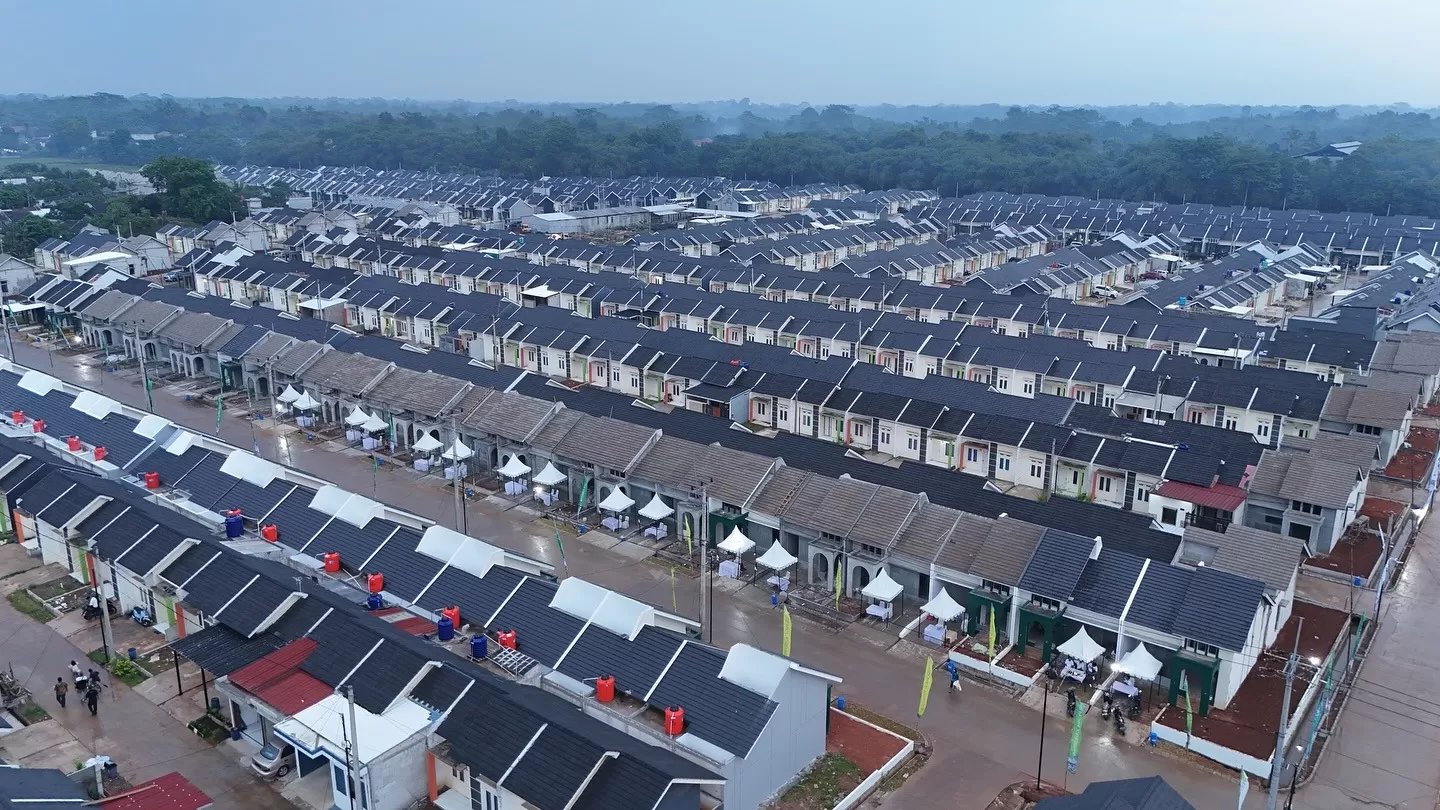
A New Breakthrough in the Subsidized Housing Program to Accelerate the Fulfillment of Housing Rights

By: Arista Putra *)
Housing is a key indicator of a country’s well-being. As we enter 2026, the Indonesian government is demonstrating a stronger commitment to providing adequate housing for all levels of society, particularly low-income groups. Through a series of more inclusive and progressive policies, the national housing agenda is now geared toward accelerating the fulfillment of housing needs that are not only financially affordable but also physically adequate.
This concrete step is evident in the significant increase in housing program targets. Minister of Housing and Settlements (PKP), Maruarar Sirait, explained that under President Prabowo’s leadership, the focus on renovating uninhabitable houses (RTLH) has increased dramatically. While the target for renovating uninhabitable houses was 45,000 units in the previous year, the government has set a target of 400,000 units for 2026. This nearly tenfold increase demonstrates the government’s commitment to direct intervention to improve the standard of living of people in various regions.
In line with efforts to physically improve people’s homes, the government is also strengthening access to new home ownership through a subsidized housing quota. Maruarar Sirait revealed that this year’s subsidized housing quota reached a national high of 350,000 units. This figure far exceeds the average achievement in previous years, which typically hovered around 230,000 units. The success in increasing this quota demonstrates the government’s ability to maintain the stability of the housing ecosystem even amidst challenging economic dynamics.
In addition to the quantity aspect, the government is also transforming the quality standards for subsidized housing, particularly for the apartment model (rusun). In the latest policy draft, the size of subsidized apartment units, previously limited to 21 to 36 square meters, has now been increased to a maximum of 45 square meters. This additional area aims to make the housing units more functional and suitable for families, with a capacity of two to three bedrooms. This standard change is a direct response to the public’s desire for vertical housing with more humane movement space.
The Head of the Central Statistics Agency (BPS), Amalia Adininggar Widyasanti, assessed that the policy of expanding subsidized apartment units to 45 square meters would significantly improve the quality of life for residents. She emphasized that this measure is a strategic solution to address the challenge of a persistent housing shortage, or backlog, in urban areas. According to BPS data, the need for housing in cities is three times greater than in rural areas, making the development of adequate vertical housing in urban areas a priority that cannot be postponed any longer.
The government also recognizes that home ownership is not just about the physical building, but also about easy access to financing. Therefore, a new financing scheme is being developed, offering installment terms of up to 30 years and fixed interest rates of around 6 percent. Furthermore, the government has begun introducing a rent-to-own scheme as an alternative for those who struggle to provide a down payment. This scheme allows people to occupy a home first while gradually acquiring ownership.
In the process of formulating this policy, Maruarar Sirait stated that the government strictly avoided unilateral decision-making without listening to the voices of the housing ecosystem, from developers and banks to prospective residents. He believes that the public must be placed at the forefront of every public policy.
Support for this policy direction also came from the community as users. Erlan Kalo, a representative of the Apartment Residents Association, expressed his appreciation for the government’s approach, which he considered more humane and attentive to residents’ needs. He noted that the government’s attention to living costs after moving in, such as evaluating electricity, water, and Environmental Management Fees (IPL), provides a sense of financial security for residents of subsidized apartments.
As a concrete step for implementation on the ground, BP Tapera is targeting the completion of contracts for 10,000 subsidized flats by 2026. Development will focus on densely populated urban areas to bring communities closer to centers of economic activity. Through the integration of physical development, easy financing, and active community involvement, the 2026 subsidized housing program is expected to set a new milestone in the provision of equitable national housing.
The government has laid a very strong foundation through increased quotas, expanded housing units, and more flexible financing schemes. By positioning the community not merely as recipients of aid but as subjects of development, this major agenda is optimistically able to significantly reduce the housing shortage. This policy transformation in 2026 is expected to set a new standard in providing national housing, where every citizen has an equal opportunity to live in a decent, safe, and productive environment for a more prosperous future for the nation.
*) Public Policy Observer and Property Sector Practitioner
