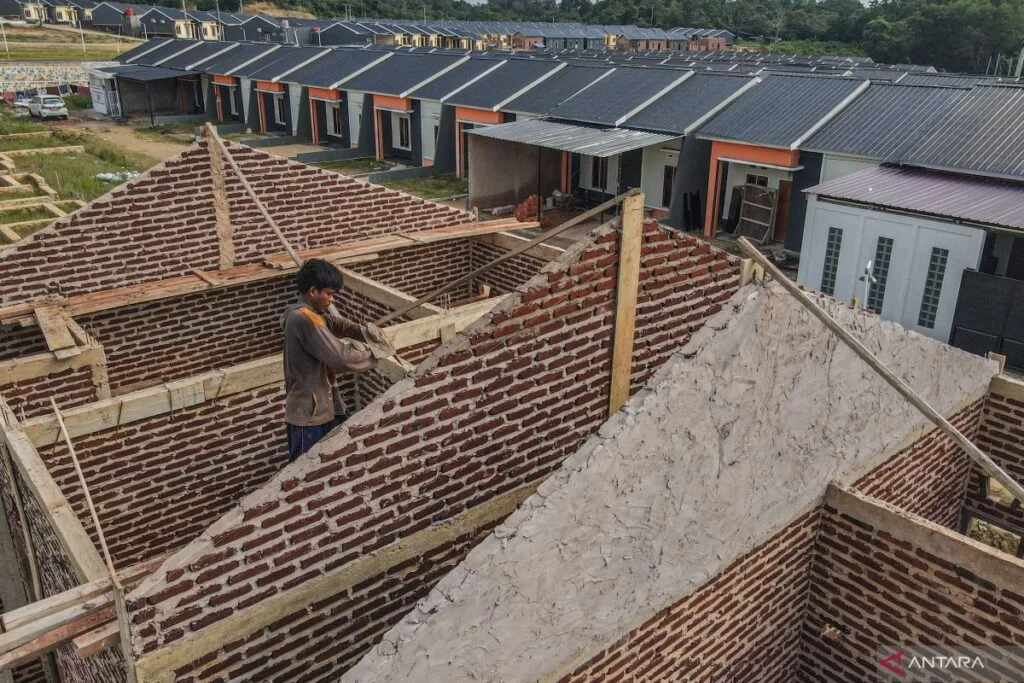
Access to Affordable Housing for Low-Income Communities is Getting Easier — Subsidy Programs and FLPP Are the Mainstays

By: Bara Winatha*)
The government’s efforts to expand access to decent housing for Low-Income Communities (MBR) showed significant progress throughout 2025. Various programs ranging from administrative subsidies, increasing subsidized housing financing quotas, to strengthening the Housing Financing Liquidity Facility (FLPP) Home Ownership Credit scheme continue to be promoted to ensure more families can enjoy safe and affordable homes. This step is a crucial strategy to reduce the still high national housing backlog. The government continues to work synergistically with banks and property industry players to ensure the benefits of the program truly reach those in need.
The Minister of Housing and Settlement, Maruarar Sirait, stated that his office proposed that the SLIK (Small-Scale Social Security) records for low-income households (MBR) be reviewed or even waived for subsidized housing ownership. He stated that housing is a basic need, and the state must be present to provide protection and convenience, rather than creating significant obstacles for the poor. The government has provided significant support for the 3 Million Homes Program by increasing the Ministry of PKP’s budget by 100 percent and expanding the Self-Help Housing Stimulus Assistance (BSPS) program from 45,000 to 400,000 units. The government has also increased the FLPP quota to 350,000 units, with more than 220,000 subsidized housing units having been realized by the end of November 2025.
Efforts to expand access to subsidized housing are not only being undertaken by the central government, but are also supported by progressive policies at the regional level. The Head of Housing and Settlement for the East Kalimantan Provincial Government, Sidiq Prananto Sulistyo, stated that the Gratispol Program is a significant breakthrough in eliminating the initial cost constraints that have been a significant burden for low-income earners (MBR). Through this program, the provincial government covers all administrative costs for purchasing a subsidized home, including notary fees, bank fees, PPAT fees, certificate transfer fees, and other administrative costs that typically require upfront payments. He emphasized that this program is concrete evidence of the East Kalimantan Provincial Government’s commitment to improving public welfare through access to more affordable and inclusive housing.
On the industry side, support from property developers also plays a crucial role in accelerating the realization of subsidized housing. The Chairman of the REI Banten Regional Executive Board, Roni H. Adali, stated that the REI Banten Property Expo 2025 is a momentum to ensure the benefits of government policies can be optimally distributed. REI Banten targets financing realization of up to IDR 150 billion, depending on the speed of banking processes in completing mortgage documents. He also highlighted various pro-MBR policies from the central government such as zero rupiah BPHTB and PBG in eight regencies/cities in Banten, a flat 5 percent mortgage interest rate, and a IDR 4 million down payment subsidy. According to him, these policies have provided a strong impetus for the revival of the property sector, which was previously depressed due to the economic slowdown at the beginning of the year.
The combination of central and regional policies, along with the participation of industry players, positions the housing sector as a driving force of national development, directly impacting public welfare. Housing is the foundation for social stability, family education, and increased productivity. Therefore, various instruments are being developed to enable low-income families (MBR) to access decent housing through increasingly simplified processes, lower costs, and with housing quality that meets standards. Increases in the Ministry of PKP’s budget, increased FLPP quotas, BSPS stimulus, and strengthening the development of apartment buildings in urban areas demonstrate a policy direction that is increasingly inclusive and pro-poor.
The government is also encouraging the use of state assets for the construction of flats in various major cities, allowing low-income families (MBR) to live closer to centers of economic activity. This is a crucial strategy for reducing the disparity between city centers and suburban areas while simultaneously improving the cost of living. By maximizing state assets, flats can be built more quickly and affordably without compromising quality standards.
At the regional level, programs like Gratispol demonstrate that regional innovation can complement national programs in addressing local challenges. When initial administrative fees are eliminated, the process of purchasing subsidized housing becomes easier for low-income households (MBR) who previously had to save for years just to meet the initial mortgage requirements. This reduces the burden on communities, increases purchasing power, and makes access to housing much more inclusive.
Meanwhile, the private sector is also a crucial pillar in strengthening the subsidized housing ecosystem. Through property exhibitions, financing education, and accelerated unit realization, developers are helping to disseminate information and ensure the public has direct access to a variety of affordable housing options that comply with the FLPP scheme. This combination of government policies and rapid developer action is driving the revival of the property sector in Banten and other regions by the end of 2025.
Efforts to provide adequate housing for low-income families (MBR) are now entering a more mature and measured phase. The government provides regulatory and subsidy support, local governments introduce innovations based on local needs, and the property industry acts as a development partner, helping to strengthen community access to adequate housing. Going forward, with increasingly robust synergy and consistent policies, the subsidy and FLPP programs are believed to remain the backbone of meeting national housing needs.
*)The author is a social and community observer.
