
Appreciating Government Efforts to Maintain Stability and Quality of Education Amid Budget Efficiency

By: Zara Quinn
The government continues to demonstrate a strong commitment to maintaining the stability and quality of national education amidst ongoing budget efficiency measures. This policy is strategically formulated to ensure that the education sector is not compromised, in line with Presidential Instruction (Inpres) No. 1 of 2025 regarding budget spending efficiency in the implementation of the State Budget (APBN) and Regional Budget (APBD).
With a well-thought-out approach, the government ensures that education remains a top priority, while budget efficiency is implemented selectively and purposefully to optimize state financial management.
The Ministry of Primary and Secondary Education (Kemendikdasmen) continues to prioritize education programs that directly impact society. Social assistance through the Indonesia Smart Program (PIP) for elementary, junior high, senior high, and vocational school students remains available to support access to education for students from low-income families.
Additionally, allowances for non-state civil servant teachers, both in public and private schools, are maintained in the 2025 State Budget (APBN).
The government also guarantees that the salaries and allowances of employees within Kemendikdasmen are fully met. Furthermore, the Teacher Professional Education (PPG) program continues as scheduled to ensure the improvement of the quality of educators in Indonesia.
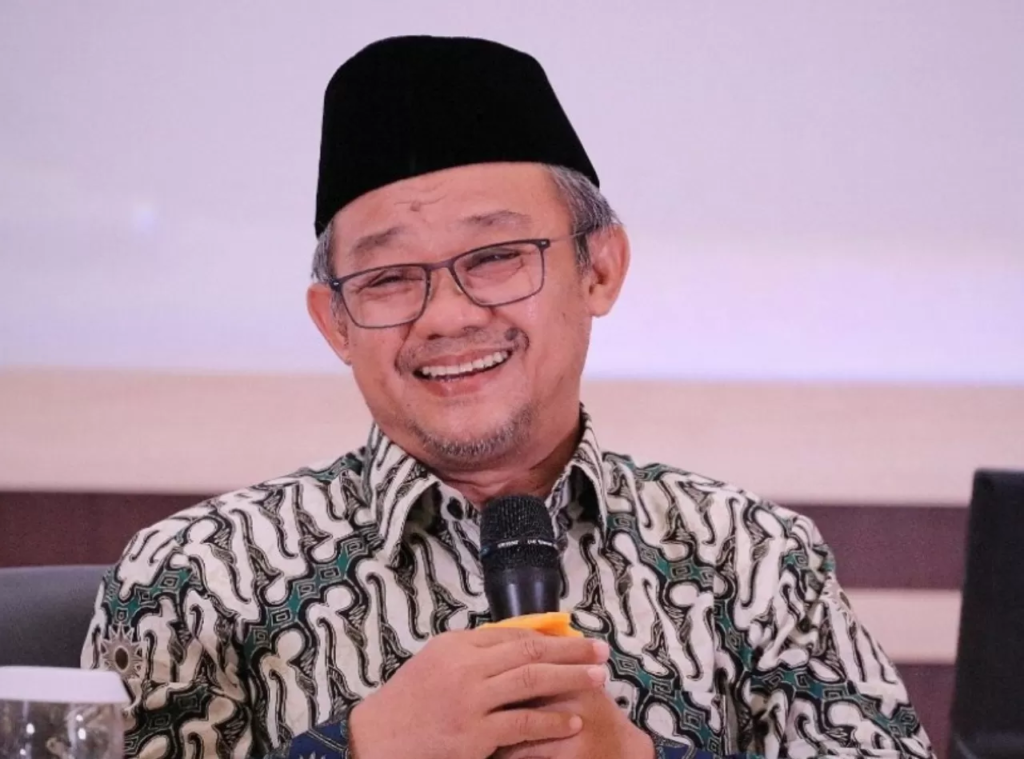
Minister of Primary and Secondary Education, Abdul Mu’ti, stated that the budget adjustment from IDR 33.5 trillion to IDR 26.27 trillion was made with careful consideration to ensure that educational programs would not be disrupted.
The budget efficiency policy takes into account the continuity of educational programs and the welfare of educators across Indonesia. Services in the main units and Technical Implementation Units (UPT) in the regions continue to operate normally without disruption.
The primary focus in budget allocation is directed towards strengthening vocational education to produce graduates who are better prepared for the workforce, protecting and developing regional languages, school accreditation to maintain education quality, and the implementation of the Academic Ability Test (TKA), which will take place in November 2025.
Moreover, the government continues to ensure that school construction and revitalization remain a priority. The transfer of funds resulting from efficiency measures is awaiting the completion of the Presidential Instruction to ensure its optimal and targeted use. This step demonstrates the government’s commitment to maintaining the sustainability of national education without compromising its quality.
Chairperson of Commission X of the Indonesian House of Representatives (DPR RI), Hetifah Sjaifudian, expressed appreciation for the strategic measures taken by Kemendikdasmen to ensure the continuity of priority education programs.
According to her, the government has ensured that spending for Civil Servants (ASN) remains secure, social assistance such as PIP is not cut, and various contracts and procurement expenditures can continue as planned.
She also emphasized that the priority programs designed by the government still receive sufficient budget allocation to ensure the continuity of national education.
Support for this efficiency policy also came from Prabowo Subianto’s spokesperson, Dahnil Anzar Simanjuntak. According to him, the budget efficiency in the education sector is carried out selectively to avoid disrupting key aspects that contribute to the improvement of national education quality.
He assessed that some parties misunderstood the efficiency policy, which raised concerns among the public. Efficiency is applied only to budget allocations that are misdirected and do not directly impact public services or human resource development. The government is merely restructuring budgets that are less relevant to the main goal of improving education quality.
Furthermore, Dahnil emphasized the importance of consistency in following the president’s directives regarding this efficiency policy. The government has ensured that the budget restructuring will not negatively impact education or the welfare of educators. The principles of equity and sustainability remain the foundation for every decision made, ensuring that the stability of national education is maintained and functions optimally.
The efficiency measures implemented in this fiscal reform deserve high appreciation. By maintaining the quality of education while optimizing budget management, the government has shown its seriousness in ensuring that each policy decision does not negatively affect the public.
This carefully implemented fiscal reform allows the national education system to continue evolving and becoming more competitive on the global stage. The government has proven that budget efficiency can be achieved without sacrificing the quality of education, creating a stronger foundation for future generations to secure a brighter future. (*)
*) The author is an education observer.
